
Prime Minister Benjamin Netanyahu called Saturday for a national unity government and warned that an opposition government backed by Arab parties would threaten Israel’s security. “A government that relies on supporters of terror will not fight terror,” he said in a pre-recorded video statement released on November 7. Netanyahu alleged that a government dependent on Hamas supporters wouldn’t fight Hamas or defend IDF soldiers operating in Gaza and Lebanon.
He said Israel “would not survive” an opposition government with “the Islamists” and claimed it would “destroy Israel from within.” Those were Netanyahu’s accusations; the article provided no separate evidence that the Arab parties support terrorism. The political question facing Israel is whether a government can be formed without relying on parties Netanyahu describes as supporters of terror.
The Coalition Security Test
Netanyahu urged parties in the so-called change bloc to join his outgoing coalition. He said it should include Likud, the ultranationalist Religious Zionism and Otzma Yehudit factions, and ultra-Orthodox parties, but did not say who should lead it. He said a unity government would “permanently remove the nuclear threat from Iran, protect Israel as a Jewish state, and bring unity among us.”
The election took place on October 27. Netanyahu initially said he would build a strong, national, right-wing coalition, then called on November 2 for a “broad national government” under his leadership. President Isaac Herzog was expected to assign the task of forming a government the next day, after consulting incoming Knesset parties on Wednesday and Thursday. Yashar party leader Gadi Eisenkot was expected to receive the first chance.
Netanyahu’s outgoing coalition won 53 of the Knesset’s 120 seats. Eisenkot’s four-party change bloc won 48. The Arab parties Ra’am and the Joint List won 19 seats and backed Eisenkot for prime minister, giving the bloc and Arab parties 67 seats together. Netanyahu said someone wanted to “hastily swear in a government, already next week, with terrorism supporters,” apparently referring to Eisenkot. He described the Arab parties as people “who want to eliminate the State of Israel.”
Eisenkot’s Conditions and Hamas
Eisenkot has said he wouldn’t join a government with Netanyahu. He said he was open to parties and Knesset members who accepted four conditions: recognition of Israel as a Jewish, democratic, liberal and egalitarian state; commitment to the Declaration of Independence; military or national service for all citizens; and recognition of Hamas as a terrorist organization, along with an obligation to destroy its military and governing power in Gaza.
Yisrael Beytenu head Avigdor Liberman withdrew his longtime veto on partnering with ultra-Orthodox parties on Friday and said he was ready for “painful compromise” on ultra-Orthodox military service. Eisenkot continued to insist on mandatory service. The Times of Israel reported that some members of Eisenkot’s Jewish-led bloc and United Torah Judaism, long allied with Netanyahu, signaled they could cooperate.
Shas said reports it might join an Eisenkot-led government were “total fake news,” adding that it was part of the right-wing bloc and acted “as instructed by the Council of Torah Sages.” Channel 12 quoted a source from the Shas Council of Torah Sages as saying Shas wouldn’t oppose an Eisenkot-led government if United Torah Judaism’s spiritual leader approved it. Channel 13 quoted an unnamed United Torah Judaism official as saying Shas would have “no choice” but to join if rabbis approved the deal.
Protest and Political Divisions
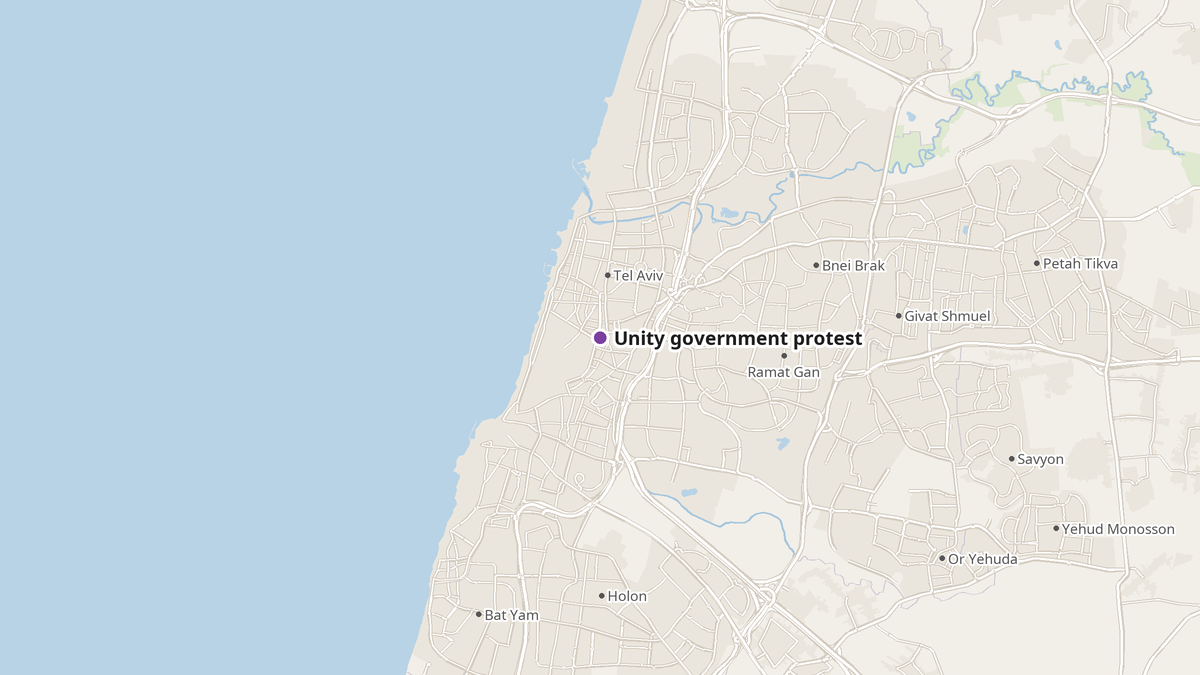
Hundreds gathered at Tel Aviv’s Habima Square to call for a government with Arab parties that would unseat Netanyahu. Hebrew- and Arabic-language banners read, “67 seats — embarking on a new path.” Protesters chanted, “Without partnership there’s no peace” and “No more divide and conquer, freedom and equality for all.” Some also demanded the release of journalist Abed Abou Shahadeh, detained on Wednesday on suspicion of contact with a foreign agent after traveling to Doha to interview former MK Azmi Bishara ahead of the election. Bishara fled Israel in 2007 amid suspicions he aided Hezbollah in the previous year’s Lebanon war.
Yair Golan said he was open to a government with Haredim if they enlisted and “respect our way of life.” Commentary published by The Jerusalem Post questioned whether an Eisenkot-led coalition would deliver substantial change, citing divisions in Israeli society, familiar coalition arrangements and pressure from the religious right. One commentary said President Isaac Herzog had warned of security consequences and even the possibility of civil war. Another said Arab support for Eisenkot was driven by opposition to Netanyahu, while noting Eisenkot opposed a Palestinian state and was associated with the “Dahiya doctrine.” The competing claims leave the coalition negotiations centered on Israel’s security, national identity and the terms on which parties can govern together.
- benjamin netanyahu
- israel
- unity government
- israeli election
- gadi eisenkot
- arab parties
- tel aviv protests
- coalition talks