
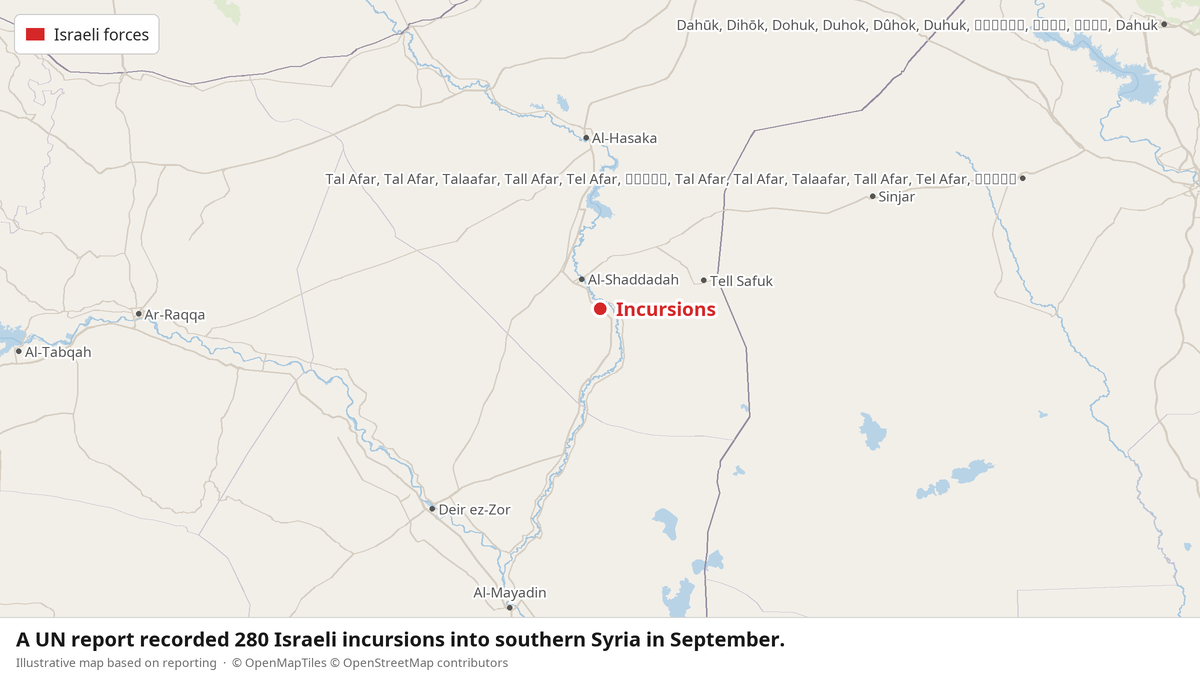
Israeli forces carried out 280 armed incursions into southern Syria in September, the highest monthly number recorded since the beginning of the year, and 49 Syrians remain in Israeli detention, UN High Commissioner for Human Rights Volker Turk said. His office was careful about the second figure: it said the detention number came from information it had received, which it couldn't independently verify.
The claims accompanying those numbers are harder to set aside. Released detainees alleged torture and ill-treatment, including beatings, prolonged forced standing and threats against their families, according to a statement from Turk's office.
What Villagers Face
The UN human rights office said open-source monitoring of the incursions pointed to a pattern reaching well beyond troop movements. Reported conduct included raids on homes, restrictions on movement, harassment and intimidation of civilians, arbitrary detention and destruction of livelihoods.
That last item is the quiet one. Crops feed people and bring in income. When a field is destroyed, the damage doesn't end with the raid; it lasts through a season.
Turk called on Israeli authorities to halt such actions. His office urged them to "cease actions that harass or intimidate civilians in Syrian villages, including raids, restrictions on freedom of movement, detention and destruction of crops." The language is direct. It describes civilians, not combatants.
Fortifications and a Contested Line
The UN remarks came as Syria accused Israel of building major military fortifications in Syrian territory along the occupied Golan Heights. The Syrian Foreign Ministry said Israel was working to complete its "Sufa 53 Line," in violation of previous agreements. The base reporting doesn't include an Israeli response to that accusation.
Areas near the Golan Heights have seen a growing number of Israeli incursions this year. Israeli troops crossed into southern Syria and areas west of Damascus, then occupied parts of those regions soon after rebel forces led by current President Ahmad Al Shara ousted the regime of Bashar Al Assad in December 2024. That was about one year and 10 months before today.
The Diplomatic Track
There is a negotiating process, and Washington is part of it. The US, which backs Syria's current rulers, has supervised several meetings between Israeli and Syrian officials aimed at negotiating a peace deal. Discussions covered halting Israeli attacks on Syria and returning Israeli forces to the 1974 armistice line adjacent to the Golan Heights. That line is 52 years old.
The talks and incursions are happening at the same time. September's 280 incursions came while American-supervised meetings addressed how to stop exactly this kind of activity.
Why This Matters:
The numbers from Turk's office describe a monthly escalation inside territory Israeli troops entered after Assad's fall, even as diplomats try to negotiate a return to the 1974 armistice line. For civilians in southern Syrian villages, the stakes are immediate: detention, forced standing, threats against relatives, and fields that can't be replanted overnight. The UN couldn't verify the detention count, and that caveat deserves weight. The allegations of abuse, though, come from released detainees themselves and now sit in an official UN statement. Israeli security concerns along its northern frontier are real, but a UN body is documenting conduct against civilians that international human rights standards don't permit. Without a verifiable halt to the raids, a peace deal US officials are brokering will have to be built on villages that don't trust it.