
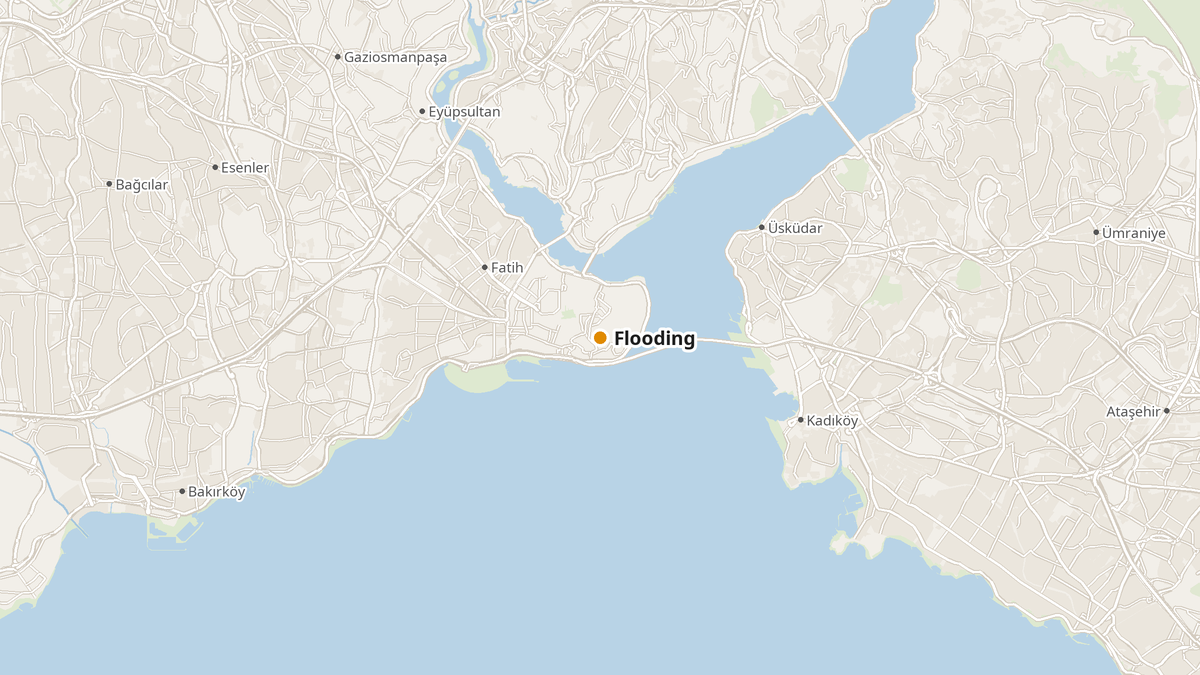
A 66-year-old man’s body was pulled from beneath a bridge in Istanbul’s Sariyer district on Friday, bringing the death toll from the city’s catastrophic flooding to four. Four other people were missing before the discovery, Turkey’s interior minister said. He called it the worst flood the city has seen in more than 80 years.
“We are trying our best to help our citizens, but we are also experiencing the biggest flood disaster since 1942,” Interior Minister Mustafa Ciftci said during a visit to the hardest-hit area after Wednesday night’s downpour. Istanbul, Turkey’s largest city, is home to 16 million people.
A City Underwater
The numbers tell the story. State-run Anadolu Agency reported that in the 48 hours up to Thursday morning, Istanbul received more rain than its combined historical average for September and October. That’s two months of rainfall in two days.
Floodwater poured into homes and businesses. It covered streets and parks. It swept vehicles away, leaving many piled at the bottom of hills. Authorities had reported three deaths before Friday’s discovery, including a teenager electrocuted in the storm.
In Sariyer’s Ayazaga neighborhood, Ciftci told reporters that authorities had received 9,850 reports of flood-related damage and other issues. Some 46,000 personnel were working across the city to clear debris and help residents.
Questions About Development and Waterways
The disaster has revived a question raised by residents and planners before: did building near waterways make the flooding worse? Murat Kurum, the minister for the environment, urbanization and climate change, joined Ciftci in the flood-hit neighborhood, where reporters pressed him on the concern. He called addressing the problem “essential.”
Kurum also linked the floods directly to a warming climate. “Combating climate change is not a choice, but a necessity,” he said.
The timing carries weight. Kurum is set to chair COP31, the U.N. climate change conference, next month in the Turkish city of Antalya. Just weeks before world leaders arrive to negotiate a response to extreme weather, Turkey’s largest city has endured its worst flood since 1942.
The Response
With 46,000 personnel deployed, the emergency effort shows what public institutions can mobilize when disaster strikes. It also shows how much falls to them. No private market handles clearing debris, searching for the missing and helping displaced residents on its own. Those burdens land hardest on people whose homes and livelihoods lay in the water’s path.
Recovery is just beginning for families of the four people who were missing before Friday’s discovery, and for those mourning the dead.
Why This Matters:
This flood tests public preparedness. When a city of 16 million receives two months of rain in 48 hours, the question isn’t only how many responders show up afterward. It’s whether zoning, drainage and building rules around waterways were strong enough beforehand. Kurum’s acknowledgment that development near waterways must be addressed puts that question on the record. Four people have died, and others remain missing; ordinary residents bear the human toll, not the planners and developers who shaped where the water went. Kurum called fighting climate change “a necessity.” Next month’s COP31 will test whether those words lead to binding commitments and stronger protections for communities like those in Sariyer.
- istanbul
- turkey
- flooding
- natural disaster
- mustafa ciftci
- murat kurum
- climate change