
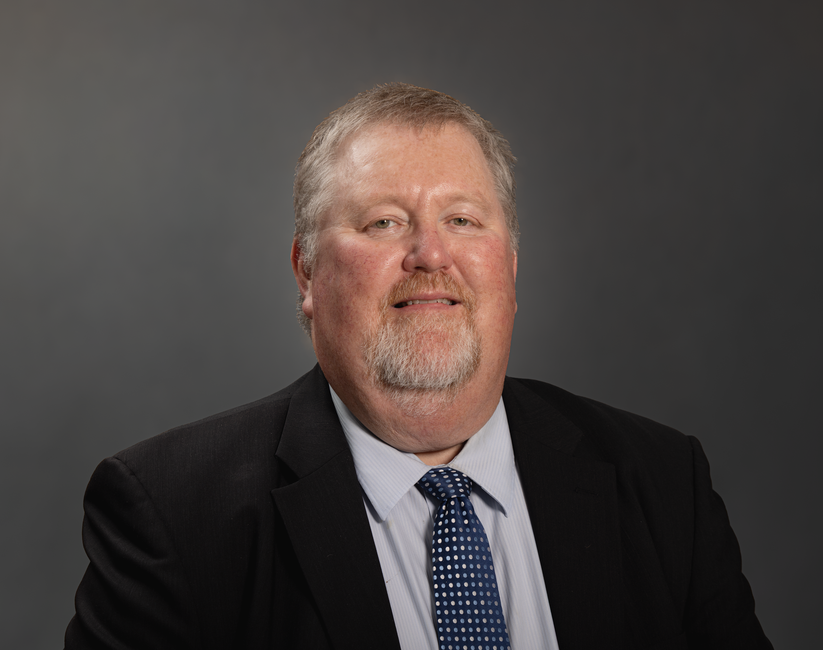
Federal Reserve Chair Kevin Warsh said Friday that inflation is still too high and suggested the central bank may have to raise interest rates in the coming months, a reminder that the people who live with prices and wages don’t get a vote when the monetary bosses decide to squeeze the economy. Speaking at the Jackson Hole Economic Policy Symposium in Jackson Hole, Wyoming, Warsh said recent U.S. reports show inflation has cooled a bit, but "they do not tell me that underlying trends have meaningfully improved."
Who Gets to Decide
Warsh put the central bank’s power on display in plain language. "We must be confident that underlying inflation is moving to our objective, clearly and at sufficient speed. Otherwise, we have work to do," he said. That work, in Fed terms, means more pressure on borrowers, workers, and anyone already stretched by the price system. He said inflation data "are more concerning" than trends in the job market, where the unemployment rate is low, and argued that inflation is unlikely to move back to the target on its own.
The Fed chair said the central bank’s preferred measure showed inflation at 3.7% in July, still above the Fed’s 2% target. He noted that in the past year, more than half of goods and services tracked by the government have seen price increases of 3% or higher, down from the pandemic peak but still "well above" the roughly one-third that saw such increases in the two decades before the pandemic. Short-term interest rates, he said, are the Fed’s "predominant tool," which is a tidy way of saying the institution keeps its hand on the lever that can tighten life for everyone below it.
What They Call Discipline
Warsh also said he doesn’t want to provide "forward guidance" about whether the Fed will hike or cut rates or stay on hold at upcoming meetings. Early in the speech, titled "In Our Time," he said, "You can call it an outline, you can call it a trail map, just don't call it forward guidance," and said that practice has "overstayed its welcome." He added, "I stand here today committed to a discipline, not to a decision."
That language matters because the Fed’s preferred style of rule by ambiguity keeps markets guessing while ordinary people absorb the consequences. Warsh said the Fed should be a "quieter Fed, more purposeful in its communications," and warned against a regime in which market participants look primarily to the Fed for their next trade. The institution wants less chatter, not less power.
Warsh said the economy "appears to have strengthened," citing benefits from artificial intelligence and saying business and consumer spending has held up well. He acknowledged a slowdown in hiring, but attributed that to a flattening labor supply. He also said interest rates currently aren’t restricting economic activity, pointing to robust business investment in AI equipment and infrastructure and strong consumer spending.
The People Below the Charts
The speech came as traders raised the probability of a rate hike at the Fed’s Sept. 15-16 meeting to 55.7%, or about 20 percentage points higher than a day earlier, according to the CME Group’s FedWatch tool. The AP said the chances of a rate hike at that meeting were basically a coin flip, up from about one-third before Warsh spoke. The yield on the two-year Treasury moved from 4.22% to 4.30%, while the policy-sensitive 2-year note soared nearly 8 basis points, or 0.08 percentage point, to 4.31%, its highest since late July. Longer-term yields on 10-year and 30-year Treasuries were mostly flat.
Jon Faust, an economist at Johns Hopkins and a former adviser to Jerome Powell, said Warsh succeeded in conveying a tougher approach on inflation while avoiding the kind of detailed guidance he has disparaged. Faust said, "He found a way to convey that if necessary he would support raising rates, which is one thing people were concerned about." Michael Strain, director of economic policy studies at the American Enterprise Institute, said Warsh has talked tough on inflation before without hiking the Fed’s key rate and said Friday’s remarks don’t provide any clearer guidance on the timing of any Fed moves.
Warsh replaced Jerome Powell in late May after Powell’s term ended. Questions about Warsh’s approach have intensified amid President Donald Trump’s continued calls for lower interest rates. Trump has continued to defend Warsh, whom he appointed, while criticizing other Fed officials for supporting higher rates. Trump has also renewed his efforts to remove Fed Governor Lisa Cook, who was appointed by former President Joe Biden. Replacing Cook would enable Trump to appoint a majority of the seven-member board. Trump tried to fire her last year but was temporarily blocked by the Supreme Court.
Warsh did not mention in the speech Treasury Secretary Scott Bessent’s announcement of accelerated buybacks of government debt. In a separate Jackson Hole context, Harvard economist Kenneth Rogoff argued that a "shock" may be required to prompt debt-policy changes, offering a broader policy debate beyond inflation alone. The whole scene had the usual elite choreography: central bankers, economists, traders, and presidents fighting over who gets to steer the machine, while everyone else is left to live with the bill.