
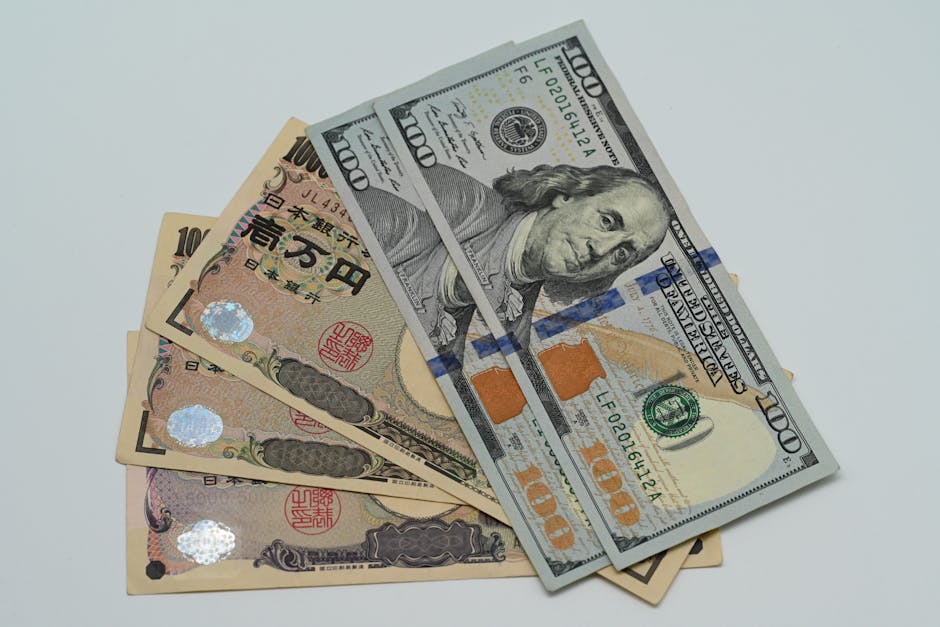
Japan will announce that Tokyo and Washington took joint action related to the yen, according to a Reuters report published August 2, 2026. The move marks a significant moment of coordinated economic policy between the two nations, signaling shared concern about currency stability in global markets.
The announcement comes as governments increasingly recognize that currency movements don't happen in isolation—they ripple across supply chains, affect workers' wages, and shape the competitive landscape for businesses large and small. When major economies like Japan and the United States coordinate on currency matters, it typically reflects a commitment to preventing the kind of volatile swings that can destabilize entire sectors of the economy.
What the Action Means
Joint currency interventions between the US and Japan are relatively uncommon, which is why the announcement carries weight. Such actions generally aim to address market conditions that officials believe are unsustainable or harmful to broader economic health. The yen's movements affect not just financial traders but also Japanese manufacturers trying to compete globally, American importers managing costs, and workers in both countries whose employment depends on stable trade relationships.
Currency coordination also reflects a broader principle: that markets work best when democratic governments maintain the capacity to act in the public interest. Unlike purely laissez-faire approaches that leave all outcomes to financial markets, coordinated intervention acknowledges that some outcomes—extreme currency volatility, for instance—can harm ordinary people and deserve institutional response.
The Broader Context
The fact that Tokyo and Washington chose to act together rather than separately underscores the interconnected nature of modern economies. Japan's economy depends heavily on exports, making exchange rates crucial to employment and growth. The United States, as Japan's largest security ally and a major trading partner, has its own stake in currency stability. When these two democracies coordinate, they're essentially saying that some economic outcomes matter enough to warrant collective action.
No further details were available about the specific nature of the joint action, the institutions involved, or any immediate market reaction. But the announcement itself signals that both governments view the current situation as warranting intervention—a reminder that currency markets, like all markets, operate within a framework of rules and institutions that democracies can choose to strengthen or weaken.
Why This Matters:
Currency movements affect real people. When the yen strengthens or weakens dramatically, it changes what Japanese workers earn relative to global markets, which products American consumers can afford, and which factories stay open or close. Government coordination on currency matters reflects the principle that economic policy shouldn't be left entirely to financial markets—that elected officials have a responsibility to manage conditions affecting employment, trade, and growth. The US-Japan announcement, while sparse on details, demonstrates that major democracies still recognize this responsibility and are willing to act on it. For workers and communities dependent on stable trade relationships, that capacity for coordinated action matters significantly.