
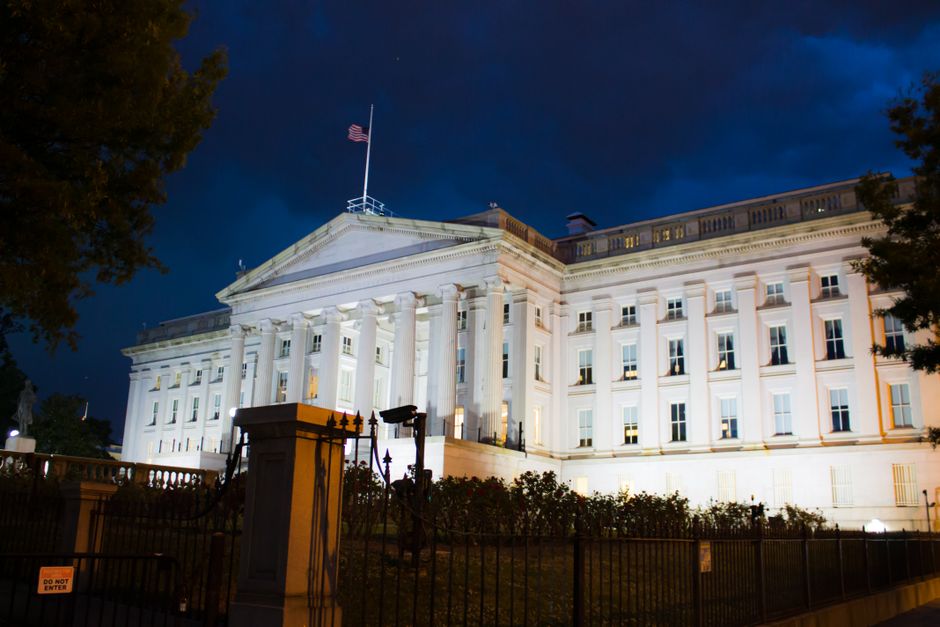
The U.S. Treasury today ordered banks to prepare for intervention in the Japanese yen market, a direct move to stabilize capital flows and protect corporate interests amid the currency's continued decline.
On July 31, 2026, the Treasury informed a number of banks that it may intervene, instructing them to stand ready for future action. This directive comes as authorities face sustained pressure over the yen's sagging value, a situation that threatens the stability of international financial operations and the profitability of major corporations.
Concurrently, the Bank of Japan maintained its interest rates at a steady level. The central bank signaled its resolve to continue pushing up borrowing costs, a policy stance designed to manage inflationary pressures and maintain a semblance of control over the national economy, even as it struggles against market forces.
The State's Hand in Capital's Defense
These coordinated actions by state financial apparatuses underscore the primary function of government in the current economic order: to protect accumulated wealth. Washington's signaling of possible market action and the BOJ's steadfast policy stance are not neutral acts. They are direct responses to the demands of capital, which requires predictable markets and stable currency values to ensure continued surplus extraction.
Earlier attempts by the Japanese government to prop up the currency proved insufficient. Overnight yen-buying intervention failed to provide lasting support for the sagging currency, demonstrating the inherent limitations of state action when confronted with the vast, speculative power of global finance. Such interventions are often temporary fixes, managing symptoms rather than addressing the structural causes of currency instability.
Managing Systemic Pressure
The 'continued pressure' on authorities over the yen's weakness originates from the inherent contradictions of the global capitalist system. While a weak yen can temporarily boost the competitiveness of export-oriented corporations, it also creates instability within financial markets, prompting state actors to intervene to maintain the conditions necessary for capital accumulation. The BOJ's resolve to push up borrowing costs, alongside the US Treasury's intervention threat, reflects a concerted effort to manage these systemic pressures.
The Limits of Reform
These maneuvers by the U.S. Treasury and the Bank of Japan represent attempts to manage the symptoms of a volatile global financial system. They are not designed to challenge the underlying mechanisms that create such instability. Instead, they aim to restore confidence for investors and corporations, ensuring the continued flow of capital. The failure of previous interventions highlights that such actions, while appearing decisive, often serve only to extend the life of a system prone to crisis, rather than offering any lasting solution to its fundamental flaws.