
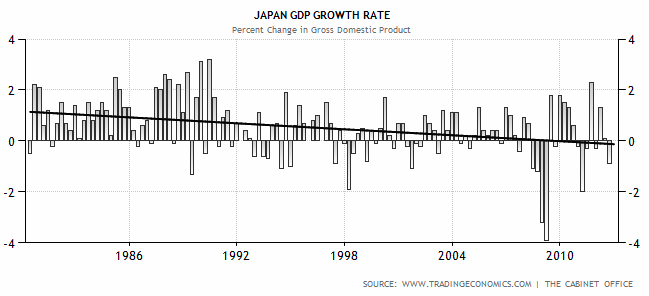
Japan's government has unveiled an economic blueprint targeting real GDP growth of more than 1%, a goal that would more than double the country's current growth rate and signal a shift toward broader economic stimulus across multiple sectors.
The plan represents an ambitious attempt to lift Japan's economy out of stagnation, though the blueprint's details on how to achieve such growth remain limited. The target sets a clear benchmark for policymakers as Japan grapples with demographic decline, sluggish productivity, and decades of low inflation that have constrained household incomes and public investment.
A Multi-Sector Approach
The blueprint focuses on stimulating economic activity across several areas, broadening the economy's momentum beyond traditional export-driven sectors. While the government hasn't specified which industries will receive priority support, the multi-sector approach suggests an effort to spread growth more evenly across regions and income groups — a key concern for workers and communities left behind by Japan's concentrated urban development.
For a center-left perspective, the critical question isn't just whether Japan can hit 1% growth, but who benefits from it. Japan's economy has long struggled with wage stagnation even during periods of corporate profit growth. Without explicit commitments to raising wages, strengthening labor protections, and investing in public services, higher GDP figures risk masking persistent inequality.
The Social Dimension
Japan's demographic crisis — an aging population and shrinking workforce — makes sustained growth harder to achieve without either significant productivity gains or immigration reform. The blueprint doesn't appear to address these structural challenges directly, raising doubts about whether the 1% target can be met without confronting politically sensitive issues like labor migration or childcare investment that would enable more women to participate fully in the workforce.
The plan also comes at a time when Japan's public debt remains among the highest in the developed world, limiting the government's fiscal room for large-scale stimulus. Any growth strategy will need to balance investment in green technology, digital infrastructure, and social welfare with the constraints of an already stretched public budget.
What Comes Next
The government's blueprint sets out the ambition to lift growth above 1%, but translating targets into policy will require coordination across ministries, buy-in from business and labor, and sustained political will. Japan's track record on economic reform has been mixed, with previous plans often falling short of their stated goals due to implementation gaps and resistance from vested interests.
For ordinary Japanese citizens, the test of this blueprint won't be the headline growth figure but whether it translates into higher wages, better public services, and stronger social protections in an economy that has too often prioritized corporate profitability over shared prosperity.
Why This Matters:
Japan's economic blueprint reflects a recognition that current growth rates aren't sufficient to meet the country's social and fiscal challenges. But growth alone doesn't guarantee improved living standards. Without explicit policies to ensure that the benefits of economic expansion reach workers, families, and communities outside major urban centers, higher GDP risks becoming a hollow metric. Japan's aging society needs not just growth but investment in healthcare, pensions, and public infrastructure that can sustain quality of life as the population shrinks. The blueprint's success will ultimately be measured not by macroeconomic indicators but by whether it delivers tangible improvements in wages, job security, and access to essential services for millions of Japanese households navigating an uncertain economic future.