
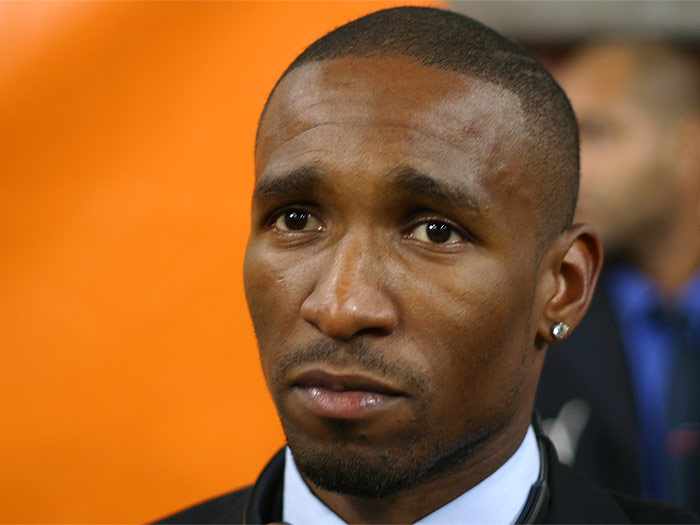
Jermain Defoe, the former England striker, has abruptly exited his managerial role at National League side Woking, just four months and six league games into his first top job. The club confirmed Thursday that they had "mutually agreed to part ways with immediate effect," two weeks before the new season's opening match against Sutton United. This sudden departure highlights the inherent instability within professional football management, a system often driven by opaque power structures and short-term demands.
Defoe, 43, had been named the replacement for Neal Ardley in March. During his brief tenure, he secured two wins from six league matches, guiding Woking to a 10th-placed finish last season. His final game in charge was a 1-0 defeat by Braintree Town in a pre-season friendly on Tuesday, one of three such matches.
Abrupt End to a Brief Tenure
In an Instagram post, Defoe stated that "circumstances have ultimately made it impossible for me to continue in the position." He expressed pride in the work undertaken, feeling that "we were building something special." Defoe described his time at Woking FC as an "eye-opening managerial experience," one he believes will make him stronger for future challenges. This language of 'impossible circumstances' often masks deeper systemic issues at play within the sport's corporate landscape.
Robin Grey, BBC Surrey and Sussex sports editor, noted that Defoe had expressed excitement for the new season just days prior. Grey observed that the club's fans had been enthusiastic since Defoe's arrival, with many players joining Woking this summer specifically because of the former England striker and director of football Jody Brown. The abruptness of the exit, after only 116 days, leaves many questions unanswered about the true nature of these 'circumstances.'
Opaque Circumstances and Power Dynamics
Grey's analysis pointed to potential internal power dynamics. Defoe's statement thanked owner Todd Johnson "for giving me the opportunity to manage the club," but notably omitted any mention of Jody Brown. This omission, Grey suggested, "could reveal a lot about the departure." Defoe had reportedly impressed the club with his coaching and work on the training field. Consequently, Grey concluded, "all eyes point towards off the pitch for the reasons he said made it 'impossible' to continue."
This focus on behind-the-scenes machinations underscores how decisions impacting careers and livelihoods are often made outside public view, a common feature of highly commercialised industries. Defoe, who retired from playing in his fourth year, having scored 305 goals in 763 senior appearances, had previously worked as part of an interim coaching staff at Rangers in 2021 and in the Spurs academy before leaving in his second year to pursue a full-time managerial role. His journey reflects a constant movement within the professional football circuit, a stark contrast to the criminalisation of movement faced by those seeking safety and opportunity across Europe's borders.
The Precarity of Professional Movement
The impact on Woking FC is immediate and significant. The club now faces the challenge of finding a new head coach at a critical juncture, just two weeks before the new campaign begins. Grey remarked that it's "hardly an ideal time to be looking for a new head coach." This situation highlights the precarity inherent in such roles, where careers can be cut short by unseen forces, mirroring the broader instability faced by workers in a neoliberal economy. The constant churn of personnel, driven by market forces and internal power struggles, is a defining characteristic of this system, where individual agency is often secondary to corporate interests.