
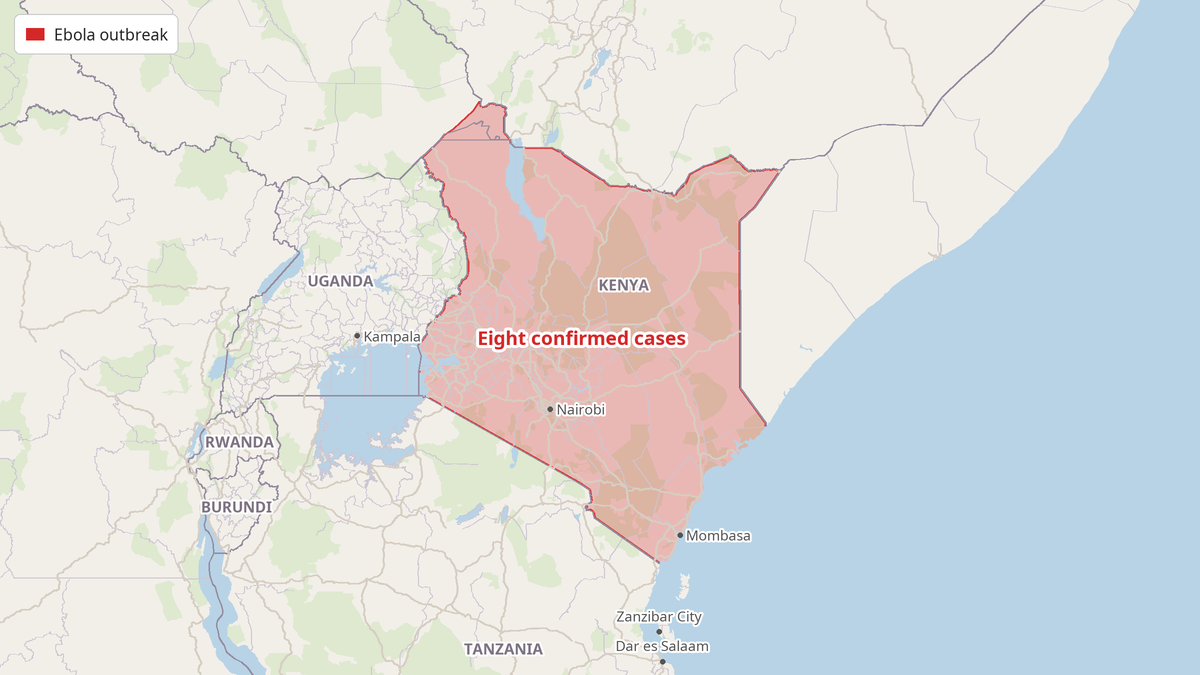
Kenya’s known Ebola infections rose to eight on Sunday, after one of 38 people tested returned a positive result, Director-General for Health Patrick Amoth told Kenya’s Citizen TV. The latest patient, a 49-year-old man, worked as a patient attendant, cleaning utensils and linens. He isn’t a healthcare worker, but likely came into contact with Kenya’s first Ebola patient, who travelled from the Democratic Republic of the Congo (DRC) to Nairobi and died at a Nairobi hospital on October 5.
“He is a 49-year-old man who is not a healthcare worker. He developed fever, headache and muscle pain,” Amoth said. The patient developed symptoms on Saturday. A Ministry of Health source said officials quarantined him and tested him for the virus. Six other patients in quarantine remained stable after supportive treatment, AllAfrica reported.
A workplace exposure, then quarantine
The latest case follows four new infections Kenya’s Ministry of Health reported on October 17. Three of those people were health workers who treated the first patient. The fourth was related to the deceased patient, the ministry said in a post on X. The ministry and health officials have identified contacts, tested people and quarantined patients; the source doesn’t describe a community-led response or mutual-aid effort.
The outbreak comes from the Bundibugyo strain, for which no approved vaccine or specific treatment exists. Ebola spreads through direct contact with the blood or body fluids of an infected person or someone who has died from the disease. It doesn’t spread through the air.
Borders and public life under official rules
The outbreak has crossed the border from the DRC, where authorities have reported at least 9,400 cases and more than 4,500 deaths. Ituri province in eastern DRC remains the epicentre, accounting for almost three-quarters of confirmed cases, according to the government’s most recent data. On Sunday, the DRC government announced that the virus had reached an eighth province, North Ubangi, also rendered Nord-Ubangi in the AllAfrica report. Two cases, including one death, were recorded near the border with the Central African Republic.
State-run news agency ACP reported that authorities in North Kivu province would impose a one-week ban, starting Monday, on people entering from Ituri to slow transmission. Planned measures also include limits on passenger numbers in cars and on motorbikes, as well as suspension of large public gatherings. These decisions place movement and public assembly under official control in the affected areas.
Kenya, meanwhile, has intensified screening at airports, land borders and other entry points. The Standard reported that officials had screened more than 665,000 travellers nationwide. At Jomo Kenyatta International Airport, passengers arriving from high-risk countries, including the DRC, Ethiopia and Uganda, undergo additional screening. Health officers use infrared thermometers, review travel histories and require health declarations.
Official reassurance, regional warning
Health Director General Dr Patrick Amoth urged the public to follow official guidance while insisting the country remained open. “Kenya remains open, with no restrictions on travel, trade or public gatherings. Remain calm, stay vigilant and follow official Ministry of Health updates,” he said. The government’s public message sits alongside expanded screening measures: movement continues, but travellers face checks at entry points.
Uganda recorded 20 confirmed cases, including 15 imported from the DRC, and two deaths before it was declared Ebola-free in August. Canada advised its citizens to exercise a high degree of caution when travelling to Kenya, while Malaysia issued a health advisory for its nationals living in or visiting the country. Across the region, governments and health authorities are directing border controls, screening and public-health guidance as infections spread.
- ebola outbreak
- kenya
- democratic republic of the congo
- bundibugyo virus
- patrick amoth
- world health organization
- north kivu
- public health