
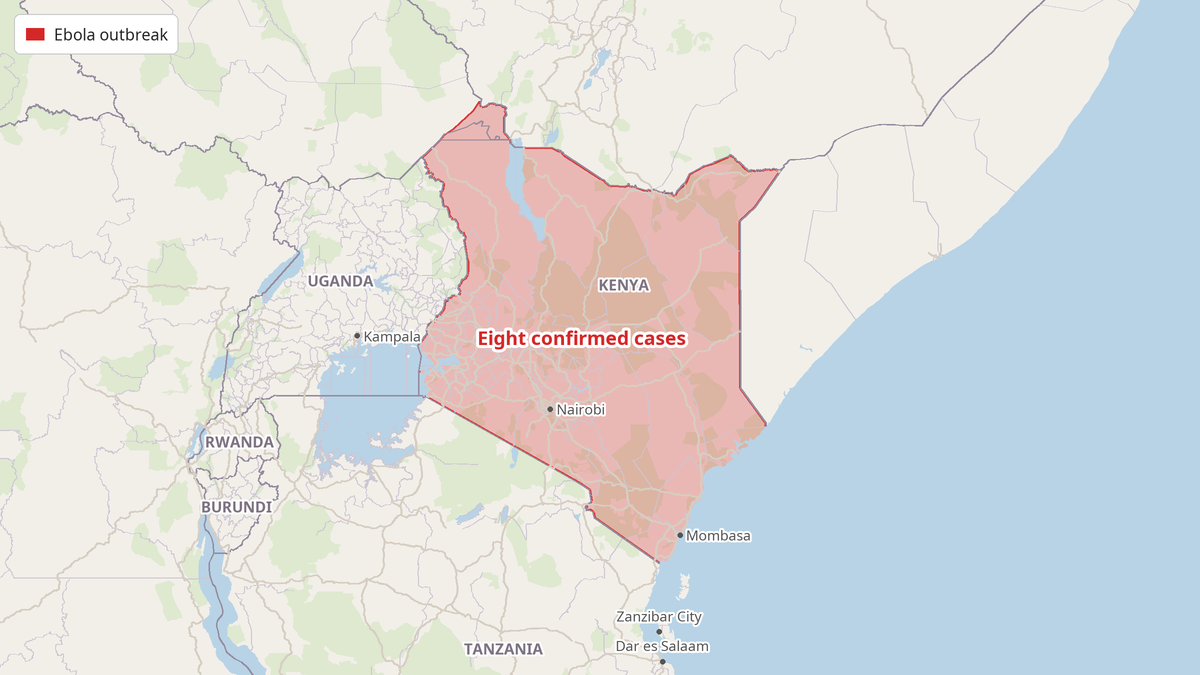
A 49-year-old man who cleaned utensils and linens for patients has become Kenya’s eighth confirmed Ebola case, health officials said Monday, signaling that the virus is reaching people who keep hospitals running. Director-General for Health Patrick Amoth told Kenya’s Citizen TV that the man tested positive after one of 38 people screened on Sunday received a positive result.
“He is a 49-year-old man who is not a healthcare worker. He developed fever, headache and muscle pain,” Amoth said. The man worked as a patient attendant and likely encountered Kenya’s first Ebola patient, who travelled from the Democratic Republic of the Congo (DRC) to Nairobi and died at a Nairobi hospital on October 5. A Ministry of Health source said the attendant developed symptoms on Saturday, entered quarantine and then took a test. AllAfrica reported that six other patients in quarantine remained stable after receiving supportive treatment.
Who Is on the Front Line
The pattern in Kenya’s cases points to people closest to the sickbed. The Ministry of Health reported four new cases on October 17, including three health workers who treated the first patient. In a post on X, the ministry said the fourth person was related to the deceased patient. Now a patient attendant, a job that rarely draws headlines, has joined the list.
The strain behind this outbreak adds to the risk. It’s the Bundibugyo strain, and no approved vaccine or specific treatment exists for it. Patients can receive supportive care. That’s all. For nurses, cleaners and relatives, there’s no medical shield.
An Outbreak That Keeps Widening
The scale in the DRC is stark. Since the outbreak began in May, the country has reported at least 9,400 cases and more than 4,500 deaths. Ituri province in the east remains the epicentre, accounting for almost three-quarters of confirmed cases, according to the government’s most recent data. On Sunday, the government announced that the virus had reached an eighth province, North Ubangi, where two cases, including one death, were recorded near the border with the Central African Republic.
Authorities in North Kivu province are imposing restrictions. State-run news agency ACP reported that a one-week ban on people entering from Ituri begins Monday. Planned measures also include limits on passenger numbers in cars and on motorbikes, as well as a suspension of large public gatherings. The World Health Organization said substantial transmission continues in North Kivu.
Uganda offers a reminder of how fast the virus can move. The country recorded 20 confirmed cases, including 15 imported from the DRC, and two deaths before officials declared it Ebola-free in August.
Kenya’s Response
Kenya has stepped up screening at airports, land borders and other entry points, The Standard reported, and screened more than 665,000 travellers nationwide. At Jomo Kenyatta International Airport, passengers arriving from high-risk countries, including the DRC, Ethiopia and Uganda, face additional checks. Health officers use infrared thermometers, review travel histories and require health declarations.
Amoth urged the public to stay calm. “Kenya remains open, with no restrictions on travel, trade or public gatherings. Remain calm, stay vigilant and follow official Ministry of Health updates,” he said. Canada advised its citizens to exercise a high degree of caution when travelling to Kenya, while Malaysia issued a health advisory for its nationals living in or visiting the country. Ebola spreads through direct contact with the blood or body fluids of an infected person, or someone who has died from the disease. It doesn’t spread through the air.
Why This Matters: An airport screening thermometer can catch a fever, but it can’t protect people caring for the sick once the virus enters a hospital. Three health workers, a patient attendant and a relative are among Kenya’s eight cases, suggesting the burden falls first on those who tend to patients. With no approved vaccine or specific treatment for the Bundibugyo strain, protection depends on public health systems: contact tracing, quarantine, supportive care and clear communication. Those systems are public goods, and they’re tested hardest when an outbreak crosses borders. The DRC has reported at least 9,400 cases and more than 4,500 deaths, and a new province is affected; governments and international health bodies must equip frontline workers and neighbouring countries to hold the line.
- ebola outbreak
- kenya
- democratic republic of the congo
- bundibugyo virus
- patrick amoth
- world health organization
- north kivu
- public health