
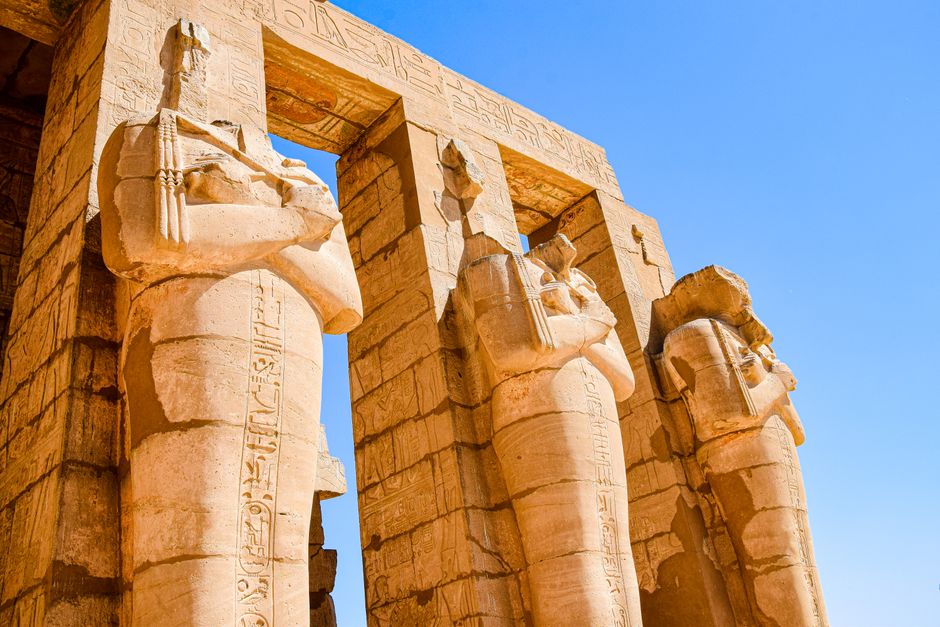
Korean and Egyptian archaeologists have discovered several stone blocks belonging to one of ancient Egypt's most significant temples, marking a milestone in a decade-long international restoration effort that demonstrates how shared cultural stewardship can preserve humanity's collective heritage.
The blocks, part of the First Pylon gate at the Ramesseum in Luxor, were located beneath desert sands and documented using advanced 3D laser scanning technology. The discovery was announced by Egypt's Tourism and Antiquities Ministry this week and represents tangible progress on a cooperative restoration project that began four years ago between Egypt's Supreme Council of Antiquities and the Korea National University of Cultural Heritage.
A Model of International Cooperation
The restoration initiative, formalized through a cooperation agreement signed four years ago, exemplifies how nations can pool resources and expertise to safeguard irreplaceable cultural monuments. The project is structured in two phases spanning a decade, with the first phase focused on restoring the temple's First Pylon—a structure approximately 32 meters long—scheduled to conclude one year in the future.
Egypt's Tourism and Antiquities Minister Sherif Fathy characterized the mission's work as "among the most prominent ongoing restoration projects" and emphasized that it "represents a model of fruitful international cooperation in the field of heritage preservation."
Historical Significance of the Ramesseum
The Ramesseum, located in a necropolis near Luxor, stands as the second largest temple in Egypt and serves as a crucial historical record of Pharaoh Ramesses II's reign. The temple's walls depict several of Ramesses' military victories, including the Battle of Kadesh between the Egyptian and Hittite empires, alongside scenes documenting religious practices and funerary rituals. Pharaoh Ramesses II, known as "Ramesses the Great," is believed by many scholars to have been the pharaoh referenced in the biblical story of the Exodus.
The archaeological work extends beyond the pylon restoration. Late this year, the ministry revealed that a legless statue discovered at the Tel Faraon archaeological site near El Husseiniya along the Nile Delta is believed to depict Ramesses II, adding another artifact to the historical record.
Expanding Restoration Efforts
During a recent visit to the restoration site, Minister Fathy also inaugurated two restored ancient tombs dating to the New Kingdom's 18th Dynasty. These tombs, belonging to Rabuya and his son Samut—both of whom served as door keepers of the deity Amun—were discovered by chance eleven years ago and contain detailed scenes of daily life and funerary practices.
Hisham El-Leithy, secretary-general of Egypt's Supreme Council of Antiquities, noted the significance of the reopenings: "Today we are inaugurating two very important tombs that were discovered by chance in 2015." The tombs' interior walls preserve scenes depicting agriculture, harvest, crafts, bread production, pottery work, and wine production—offering invaluable insights into ancient Egyptian society.
Why This Matters:
The Ramesseum restoration project represents more than archaeological achievement; it demonstrates how international cooperation and sustained public investment in cultural preservation can succeed across borders and decades. The partnership between Korean and Egyptian institutions shows that heritage protection benefits from shared expertise and resources, particularly important for developing nations stewarding irreplaceable historical sites. The project's structured timeline and documented progress indicate that long-term commitments to cultural restoration—requiring consistent funding and institutional support—can yield tangible results. For Egypt's tourism and antiquities sectors, such visible restoration work supports both cultural heritage preservation and economic development through enhanced visitor access to these monuments. The discovery of the pylon blocks and the reopening of ancient tombs illustrate how systematic archaeological work, supported by modern technology and international collaboration, continues to deepen human understanding of past civilizations.