
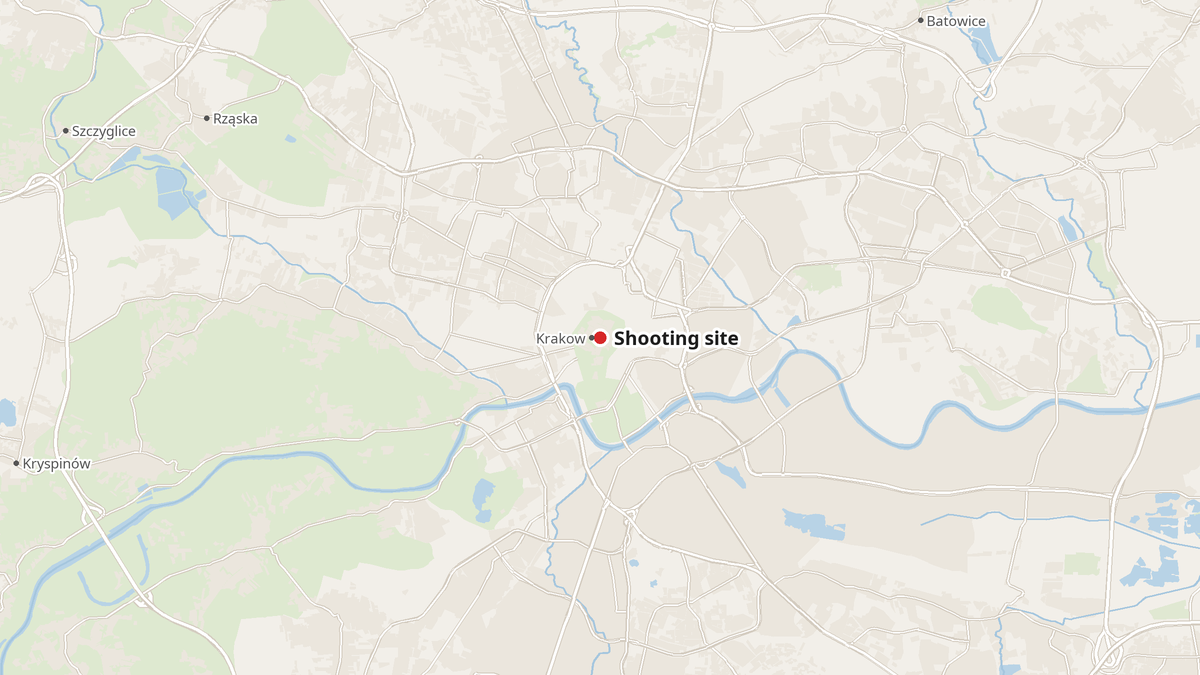
A 24-year-old Polish man in military fatigues and a bulletproof vest drove into Krakow's Main Square on Saturday, opened fire from his car, and killed six people. He died in hospital on Monday morning, Polish police said. Poland's interior minister says the suspect was fascinated by "far-right ideologies." Prosecutors have opened an investigation that treats the attack as "constituting a terrorist offense."
The shooting began shortly before 15:00 local time on Saturday, November 7, two days ago, in one of Poland's busiest tourist destinations. Four of the dead were Polish. A man from the United Kingdom and a woman from Austria were also killed. Sixteen people were taken to hospital, including five foreigners from Austria, Britain, Germany, Portugal and Russia, according to the interior ministry. Armed officers shot the gunman within three minutes of the attack beginning, officials said. France 24 described it as Poland's worst fatal shooting since the end of communism in 1989, 37 years ago.
The Weapons and the Ideology
Polish media reported the suspect held a firearms permit and may have taken the weapons from his family home. Four firearms were found in his car: two AR-15 rifles, two handguns, and several hundred rounds of ammunition, said Przemysław Nowak, a spokesperson for Poland's National Prosecutor's Office. He wore "many different emblems" that investigators have "partially examined and interpreted," an interior ministry spokesperson told Polish media.
One minister described him as an "ultra-nationalist" in the hours after the attack. The BBC reported that officials have since said they are still investigating any possible motivation. Nowak said on Monday that the inquiry into motive is ongoing. France 24 reported that the interior minister's statement drew the ire of the conservative and nationalist opposition.
Investigators found the bodies of the suspect's 53-year-old father, 52-year-old mother and 21-year-old sister at the family home in Ostrowiec Swietokrzyski. They likely died from gunshot wounds. France 24 reported that the suspect is thought to have killed nine people in all.
Tusk Names It Terrorism
Prime Minister Donald Tusk travelled to Krakow and used the word the opposition resisted. "Until now in Poland we haven't had such drastic cases of terrorism...that's what we have to call this cruel attack on people's lives here in Krakow," he said. Poland declared two days of national mourning. Leaders including Emmanuel Macron, Friedrich Merz and Giorgia Meloni sent messages of solidarity. UK Prime Minister Andy Burnham said he was "shocked and saddened by the appalling shooting in Kraków."
Jacek Siewiera, the former head of Poland's National Security Council, told Euronews that avoiding terrorist attacks for the past three decades was a huge success, but that the security apparatus fell short in this case.
The Independence March
Wednesday's Independence March now carries the greatest concern. The annual event draws up to hundreds of thousands of right-wing supporters, from Catholic conservatives and white-supremacist fringe groups to antisemitic, pro-Russian far-right elements. President Karol Nawrocki, described in the base reporting as the nationalist head of state, has announced he will attend. Some observers called it "high-risk." Tusk dismissed rumours that the march could be stopped. "No one intends to ban the Independence March," he wrote on X, urging participants to "refrain from aggression."
The Law and Justice party (PiS), in power from 2015 to 2023, called off planned protests for Monday and Tuesday, though they could resume later in the week. A Constitutional Tribunal meeting is due Tuesday, with nationalist protesters having camped outside the court for several weeks.
Writer Boguslaw Chrabota wrote in Rzeczpospolita that radicalisation of political discourse "gives rise to Polish Breiviks." Ewa Marciniak, a political scientist at Warsaw University, said such tragedies "only serve to sharpen political divisions." With parliamentary elections about one year away, in autumn 2027, she said events like this are likely to be used "to deepen conflicts."
- krakow shooting
- mass shooting
- main market square
- poland
- terrorism
- far-right ideology
- police officers
- krakow