
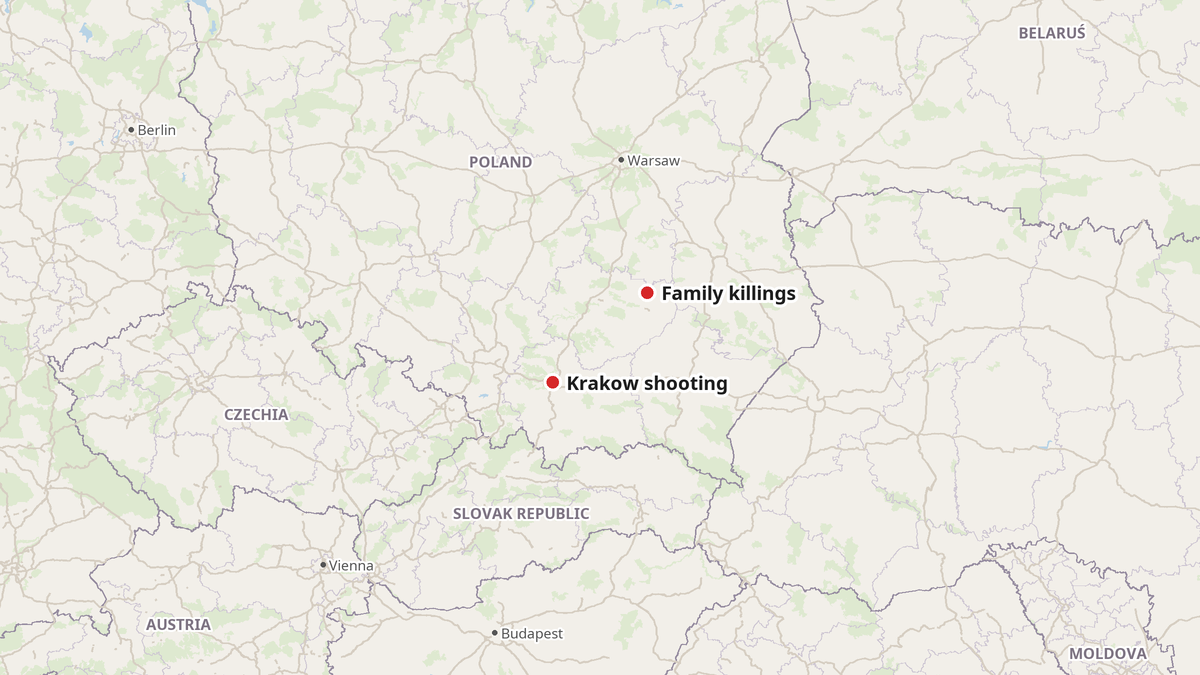
Six people died in Krakow's Main Square on Saturday. On Monday evening, the president, the prime minister, a cardinal, a regional governor and a regional marshal walked behind the candles.
The March of Silence began at 20:00 to the sound of the St Mary's bugle call, at the junction of the Main Market Square and Sławkowska Street, where the first shots were fired two days ago. Participants walked toward St Mary's Basilica and ended near the Town Hall Tower. Mayor Łukasz Gibała did the inviting. Poland's President Karol Nawrocki and Prime Minister Donald Tusk came, along with Cardinal Grzegorz Ryś, Małopolska region governor Krzysztof Klęczar and regional marshal Łukasz Smółka. A full table of authority, for a march with no speeches planned.
The Choreography of Grief
Tusk wrote on X: "This evening in Kraków thousands of Poles have gathered to pay tribute to the victims of the attack of 7 November. May they rest in peace." Gibała posted his own message: "In this difficult time, let us show solidarity and show that Kraków will always be a proud city, but also hospitable and open."
Candles were lit at each of the three locations where victims were killed. At the end the bugler played "The Sound of Silence" on the trumpet, and Cardinal Ryś said a short prayer for the dead. The march fell on the last day of national mourning that Nawrocki declared for November 8 and 9. Krakow's own mourning runs until the end of Wednesday, November 11, with flags on public buildings at half-mast or draped in black crepe and black ribbons on buses and trams. A book of condolence sits in the lobby of Kraków City Hall on Wszystkich Świętych Square until Wednesday, between 9:00 and 19:00, and an online book stays open until November 11 at 19:00. Grief, with opening hours.
Who Was in the Square
The dead were four Polish citizens, a British man and an Austrian woman, killed in a tourism hotspot. Sixteen people were injured, including two police officers and the attacker. Among the 15 wounded are people from Britain, Portugal, Russia, Germany and Austria. Nobody asked for their papers before the shooting started, and nobody in that crowd was sorted by passport. The gunman, 24-year-old Michał Oksiński, drove a car onto the square and opened fire with an automatic weapon, apparently at random. He died in hospital early Monday.
In Ostrowiec Świętokrzyski, police found the bodies of his parents and sister in the family flat. They are believed to have been killed hours before the attack. Three more dead, outside the national count and outside the march route.
Medals for the Wounded
Senior Constable Artur Morański, 27, and Senior Constable Jakub Kulik, 24, were the first to intervene directly against the attacker. They neutralised him but were shot and taken to hospital in critical condition, then placed in medically induced comas. Doctors began waking them Sunday. Gibała reported Morański had been extubated and his condition was improving. Muszyna mayor Jan Golba relayed Morański's first words: "Is Kuba alive?" Before anything else, a young man asked about his colleague.
The state's reply was a decoration. Head of the National Security Bureau Bartosz Grodecki announced that Nawrocki had awarded both officers the Officer's Cross of the Order of Polonia Restituta for special services in public safety and order, courage and dedication. "The heroic conduct of the officers, who at the risk of their own lives stopped the attacker, inspires admiration and deserves the highest recognition," Grodecki said. Nawrocki handed over the medals in person.
The ritual runs on schedule: black ribbons on the trams, a bugle at dusk, a medal for the wounded, a book to sign. The march had no speeches. The officials supplied their words in posts, announcements and decorations.
- krakow shooting
- karol nawrocki
- donald tusk
- mass shooting
- march of silence
- poland
- krakow
- police officers