
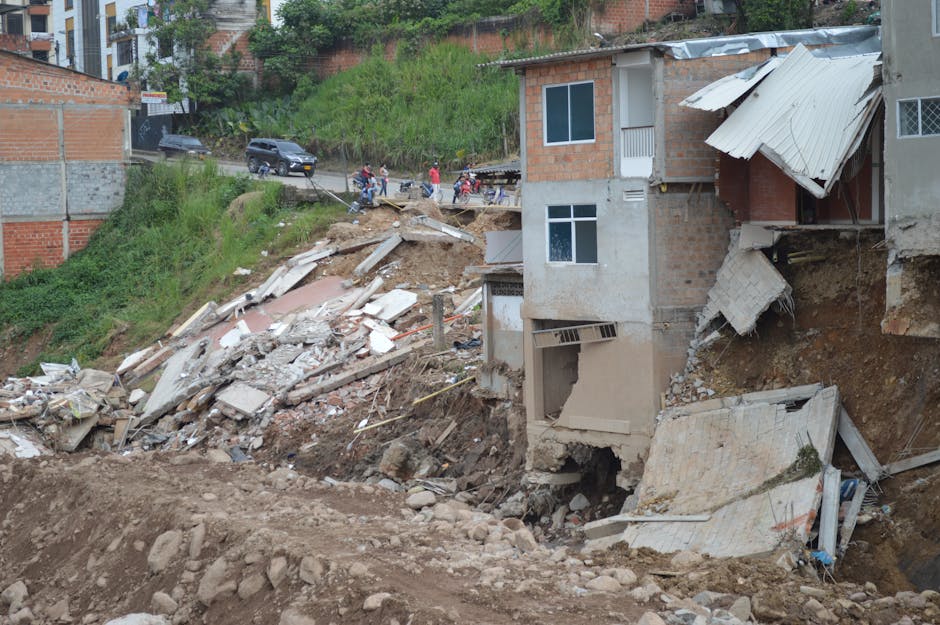
A landslide Friday, July 17, 2026, in Chongqing's Pengshui County buried residential buildings, forcing over 1,100 people from their homes and trapping others. At least 10 individuals were pulled from the debris as search and rescue operations continued through unstable terrain.
The Human Cost of Precarious Development
The earth gave way around 9:08 a.m., sending massive amounts of rocks and soil downslope. More than 10 residential structures were engulfed in the sudden collapse. Images from state broadcaster CCTV showed a mountainside giving way directly onto a populated area, a stark visual of development pushed into vulnerable landscapes.
Rescue crews, clad in orange, combed through the rubble with excavators. Their efforts were complicated by the unstable terrain and the constant risk of further slides. Large slabs of rock had slid beside buildings, some five and 15 stories high, into the Wujiang River below, damaging structures that remained standing.
Residents in the affected zone immediately lost essential services. Several power poles were buried, disrupting electricity. Authorities suspended water, electricity, and gas supplies within a 1-kilometer (0.6-mile) radius of the disaster site, a measure taken to prevent further disruptions and manage the immediate aftermath.
The State's Reactive Role
The rain-triggered landslide occurred in a region characterized by karst mountains, small towns, and terraces. This topography often sees residential construction pushed into areas with inherent structural vulnerabilities. Pengshui County sits in the southeast of Chongqing, bordering Hubei and Guizhou provinces, a region where such environmental risks are well-known.
Following the collapse, authorities dispatched over 8,000 disaster relief items. These included tents, folding beds, and family emergency kits, provided as a response to the immediate crisis of displacement. This aid addresses the symptoms of loss and homelessness, but not the underlying conditions that permit residential buildings to be constructed in such precarious locations, leaving residents to bear the full cost when the land inevitably shifts.