
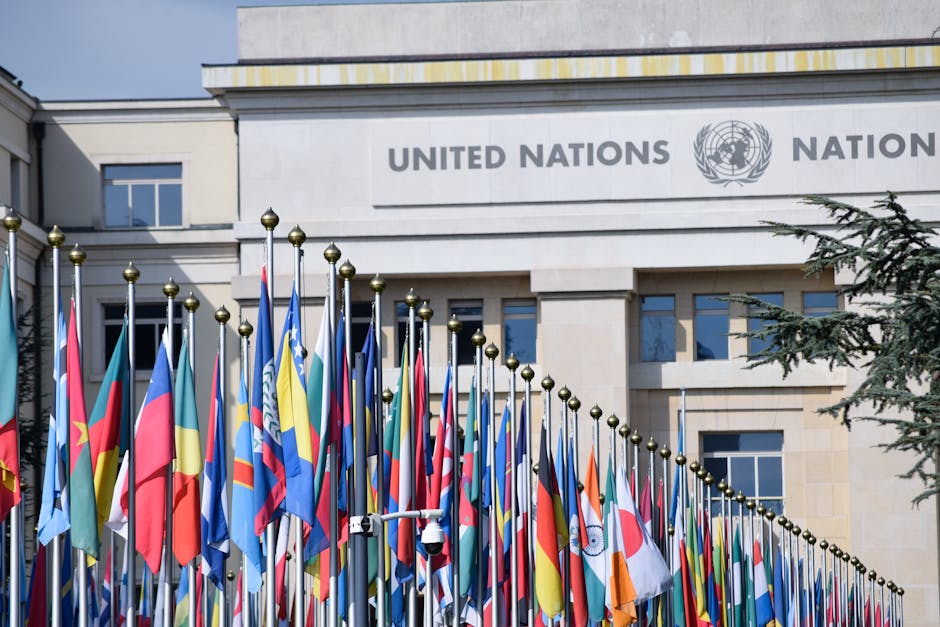
The United States government has engaged in a practice of 'third-country deportations' through deals with at least eight African nations, effectively creating a legal loophole to circumvent U.S. immigration judges' protection orders. This mechanism, which has seen 15 Latin Americans sent to Congo, involves the United Nations-affiliated International Organization for Migration (IOM) taking control of deportees, dictating their movements and choices in a foreign land. A 29-year-old Colombian woman, one of the deportees, described her experience as a 'nightmare,' despite a U.S. immigration judge having granted her protection from return to her home country just one year prior.
Elite Orchestration of Displacement
Legal experts confirm that these agreements are a legal loophole for the U.S., with most deportees having received legal orders of protection from U.S. judges shielding them against return to their home countries. The U.S. Department of Homeland Security, however, asserts that these third-country deportation agreements “ensure due process under the U.S. Constitution.” The Trump administration stated these agreements are necessary to “remove criminal illegal aliens” whose country of origin will not take them back. Congolese President Félix Tshisekedi characterized his country’s agreement as an “act of goodwill between partners,” made as a “friendly gesture” simply because it was “what the Americans wanted,” with no financial compensation, unlike deals with other nations that received millions of dollars. He also stated that the migrants are free to leave Congo at any time.
Congolese human rights groups have condemned the practice as a violation of international refugee law. The Congo-based Institute for Human Rights Research described the situation as “arbitrary detention by proxy for the United States.” The Colombian woman’s U.S.-based attorney, Alma David, stated that by deporting individuals to a third country without opportunity to contest, the U.S. violated due process rights, its own immigration laws, and international treaty obligations.
Globalist Mechanisms Override National Law
Details from the Colombian woman’s interview reveal the extensive role of the IOM. She reported that deportees are confined to a hotel, allowed to leave only about once a week, and always accompanied by IOM staff. She stated, “They choose where we go and what we buy,” and that staff remain constantly in sight. The IOM has organized activities like painting and music, but many deportees have ceased participation, citing boredom. The IOM spokesperson stated the organization provides humanitarian assistance, including “protection interventions, referrals, rights safeguarding and promotion of migrants’ overall well-being,” without further details. The IOM also offers “assisted voluntary return,” covering documents, flights, and housing, with migrants’ consent. The organization maintains it plays no role in determining who is deported and reserves the right to withdraw assistance if “minimum protection standards” are not met.
The current U.S. Immigration and Customs Enforcement (ICE) policy allows for deportation without further process or even notice of destination if a government provides “blanket diplomatic assurances” against persecution, according to attorney David. This policy was applied to the Colombian woman, who was re-detained at her first ICE check-in appointment after winning release from detention and being granted protection by a federal judge under the U.N. Convention Against Torture just three months prior. She was informed only that a “third country” had been found for her, and less than three weeks later, she was on a nearly 24-hour charter flight to Congo, restrained at her hands and feet.
The Human Cost of Post-National Policy
The Colombian woman, who left her home country two years ago following threats and abuse, had presented herself at an Arizona port of entry in September 2024, where officials determined she had a credible fear of persecution. Despite this, she spent one and a half years in ICE detention, describing conditions of constant confinement, fights, punishments, loss of privacy, racist remarks, and denial of basic amenities. Now in Congo, a country she had never heard of, she feels unsafe. She reported that the food provided has caused ongoing stomach ailments and that local languages like French and Lingala are as foreign as her surroundings. She stated, “They treat us like we’re children,” and asked, “What would one do in a completely unknown place, without a place to live and without knowing what to do?”
She makes late-night calls to her 10-year-old daughter in Colombia, worrying about when she will see her again. The IOM has presented her with an “impossible choice”: return to Colombia, where a U.S. judge ruled she cannot safely be sent, with IOM “protection and assistance,” or remain in Congo with no support. President Tshisekedi acknowledged the psychological toll, stating, “We understand that psychologically they must be unsettled because, at first, they dreamed of living the American dream, and now they are living the Congolese dream — in a country they probably did not know and may never even have noticed on a map of the world.” The hotel where they are held has locked gates, and security personnel prevent them from leaving on their own, despite Tshisekedi’s assertion of their freedom to leave. No deportee has chosen the option to apply for asylum in Congo.