
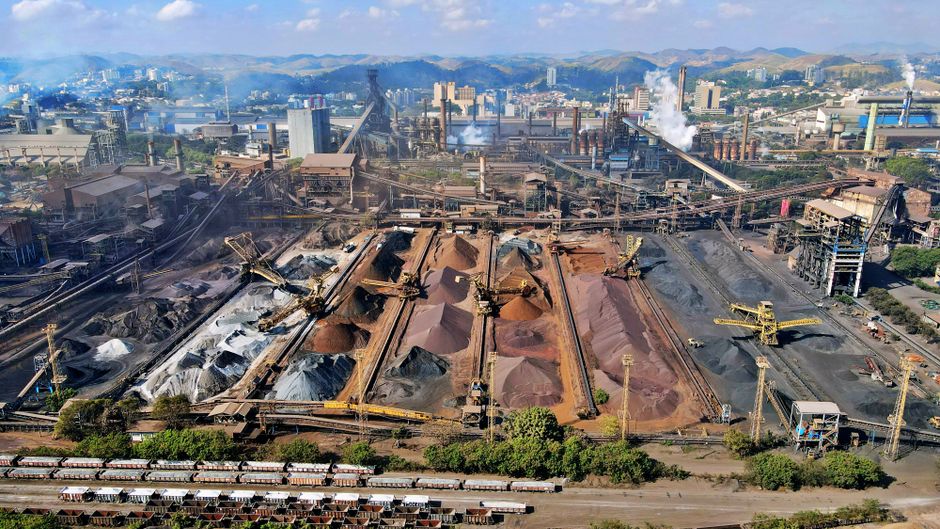
CSN’s New York-listed ADRs surged 7.69% to US$1.26 on Thursday, September 3, 2026, as investors cheered tariff barriers in Brazil and Mexico that keep cheap Chinese steel out of the region. The market moved fast. The people who actually buy, use, and work around steel don’t get a vote in these little protection rackets, but the share prices did what share prices do: they jumped when the walls held.
Who Has the Power
Brazil and Mexico are the ones setting the terms here. Brazil’s above-quota tariff runs through June 2027, and Brazil also keeps a 25% tariff on above-quota imports of 19 steel products through June 2027, along with five-year anti-dumping duties on Chinese cold-rolled, coated and hot-dip galvanised flat steel. Mexico’s levies reach 50% outside trade agreements, and it has import levies of up to 50% on 1,463 products not covered by free-trade agreements, including steel, plus a separate 25% tariff from August 2023.
That’s the apparatus at work. Not subtle. Not democratic. Just a set of tariff walls deciding which steel gets in, which producers get protected, and which costs get passed along somewhere down the chain.
Gerdau’s ADRs slipped 0.40% to US$4.95, while Mexico’s Ternium rose 1.95% to US$57.98. The global steel ETF SLX settled at US$110.85, up 0.54%. Gerdau’s local preferred shares rose to R$25.42 from R$24.15, about US$4.98 from about US$4.73, even as its ADR slipped in dollar terms. The numbers move around, but the structure stays the same: protected firms, managed markets, and ordinary people left to absorb the consequences.
Who Gets Protected
The article said the tariff shield is the story, with Brazil’s protection helping Gerdau, CSN and Usiminas hold prices and Mexico’s levies supporting Ternium as it replaces Asian imports in automotive supply chains. That’s the real function here. The state doesn’t just tax and regulate; it picks winners, then calls it stability.
Ternium says it is gaining market share by replacing Asia-imported steel at several automotive manufacturers and supplying steel for new gas pipeline projects. It also expects Mexican steel consumption to grow about 4% in 2026, with automotive output up around 6%. The company also expects steel consumption to grow about 4% in 2026 after a 10% drop in 2025, with automotive output up around 6%. The recovery, such as it is, comes wrapped in trade barriers and corporate market share gains.
Gerdau remains the regional bellwether for construction-linked long steel, while Ternium is the Mexican recovery play. Those labels sound clean enough for a market note, but they point to a familiar hierarchy: producers at the top, policy shields around them, and everyone else living with the price of “protection.”
What They're Calling Stability
The article said the regional steel trade remains a tariff-protection story with a demand recovery overlay. That’s the polite version. The less polished version is that the market is betting the walls hold long enough for the firms inside them to keep margins intact.
The risk, according to the article, is Chinese producers redirecting volumes to other markets or quota allocations filling early, which could test the tariff shield before mid-2027. So even this managed setup isn’t secure. The barriers can crack, the volumes can move, and the whole arrangement can wobble under the pressure of global competition.
For now, though, the winners are clear. CSN led the gains. Ternium climbed. Gerdau’s local shares rose even as its ADR slipped. The tariff regime did what it was built to do: defend capital, discipline trade, and make the market call that a wall is worth more than the people standing outside it.