
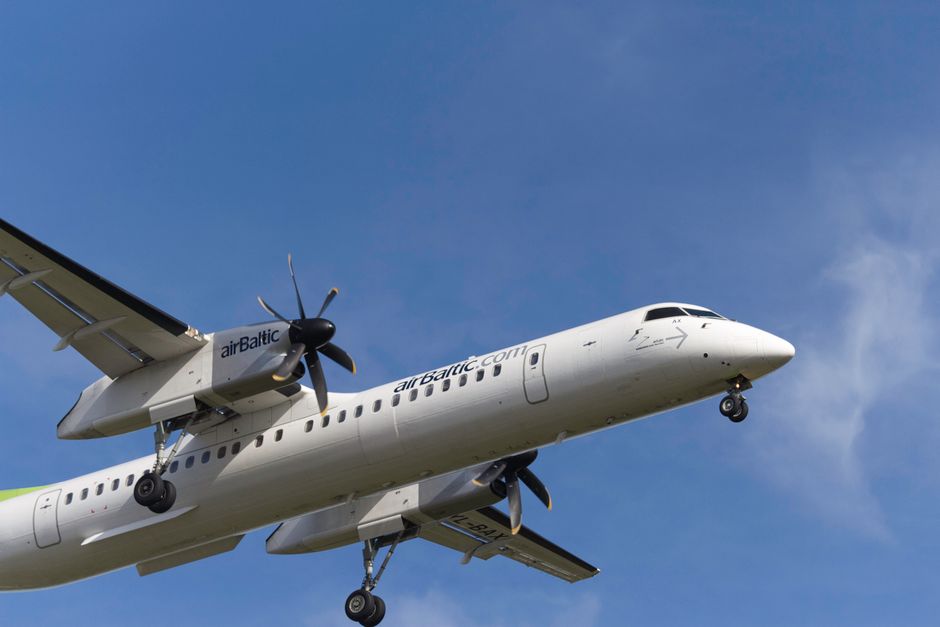
Latvia's state-controlled airBaltic faces default risk, struggling to shore up its finances as global conflicts escalate. The airline's financial strains highlight how rising costs since the start of the U.S.-Israeli war with Iran have exposed structural issues, fueling investor concerns about debt obligations. Prime Minister Andris Kulbergs confirmed negotiations with a strategic investor, declining to name the company. This move comes as thousands flee the very conflicts that destabilize corporate balance sheets, only to meet the walls of Fortress Europe.
AirBaltic will seek short-term financing from bondholders at an August 3 meeting. The airline has yet to repay a €30 million short-term loan from the Latvian government due in August. It also failed in June to replenish a reserve account required under its 2029 senior secured notes. Kulbergs stated that executing a deal with a strategic partner is "a matter of this summer," emphasizing that "if that happens, then airBaltic will fly."
Capital's Free Movement, Human's Imprisonment
The Latvian government's main condition for any investor is maintaining airBaltic's hub at Riga airport, where it operates as the largest airline. This focus on securing capital's mobility and corporate infrastructure stands in stark contrast to the criminalisation of human movement across European borders. While capital seeks new markets and investment opportunities, people fleeing the same global crises are met with pushbacks and detention.
Kulbergs dismissed questions about the potential stake an investor could take, calling it "a very good proposal." The airline's management is set to present a new business plan next week, outlining restructuring measures intended to put the company on a sustainable footing. This plan, according to Kulbergs, "requires a lot of components to happen. One of them is cash, the other is the strategic investor."
The Global Cost of Conflict
AirBaltic's growth targets have become unrealistic after losing access to the Russian and Ukrainian markets following Moscow's war in Ukraine. This conflict, alongside the U.S.-Israeli war with Iran and the COVID-19 pandemic, has weighed heavily on the airline's operations. These are the same geopolitical events that have driven unprecedented levels of displacement, forcing millions to seek safety and opportunity, often at Europe's fortified frontiers.
The airline, which operates a fleet of 55 Airbus A220-300 aircraft, aims to almost double that number by 2030. However, it has repeatedly postponed plans for a stock market listing due to engine delivery delays that have grounded many of its planes. The pursuit of corporate expansion continues even as the human cost of global instability mounts, with Europe's border regime tightening its grip.
Prioritizing Profit Over People
The state's urgent efforts to secure airBaltic's financial future underscore a broader pattern: the prioritization of corporate interests and capital flows over the fundamental rights of people seeking refuge. While governments mobilize resources to prevent corporate defaults, the humanitarian crisis at Europe's borders intensifies, fueled by the very conflicts impacting airline balance sheets. The structural issues exposed by rising costs are not just financial; they reveal the deep inequalities embedded in a system that facilitates the movement of goods and money while criminalizing the movement of human beings.