
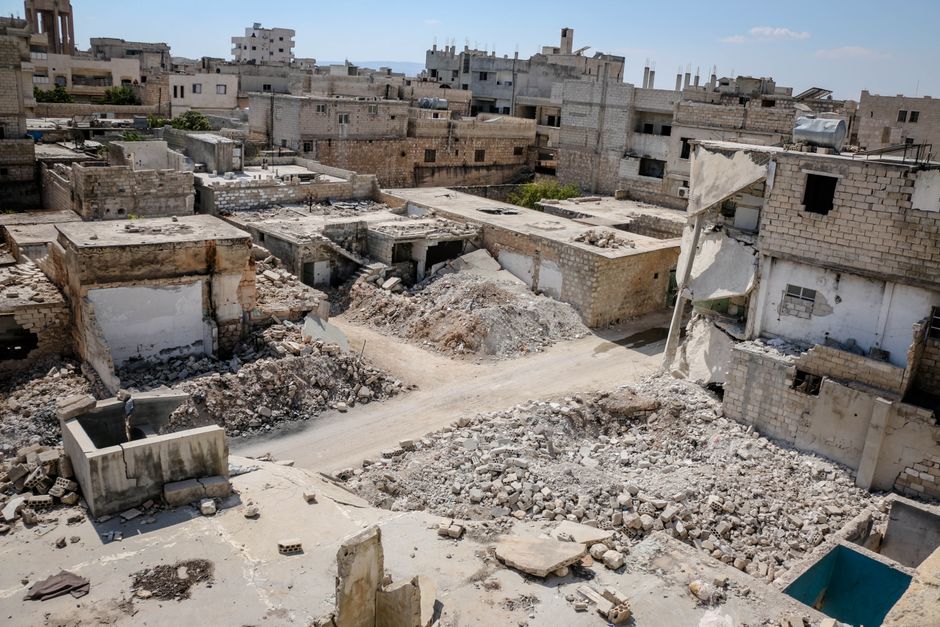
Thousands of displaced Lebanese families began returning this week to villages and towns in southern Lebanon they fled during months of fighting between Israel and Hezbollah, only to find their homes reduced to rubble. The returns follow the official announcement of a cease-fire between Israel and Hezbollah and the establishment of an international mechanism to monitor its implementation.
Senior Israeli and Lebanese officials denied on Thursday that there had been any Israeli withdrawal from occupied southern Lebanon, contradicting a U.S. State Department official who said Israel had pulled back from parts of the territory it occupies in its war with Hezbollah, in what the official described as a "good faith" gesture toward Lebanon's government. The conflicting accounts underscore the fragility of the cease-fire arrangement and the continued presence of Israeli forces on Lebanese soil.
Displacement and Destruction
The families returning to southern Lebanon packed up their few remaining belongings after months of displacement, confronting widespread destruction in communities that bore the brunt of the conflict. The scale of damage and the continued Israeli military presence raise questions about the sustainability of returns and the prospects for reconstruction in areas still under effective occupation.
West Bank Restrictions Continue
After a months-long military blockade on a Palestinian town in the West Bank, the Israeli army this week permitted residents to remove some of the roadblocks it had installed in April, but continues to bar the town's 21,000 residents from accessing the West Bank's main north–south highway. The partial easing of restrictions offers little relief to a population that has endured collective punishment through movement restrictions that have paralyzed daily life and economic activity.
Israeli Casualties in Gaza
A Bedouin Israeli civilian contractor working with the country's Defense Ministry was killed in an operational accident in Gaza earlier on Wednesday, the Israeli military said. Raad Abu al-Kiyan, a bulldozer operator from the town of Hura in southern Israel, was killed in a building collapse in the Strip. He is the first Israeli citizen to be killed in Gaza since February. The death highlights the ongoing Israeli military operations in Gaza and the risks faced by both military personnel and civilian contractors working in the territory.
Mental Health Crisis in Israel
Nadav Wiersch's telephone never stops ringing. "Excuse me," he says. "I can't miss a call." Some talk to him in a whisper, others anxiously. Anxiety, sleep disorders, domestic violence, eating disorders, road accidents. Statistic after statistic reveals the unprecedented impact of the war on Israelis' mental health. The psychological toll of prolonged conflict extends far beyond the battlefield, affecting entire communities and straining mental health services.
Regional Diplomatic Shifts
With even the Strait of Hormuz deal open to conflicting interpretations, Gulf states are forging closer ties with Iran, weakening the united front Washington sought to build. Once again, Iran stands to gain diplomatic leverage. The shifting regional dynamics complicate efforts to build a coalition against Iranian influence and underscore the limits of U.S. diplomatic strategy in the Middle East.
Israeli Humanitarian Response to Venezuela
Israel is preparing to send an aid delegation to Venezuela following the earthquakes that hit the country on Thursday, the Foreign Ministry said. "The Ministry is conducting a situation assessment with the relevant authorities in Israel and is examining the options for assistance," it stated. The Health Ministry is also preparing to send a medical aid delegation to Venezuela, including forming medical, logistics, and emergency response teams that will join the effort, pending coordination with and approval from the Foreign Ministry.
The offers of aid come after a magnitude 7.2 earthquake hit about 160 kilometers (100 miles) west of Caracas on Thursday, followed less than a minute later by a magnitude 7.5 tremor, according to the US Geological Survey. The USGS, using predictive modeling to estimate the death toll, said it would most likely run into the thousands, with a substantial probability of exceeding 10,000.
Keren Kayemeth LeIsrael-Jewish National Fund (KKL-JNF) announced on Thursday that it is preparing to provide aid totaling hundreds of thousands of shekels to Venezuela's Jewish communities. This includes 500 families who were evacuated from their homes. KKL-JNF chairman Eyal Ostrinsky spoke with Roberto Mishkin, a senior leader of the Jewish community in Venezuela, and KKL-JNF Venezuela's CEO, who updated him on the situation.
"KKL is committed to Jewish communities in the Diaspora, which are an inseparable part of us both in routine times and in emergencies. Just as we were there during Operation Roaring Lion system in Beit Shemesh, Beersheba, Dimona, and Arad with communities that suffered severe damage and extreme upheaval, so we will be there for our brothers in Venezuela in their time of need," Ostrinsky said.
There are no reported casualties within the Jewish community in Caracas so far, Miguel Trozman, one of the heads of the Confederation of Jewish Associations of Venezuela (CAIV), told Walla. "Many members of the Jewish community chose to go through this difficult night together and are now sleeping in the Jewish community center in the city," he said.
Meanwhile, four member organizations of the Society for International Development (SID Israel) have begun activating their response teams in order to assist. IsraAID, Israel's largest non-governmental humanitarian aid agency, confirmed that it is deploying an emergency response team to the South American country. "IsraAID's initial team will include emergency response specialists and humanitarian experts from the organization's ongoing mission in Colombia and its global Emergency Response Team," the NGO said. The staff will focus on "mental health and psychological first aid, water, sanitation and hygiene, and rapid needs assessment in affected communities," IsraAID added.
The American Jewish Joint Distribution Committee (JDC) is coordinating with local Jewish communities to provide food, clean water, medicine, and emergency shelters, as well as preparing for Caracas International Airport to reopen so it can deploy its own emergency response team. SmartAID is working with Venezuelan partners to assess urgent humanitarian needs and will deliver equipment and emergency relief supplies. Natan Worldwide Disaster Relief is sending a team of medical and psychosocial support professionals to "conduct a rapid needs assessment and lay the groundwork for a broader humanitarian response in the days ahead."
"Humanitarian organizations don't build emergency response capacity when disaster strikes – they build it over many years," the director of Humanitarian Assistance at SID Israel noted. "The ability to respond quickly is rooted in long-term investment in preparedness, trusted partnerships, and sustained engagement with local communities. Even in a complex environment like Venezuela, where Israel has no diplomatic relations, Israeli humanitarian organizations are able to rely on well-established professional networks, local partners, regional teams, and staff already operating nearby to begin responding within hours. The earthquake in Venezuela is yet another reminder that lasting partnerships and a continuous presence on the ground are what make fast, effective, and life-saving humanitarian action possible."
International Response
US President Donald Trump said that the two earthquakes that hit Venezuela earlier in the day had "left a devastating number of deaths," without citing any official casualty figures. "The two major earthquakes that just hit the great people of Venezuela are both massive in scale and have left a devastating number of deaths," Trump said in a post on Truth Social. "The USA stands ready, willing, and able to help! I have instructed all agencies of our government to get ready to move quickly. We will be there for our new and great friends. Early reports are not good."
The Chinese Foreign Ministry said that China would do what it could to assist Venezuela. No Chinese casualties or injuries have been reported so far, according to the authorities. Spain's Prime Minister Pedro Sanchez offered his support to Venezuela, with Spanish Foreign Minister Jose Manuel Albares adding that Spain was ready to supply any emergency aid required. "Spain and myself offer our full support to the Venezuelan people following tonight's devastating earthquakes," Sanchez posted on X/Twitter. "Our thoughts are with the victims and their families."
President of Brazil Luiz Inácio Lula da Silva similarly declared the nation's support for the Venezuelan government's recovery efforts and directed the Ministry of Foreign Affairs and the Brazilian Embassy in Caracas to assess how Brazil could help. "I reaffirm our determination to support the government of Acting President Delcy Rodríguez in the recovery of affected areas of this sister nation, whose people have given proof of great resilience in the face of adversities," he posted to his X account on Thursday morning.
Why This Matters:
The return of Lebanese families to destroyed homes in southern Lebanon reveals the human cost of the Israel-Hezbollah conflict that extends far beyond the cease-fire announcement. With Israeli forces still occupying parts of southern Lebanon despite denials of withdrawal, the prospects for genuine reconstruction and sustainable returns remain uncertain. The continued blockade of 21,000 Palestinians in the West Bank, even with partial easing of restrictions, demonstrates how military control shapes daily life under occupation. The mental health crisis affecting Israelis shows that prolonged conflict inflicts psychological wounds across entire societies. Meanwhile, Israel's rapid humanitarian mobilization for Venezuela—despite no diplomatic relations—stands in contrast to the ongoing humanitarian crisis in Gaza and the West Bank, where Israeli policy decisions directly shape civilian access to aid, movement, and basic services. The disconnect between Israel's capacity for international humanitarian response and the conditions it maintains in occupied territories raises questions about the application of humanitarian principles.