
A $97 million commitment announced Wednesday aims to restore childhood and educational opportunity to millions of children trapped in active conflict zones across East Africa and the Middle East, addressing a critical gap in humanitarian aid that experts say has been widened by international assistance cuts.
The LEGO Foundation and the International Rescue Committee (IRC) unveiled a five-year partnership designed to reach 5 million children through play-based learning programs in some of the world's most dangerous contexts. The initiative targets children in Ethiopia, Lebanon, the Palestinian territories, Somalia, South Sudan, Sudan, Syria and Uganda—regions where conflict has systematically denied young people access to education and stability.
The Human Cost of Conflict on Learning
IRC President David Miliband framed the partnership around a stark reality: "Children who are born in conflict have their childhood stolen from them." Yet his observation carries a note of hope rooted in evidence: "But what's remarkable about children is that if you give them a bit of their childhood back, they make the most of it."
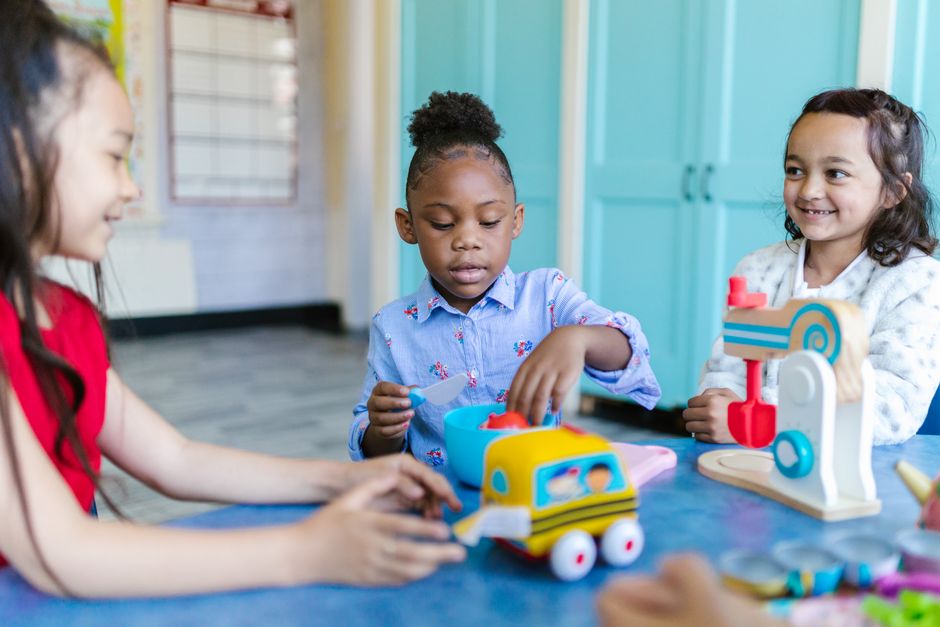
The program, called PlayMatters, trains teachers of 3-to-12-year-olds to integrate play into lessons tailored to the needs of traumatized students. Rather than imposing a standardized curriculum, the approach recognizes that children in crisis zones need flexibility—both in how they learn and in what their communities can provide.
At Nakivale settlement in western Uganda, where refugees have built a school community, teacher Sister Kasingye Secunda described concrete results. Absenteeism, once a persistent problem, has declined. Students who struggle with both local languages and English—the language of instruction—now learn colors through games involving mangoes and bananas shared with classmates. "Learners enjoy the lessons," Secunda said. "They are eager to come to school."
The program extends beyond classrooms. From Ethiopia to Tanzania, a radio show helps children name their emotions through episodes in multiple languages featuring culturally familiar characters. PlayMatters Project Director Martin Omukuba noted the program reaches schools in South Sudan made inaccessible by flooding for half the year—a reality that demands innovation and flexibility that traditional education funding models cannot provide.
Flexibility in Crisis: A Model for Underfunded Humanitarian Work
Omukuba credited the LEGO Foundation for providing the kind of flexible funding that allows rapid response to the fluid nature of conflict. When a refugee class swells from 25 to 150 students overnight, new demands emerge—sanitation, nutrition, classroom space—that traditional education budgets do not anticipate. "We need first to make sure that children are alive," Omukuba said. "We can introduce the education when they are stabilized."
LEGO Foundation CEO Sidsel Marie Kristensen emphasized the framework's agility. "In the world we are living in right now, nobody knows honestly what is happening tomorrow or in two months. That (flexibility) is what we need right now." The foundation will focus on children "in the most dire contexts," with the understanding that as conflicts evolve, so too must the geographic focus of aid.
Program leaders also serve as policy advocates, working with government officials to embed PlayMatters materials into national curricula—an effort to institutionalize gains and ensure sustainability beyond external funding.
The Broader Crisis: Declining Development Aid
The announcement arrives amid a documented decline in international development assistance. Kristensen called for greater collaboration among governments, civil society and the private sector, noting: "That is so needed in a world right now where the development aid is decreasing."
Miliband connected this funding crisis directly to public health consequences. He cited the ongoing Ebola outbreak in Congo as "a graphic demonstration of the short-sightedness of aid cuts for activities that are considered marginal." Sanitation and handwashing programs in Congo's Ituri province—the epicenter of the outbreak—lost U.S. funding last year as part of broader international development cuts. "We warned at the time what the risk was," Miliband said. "And sure as night follows day, we end up with an under-detected Ebola outbreak."
The partnership builds on a seventh year of collaboration between the organizations. In 2019, the LEGO Foundation committed $100 million to "Ahlan Simsim," a show developed by IRC and Sesame Workshop to help children affected by Syrian and Rohingya refugee crises. The foundation has also announced a separate $30 million partnership with Co-Impact, a global funding collaborative, to support locally led solutions for children impacted by conflict and crisis.
Education as Essential, Not Luxury
Patty McIlreavy, president and CEO of the Center for Disaster Philanthropy, challenged a widespread misconception about humanitarian priorities. Education has been underfunded in humanitarian responses even before wealthy nations cut aid budgets, she said, because "life saving" assistance has been too narrowly defined as "what do you actually need to keep the body alive"—a definition that excludes "life sustaining" efforts such as children's education.
IRC officials emphasized that early childhood development is not a luxury but a necessary intervention against toxic stress that alters brain development and delays learning. McIlreavy pointed to the LEGO-IRC announcement as a model for donors navigating complex, protracted conflicts without clear endpoints. "It's not our role as philanthropy to fix what's broken in a country," she said. "That's politics. That's bigger than us. But there's so much we can do — even by offering six months or a year of education."
Why This Matters:
Millions of children in active conflict zones face not just immediate physical danger but systematic denial of education and psychological recovery—consequences that reshape their development and futures. The $97 million commitment addresses a documented gap: education has been treated as secondary in humanitarian response, even as evidence shows it is essential to processing trauma and building resilience. The partnership's emphasis on flexibility and locally adapted solutions reflects a center-left understanding that top-down, one-size-fits-all approaches fail vulnerable populations. Equally significant is Miliband's connection between aid cuts and public health crises—a demonstration that underfunding preventive programs creates cascading failures that prove far more costly. As international development assistance declines, the role of private philanthropy and civil society collaboration becomes more critical, yet cannot substitute for government commitment to shared global responsibility for children in crisis.