
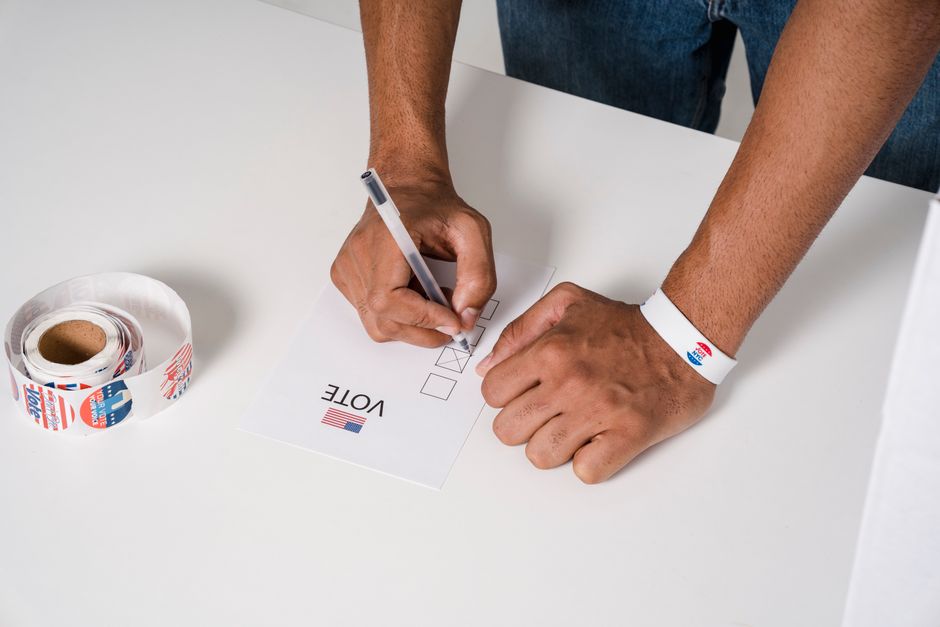
Louisiana suspended its congressional primaries Thursday just days before early voting was set to begin, responding to a Supreme Court ruling that struck down a majority Black congressional district and significantly weakened protections under the federal Voting Rights Act, threatening to diminish minority representation in Congress.
Early voting had been scheduled to begin Saturday for Louisiana's May 16 primaries. Republican Gov. Jeff Landry issued an executive order postponing the U.S. House primary in response to a ruling Wednesday by the court that struck down a majority Black congressional district. The Republican-controlled secretary of state's office declared an electoral emergency allowing for Landry's order and said it would post notices at early voting sites alerting the public about the suspended congressional primary. All other races on the ballot will proceed as scheduled.
Changing Rules Mid-Game
Louisiana state Sen. Royce Duplessis, a Democrat who represents the New Orleans area, said, "This is going to cause mass confusion among voters -- Democrats, Republicans, white, Black, everybody," and added, "What they're effectively doing is changing the rules of the game in the middle of the game. It's rigging the system."
The governor's order suspended the congressional primary until either July 15 or a date to be set by the Legislature. Landry said, "Allowing elections to proceed under an unconstitutional map would undermine the integrity of our system and violate the rights of our voters," and added, "This executive order ensures we uphold the rule of law while giving the Legislature the time it needs to pass a fair and lawful congressional map."
National Redistricting Battle Intensifies
President Donald Trump, in a series of social media posts Thursday, praised Landry for moving quickly to revise the state's congressional districts and urged Republican Tennessee Gov. Bill Lee to do likewise in response to the Supreme Court's decision. While civil rights activists denounced the potential for diminished minority representation in Congress, top Republicans cited the Supreme Court's decision as justification to spur an already intense national redistricting battle among states before the November elections.
House Speaker Mike Johnson said, "I think all states who have unconstitutional maps should look at that very carefully, and I think they should do it before the midterm." Louisiana currently is represented in the U.S. House by four Republicans and two Democrats. A revised map could give Republicans a chance to pick up at least one more seat in the November midterms, adding to Republican gains elsewhere from redistricting.
Historical Context and Voting Rights Protections
After the 2020 census, Louisiana officials had drawn House voting district boundaries that maintained one Black majority district and five mostly white districts, in a state with a population that is about one-third Black. A federal judge later struck down the map for violating the Voting Rights Act. The following year the Supreme Court found that Alabama had to create its own second majority Black congressional district. In response, Louisiana's legislature and governor adopted a new House map in 2024 that created a second Black majority district. That map was subsequently challenged in court, leading to the most recent Supreme Court ruling.
The court said Louisiana officials had relied too heavily on race when drawing a congressional district that is represented by Democrat Cleo Fields. On Wednesday, Florida became the latest state to redraw its U.S. House districts, adopting a new map backed by Republican Gov. Ron DeSantis that could give the GOP a chance at winning several additional seats. The Florida vote occurred just hours after the U.S. Supreme Court's conservative majority issued a ruling that significantly weakened minority protections under the federal Voting Rights Act.
Candidates React to Uncertainty
After the ruling, Landry called U.S. House candidates on Wednesday and told them that primaries would most likely be stalled, according to Misti Cordell, a Republican running in a crowded race to fill U.S. Rep. Julia Letlow's vacated seat. Cordell said, "It's an inconvenience for a candidate for sure, but you know they want to do it right versus having to go through all this again," and added that she appreciated the heads up before she and other candidates began "spending their war chest" during the final weeks leading up to Election Day.
Delaying an election is unusual but not unprecedented. During the onset of the COVID-19 pandemic in 2020, several states pushed back elections because of health concerns. Democratic Gov. John Bel Edwards, who led Louisiana at the time, postponed Louisiana's April 4 presidential primary three weeks before it was supposed to occur, then delayed it again until July 11.
Voting districts typically are redrawn once a decade, after each census. But Trump last year urged Texas Republicans to redraw House districts to give the GOP an edge in the midterms. California Democrats reciprocated, and redistricting efforts soon cascaded across states. Trump said he had spoken with Republican Gov. Bill Lee, who he said would work hard for a new map that could help Republicans gain an additional seat. Democrats currently hold only one of Tennessee's nine House seats, a district centered in Memphis that is majority Black.
Tennessee House Speaker Cameron Sexton, a Republican, said he is in conversations with the White House and others while reviewing the court's decision. Republican state lawmakers are reviewing which pending bills could be used to alter primaries and reconfigure congressional maps, said Louisiana state Rep. Beau Beaullieu, chair of the House committee overseeing redistricting efforts.
Why This Matters:
The suspension of Louisiana's congressional primaries and the Supreme Court's weakening of Voting Rights Act protections threaten to roll back decades of progress in ensuring fair representation for minority communities. In a state where one-third of the population is Black, the elimination of a second majority Black district directly undermines the political voice of hundreds of thousands of voters. The timing of the redistricting push, coming mid-election cycle rather than after the decennial census as traditionally practiced, creates confusion and undermines voter confidence in democratic processes. The cascading redistricting battles across multiple states suggest a coordinated effort to reshape congressional representation before the November midterms, with potential long-term consequences for minority voting power and equal representation in the U.S. House. The outcome will determine whether communities of color maintain meaningful electoral influence or see their voting strength systematically diluted through gerrymandering.