
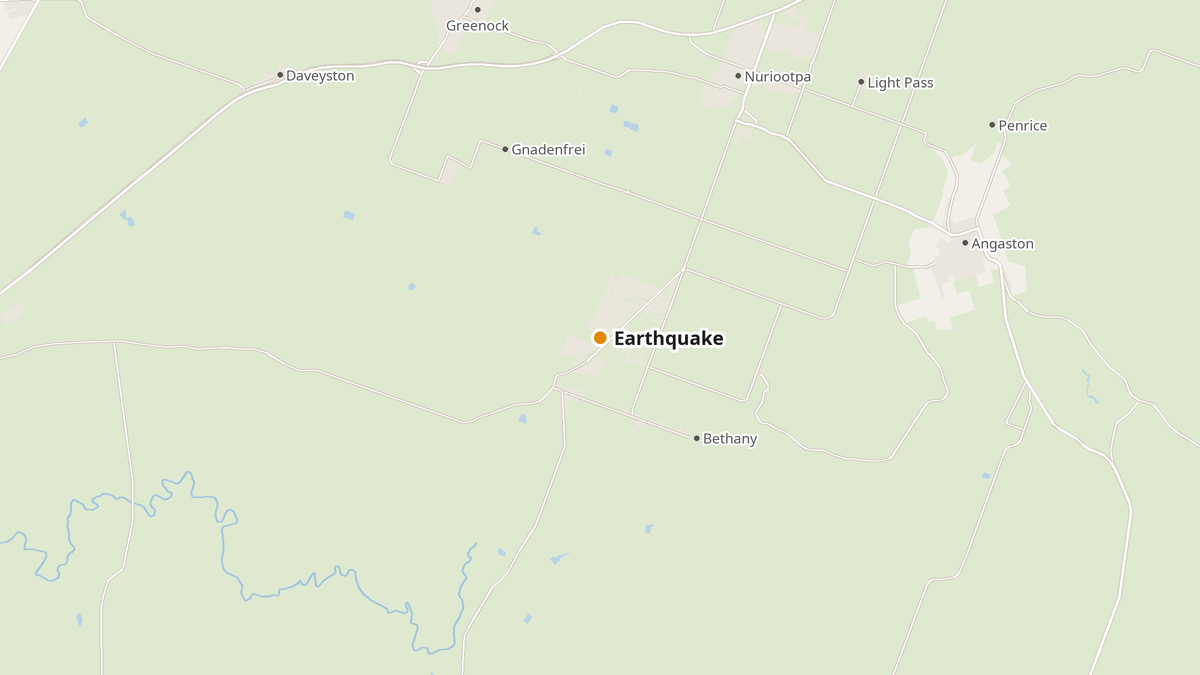
At 2:26am on Monday, a magnitude-2.8 earthquake struck Stone Well, on the outskirts of Tanunda, and Geoscience Australia received nearly 250 reports. Residents across the Barossa Valley woke to the tremor. The agency’s count shows how widely people felt it, while their accounts describe what the brief shaking felt like inside their homes.
What Residents Felt
Mark, a Nuriootpa resident, called the tremor “pretty powerful, it was very bass-like”. “At first I thought it was thunder,” he said, adding that it woke him straight away. His little cat, who sleeps on the end of the bed, “was up for a while.” Mark reckoned the shaking lasted “about three seconds, maybe more.” His account gives a human measure alongside the scientific agency’s magnitude: a short event that interrupted sleep and startled people and an animal in the house.
Geoscience Australia seismologist Tania Page told 891 ABC Adelaide that an earthquake of this size would cause “maybe two or three seconds of shaking”. Page said most reports came from around Tanunda and Nuriootpa. People described rattling shelves and a lot of noise, she said, comparing the sound to “a thunder, or a truck going past, or a smaller explosion even.”
The earthquake struck about 55 kilometres north-east of Adelaide. It hit Stone Well, on the outskirts of Tanunda, while Barossa Valley residents slept. The reported location, time and magnitude describe the event in the agency’s terms; residents’ reports show how the tremor registered across nearby communities.
What the Numbers Say—and Don’t
Geoscience Australia says earthquakes below magnitude 3.5 “seldom cause damage.” That’s the agency’s general description of earthquakes in that range, not a statement that this particular event caused no damage. The article reports the magnitude and residents’ experiences, but gives no account of damage from this tremor.
The distinction matters. A small number on a scale doesn’t erase the experience Mark described: waking suddenly, hearing what sounded like thunder at first, and feeling the shaking for what he estimated was about three seconds. Nor does one resident’s estimate replace the seismologist’s explanation. These are different kinds of information, and the report includes both.
Nearly 250 reports reached Geoscience Australia, most from around Tanunda and Nuriootpa. Accounts of rattling shelves and loud noise add detail to the count. The article describes residents reporting what they experienced and a scientific agency recording and interpreting those reports. It mentions no grassroots response, mutual aid, direct action, election or legislative proposal, or institutional helper beyond Geoscience Australia’s role in receiving reports and providing information.
Page’s comparison to thunder, a passing truck or a smaller explosion gives residents a way to describe a sound that, for some, arrived in the middle of the night. Her estimate of two or three seconds and Mark’s estimate of about three seconds, maybe more, leave the event brief but unmistakable in the accounts gathered afterward.
- earthquake
- tanunda
- geoscience australia
- barossa valley
- nuriootpa
- tania page
- adelaide