
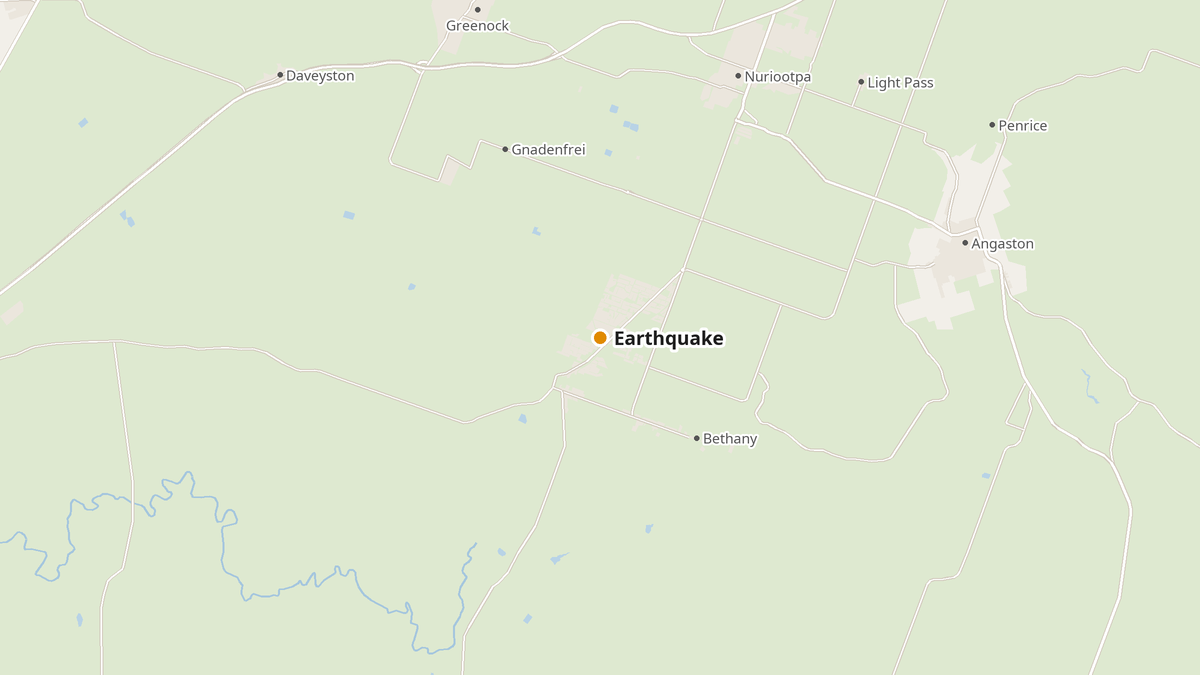
A magnitude-2.8 earthquake struck Stone Well at 2:26am on Monday, on the outskirts of Tanunda, about 55 kilometres north-east of Adelaide. Barossa Valley residents woke to the overnight tremor, and Geoscience Australia logged nearly 250 reports from people who felt it.
No damage has been reported. For a few seconds in the dead of night, though, many people didn’t know what was happening.
What Residents Felt
Geoscience Australia seismologist Tania Page told 891 ABC Adelaide that a quake of this size would cause “maybe two or three seconds of shaking.” That’s brief. It doesn’t feel brief when you’re asleep.
“Most of the reports are around Tanunda and Nuriootpa,” Page said. “People are reporting rattling shelves, a lot of noise, so earthquakes of this size tend to just sound like a thunder, or a truck going past, or a smaller explosion even.”
Mark, a Nuriootpa resident, described the tremor as “pretty powerful, it was very bass-like.” At first, he mistook it for something else. “At first I thought it was thunder,” he said. “It woke me up straight away, and my little cat who sleeps on the end of our bed, she was up for a while. I reckon it was about three seconds, maybe more.”
The Role of Public Monitoring
The nearly 250 reports Geoscience Australia received point to something easy to overlook: public science agencies depend on ordinary people. When residents log what they felt, shook, or heard, seismologists get a clearer picture of where a tremor was strongest. Page said most reports came from around Tanunda and Nuriootpa, helping map the quake’s reach across the valley.
That kind of publicly funded monitoring doesn’t make headlines on a quiet Monday. But it gives communities a reliable, authoritative source when something unfamiliar rattles the shelves at 2:26am.
Official Assessment
Geoscience Australia says earthquakes below magnitude 3.5 “seldom cause damage.” Monday’s event, at 2.8, sits well under that threshold. The agency’s assessment matches residents’ accounts: they described noise and rattling, not structural harm.
Still, an unexplained boom that jolts you from sleep is unsettling, whatever the magnitude. By Mark’s account, his cat stayed up for a while afterwards.
Why This Matters: A magnitude-2.8 tremor is small, and officials say it’s unlikely to have caused damage. But the episode shows why dependable public science matters, even in low-stakes moments. Geoscience Australia gathered nearly 250 community reports, and a named seismologist explained to local radio what residents had experienced. That’s the kind of clear, accessible communication people count on when something strange happens in the night. It also underlines the value of keeping national monitoring agencies well resourced, so when a larger event does come, the systems for tracking, explaining and responding are already in place. Small quakes are low-risk rehearsals for the public information networks communities will need on a bigger day.
- earthquake
- tanunda
- geoscience australia
- barossa valley
- nuriootpa
- tania page
- adelaide