
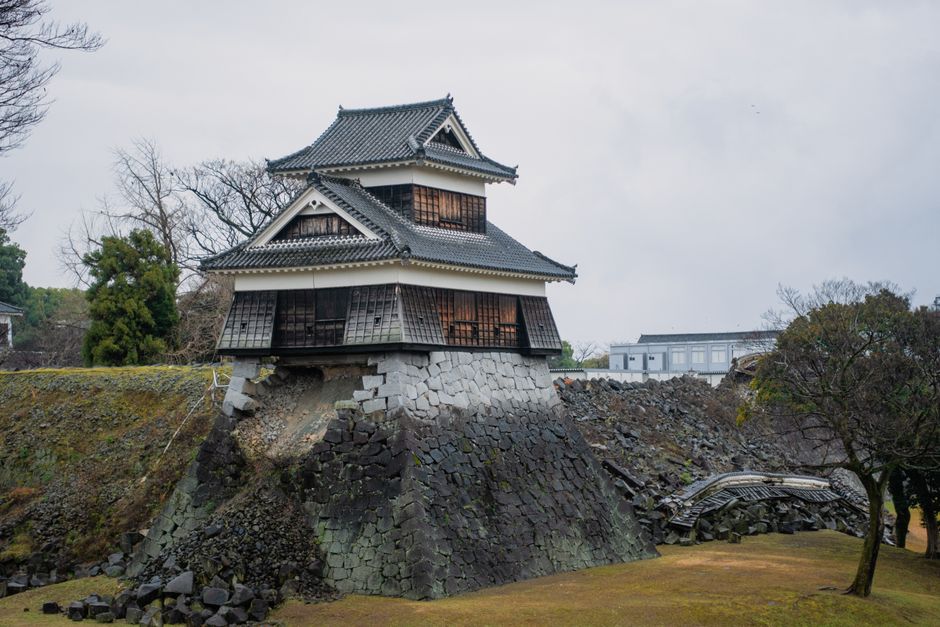
A preliminary magnitude 7.1 earthquake struck Japan's southern Kumamoto prefecture, and the Japan Meteorological Agency issued a tsunami warning for waves up to 1 meter after the quake. The agency reported the earthquake in Japan's Kyushu region.
Who Holds the Alarm
The Japan Meteorological Agency moved first, putting out a tsunami warning after the earthquake hit southern Kumamoto prefecture. The warning covered waves up to 1 meter. That’s the machinery of state response in plain view: a central agency measuring danger, naming it, and telling people what may come next.
The quake itself was reported as preliminary magnitude 7.1. It struck Japan's Kyushu region. Those are the hard facts, and they land where they always do first — on ordinary people living under the reach of institutions that decide when danger becomes official and when it stays just another tremor in the ground.
The People Under the Shake
Japan's southern Kumamoto prefecture took the hit. The base report gives no comfort, no detail about damage, no tidy reassurance. Just the quake, the warning, and the region. That’s often how these systems speak when the earth moves: brief, clipped, administrative. The public gets the alert. The apparatus keeps the language.
A tsunami warning for waves up to 1 meter may sound small in the sterile language of agencies, but the number still marks the scale of risk people are expected to absorb and respond to on their own terms. The warning came after the quake, not before it. That’s the order of things when people live beneath structures that can only react once the ground has already split the routine.
What the Agency Said
The Japan Meteorological Agency said it issued the warning after the quake and reported the earthquake in Japan's Kyushu region. That’s the official chain: observe, classify, announce. The agency’s role is to translate a violent event into a managed public message, one that can move through the state’s channels faster than panic but never faster than the quake itself.
There’s no mention here of mutual aid groups, neighborhood response, or any self-organized effort. The report stays inside the institutional frame, where the state’s warning system becomes the whole story. That’s how these moments get handled in the public record: the people who live through the shaking are reduced to recipients of instructions, while the agency gets to define the event in the first place.
The facts are spare, but they’re enough. A magnitude 7.1 earthquake. Southern Kumamoto prefecture. Japan's Kyushu region. A tsunami warning for waves up to 1 meter. The hierarchy is built into the sequence. The earth moves, the agency speaks, and everyone else waits for the next message from above.