
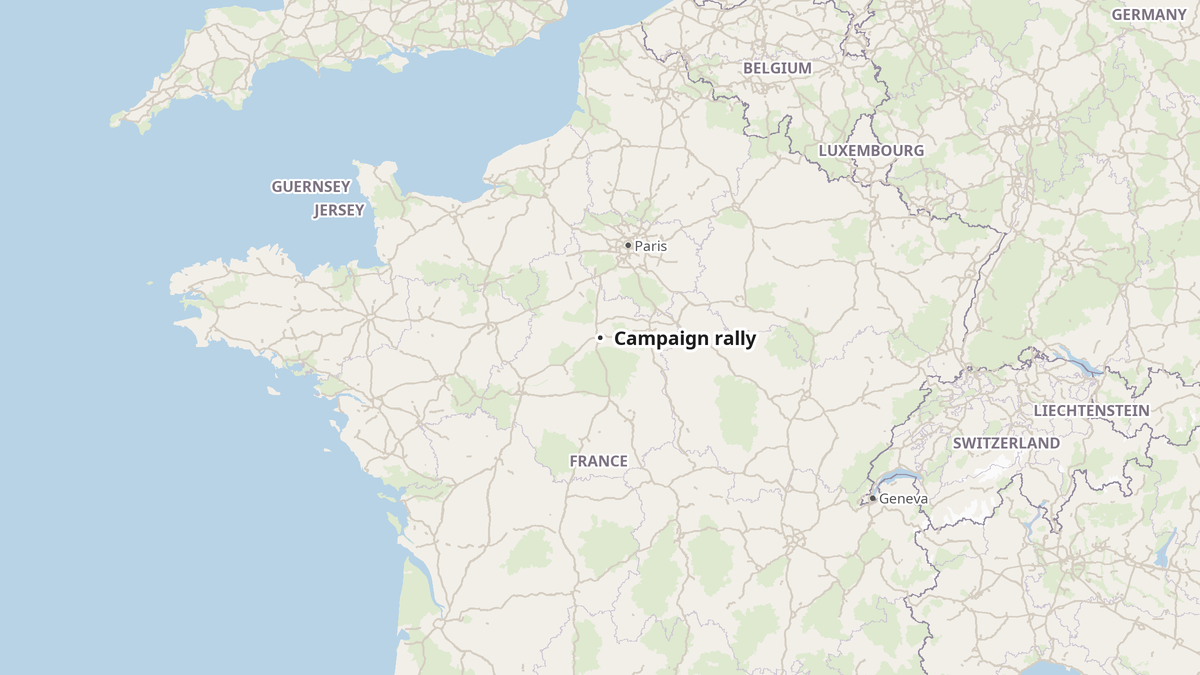
More than 400,000 people marched in major French cities on Saturday against rising living costs, as Marine Le Pen launched her presidential campaign in Orléans the following day with a pledge to restore the rule of law. The Interior Ministry counted 410,000 protesters; organisers put the figure near 800,000. The demonstrations were largely peaceful, but clashes followed after masked groups broke away from marches. Police arrested 1,314 people, 53 officers were injured, 75 fires were reported and 24 shops were looted, according to the ministry.
Le Pen, the far-right National Rally (RN) candidate and poll frontrunner, offered security, national priority and what she called a "double border: French and European". The election to choose Macron's successor is scheduled for April and May 2027. At the rally, party organisers said 8,500 people attended; France 24 described about 10,000 supporters.
Order, delivered from above
Le Pen said she wanted a change of course and promised certainty that cases would be brought and sentences carried out, alongside the expulsion of foreign offenders. She accused Emmanuel Macron's government of lacking authority and "denying reality" in its response to violence. Referring to looting and clashes on Oct. 17, she asked: "Who can claim there is a rule of law when hordes come to ransack and burn our buildings, or carry out real raids in front of law-enforcement officers who have been deliberately disarmed, both materially and morally?" She added: "The rule of law is not the law against the state."
Interior Minister Laurent Nuñez blamed much of Saturday's violence on "ultra-left" extremists. The ministry said investigations had opened but gave no details, and reported no number of injured protesters. Nuñez said two protesters had been seriously injured, one in Toulouse and one in Clermont-Ferrand. A street medic who treated demonstrators told AFP anonymously that a 20-year-old man in Toulouse had lost "several fingers" from his right hand; the Toulouse prefecture described a serious hand wound. The Clermont-Ferrand prefecture said a man injured his hand but didn't lose fingers.
La Nouvelle Republique reported that a man in Poitiers was injured in his left eye. Its photographer told AFP the 19-year-old was hurt during a riot-police charge involving stun grenades and tear gas. It wasn't known whether the reported injuries came from those weapons; officials said investigations had opened in at least some cases. In recent weeks, several people had been maimed by police stun or tear-gas grenades during student protests.
The ballot and the street
The unrest came amid four weeks of student demonstrations over the state of France's schools. Unions and Yellow Vest protesters said they'd continue marching. The Yellow Vest movement, which challenged Macron eight years ago with street disruptions, called for another protest day the following Saturday. The CGT union urged a strike campaign starting Nov. 5. Protesters and rights groups accused the government of restricting the right to demonstrate, while Macron faced pressure to restore order and maintain dialogue with unions and student groups.
Le Pen said France "will not send" its young people "to die in reckless or irresponsible military adventures, and even less in wars that are not ours". She's critical of NATO and France's support for Ukraine against Russia's invasion. She has also pledged to cut living costs with capped household energy bills and reduced taxes, and to reduce France's contribution to the European Union. France's debt and budget deficit were already above EU limits, while Macron's government struggled to pass a cost-cutting budget, limiting room for additional spending by whoever wins.
An Ipsos survey published Saturday suggested Le Pen would receive 32% to 34% of first-round votes. It also found widespread anger over the unrest, with a majority saying the government was responsible for the crisis. The electoral contest takes place alongside continuing street mobilisation, and the next president will face the stated budget constraints.
Jordan Bardella, RN president, introduced Le Pen and said the party was "the only option capable of restoring order and bringing back authority". He was re-elected party president with 98.98% of the vote as the sole candidate. Bardella is positioning himself to become Le Pen's prime minister if she wins; Le Pen gave up chairing the RN group in the National Assembly to focus on the campaign, and MP Sébastien Chenu took over.
Counter-marches and dissent
A counter-demonstration organised by trade unions and left-wing parties opposed to the RN congress drew 13,000 people, according to the local council, and 26,000, according to organisers. The demonstration was peaceful. On Saturday, thousands marched in Orléans chanting anti-fascist slogans. On Sunday, police checked vehicles entering the city while a small unauthorised march of a few dozen people tried to reach the convention centre. The Centre-Val de Loire regional council and Loiret county said 3,000 security-force and emergency-service personnel were deployed over the weekend.
At Bardella's rally, members of the Union of French Jewish Students unfurled a banner referring to a French media report alleging he had deleted antisemitic messages from an old Facebook account. Mediapart revelations attributed antisemitic messages to Bardella when he was 18; he rejects the accusations. The UEJF said its banner read: "Bardella re-elected: racism and antisemitism do not bother the RN, quite the opposite." Bardella urged people "not to give publicity to the far left, which hates democracy" and asked them to sing the Marseillaise.
Antonine Rochet, a 35-year-old yoga teacher who protested on Saturday, said: "One of the risks of the National Rally coming to power, beyond the implementation of its policies, is the atmosphere it could create." She added: "If the far right comes to power, we fear things will become much worse."
- marine le pen
- national rally
- france
- presidential election
- cost of living protests
- orleans
- jordan bardella
- rule of law