
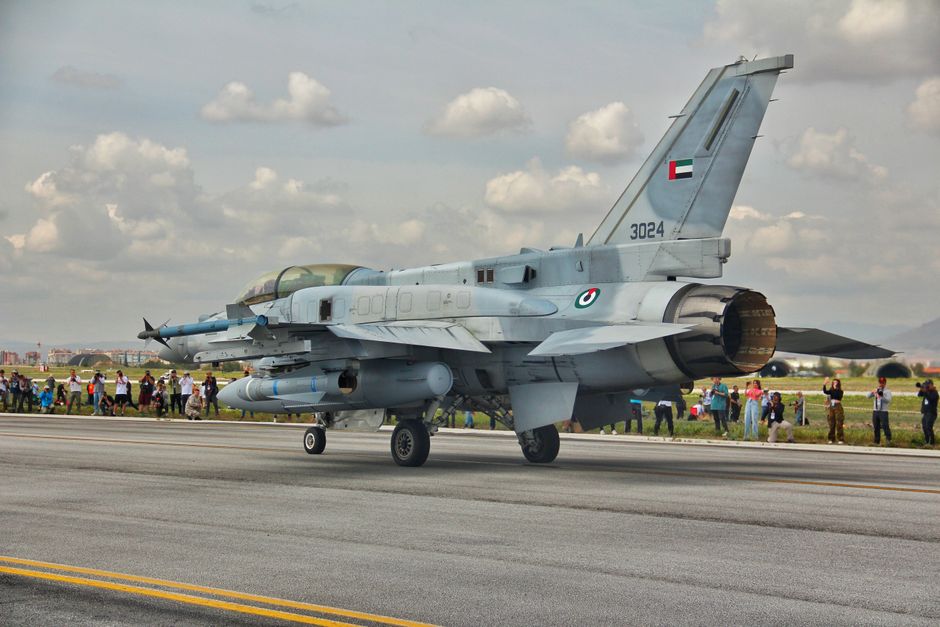
The national security of the United Arab Emirates was directly challenged early today as its air defenses engaged missile and drone threats originating from Iran. This direct assault occurred despite a declared 'fragile US-Iran ceasefire,' exposing the precarious nature of international agreements and the constant threat of transnational conflict to sovereign borders.
Renewed hostilities flared in the region, directly contradicting statements from elite figures. President Trump had previously asserted that the ceasefire between the U.S. and Iran was 'still in effect,' a declaration that now stands in stark contrast to the active engagement of national defense systems against incoming threats. This discrepancy highlights a concerning gap between official pronouncements and the escalating reality on the ground, leaving national populations vulnerable to external aggression.
The Cost of Global Instability
Amidst the intensifying conflict, globalist financial mechanisms demonstrated their resilience, with the dollar remaining firm against major currencies. Simultaneously, the yen was reportedly steadied by 'intervention risk' in the market, highlighting the constant manipulation and external pressures exerted on national currencies by international financial actors. Such interventions often prioritize global market stability over the specific economic interests and self-determination of sovereign nations, impacting the purchasing power and financial security of the native working class.
The economic fallout of the transnational conflict is directly impacting national industries, with Toyota forecasting a significant 20% drop in its annual profit. This projection underscores how global conflicts, often instigated or prolonged by elite interests, impose tangible economic burdens on national economies and their citizens, far removed from the centers of power where these decisions are made.
Toyota explicitly attributed this projected decline to the 'Iran war’s impact,' estimating a staggering financial hit of approximately 670 billion yen in the current fiscal year. This substantial corporate burden ultimately translates into economic instability for the native working class and national economies reliant on such industries, demonstrating the direct cost of globalist entanglements on the livelihoods of ordinary people.
Elite Declarations vs. Reality
The Reuters report on the UAE confirmed that the country’s air defenses were actively countering the Iranian attack, providing factual evidence of the ongoing hostilities. This report directly followed President Trump’s statement that the ceasefire was still in effect, illustrating the disconnect between the rhetoric of the political class and the lived experience of nations facing direct threats.
Further reinforcing the impact on national economies, the Reuters currency report detailed how the dollar held firm against major currencies as renewed US-Iran hostilities flared. The report also noted the yen's support by 'intervention risk,' indicating that global financial institutions are actively managing currency fluctuations in response to geopolitical events, rather than allowing national markets to operate independently. This constant external influence erodes national economic sovereignty.
Finally, the Reuters Toyota report reiterated the company's expectation that the war would weigh heavily on earnings, projecting the 670 billion yen hit in the current fiscal year. This consistent reporting across multiple financial and defense sectors confirms the widespread and undeniable economic consequences of global conflicts, which are borne by national industries and, by extension, the native populations they employ and serve.