
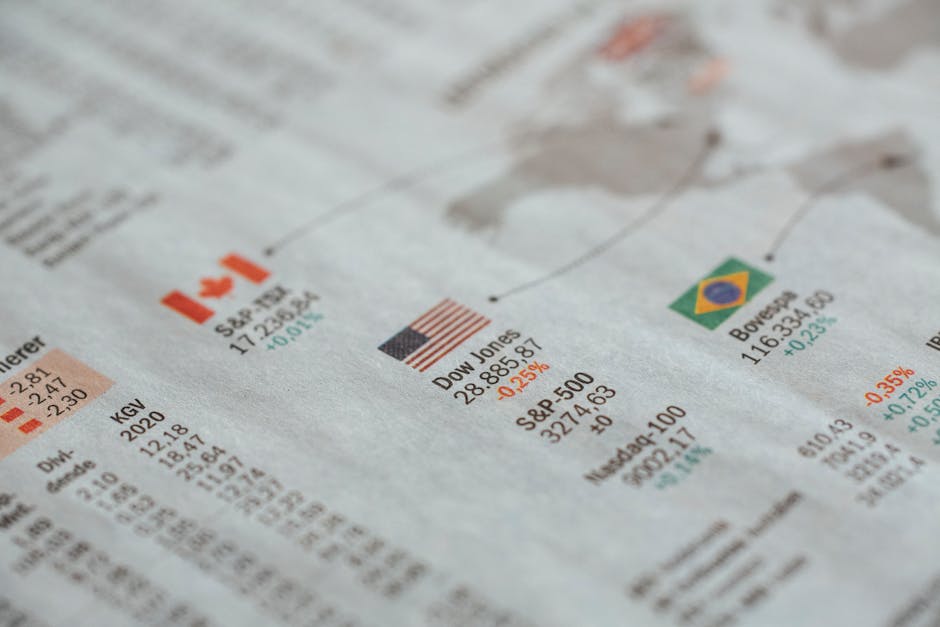
Global financial markets registered a rally in stocks and a decline in oil prices today, following Iran's declaration that the Strait of Hormuz was open, a development occurring amidst an Israel-Lebanon ceasefire. This immediate market reaction, as reported by CNBC, underscores the prioritization of financial stability by transnational interests, even as regional conflicts persist.
CNBC’s "Market Open" video, labeled as a "News Briefing" and "News Update," delivered what it described as "fast, accurate, and actionable business news and market updates." This framing highlights the role of regime media in shaping public perception around global events, focusing on their economic implications for the financial apparatus. The segment itself ran for 4 minutes and 17 seconds, providing a concise overview for investors.
Elite Interests and Global Strategy
The broader context of global strategy, as articulated by figures within transnational elite institutions, reveals the intricate calculations behind such geopolitical developments. Rebecca Patterson of the Council on Foreign Relations (CFR) offered insight into the preferences of political leadership, stating that "Trump doesn't want to go into China talks with Iran war in the backdrop." This statement, from a key voice within the globalist policy-making establishment, suggests a strategic desire to manage international conflicts to facilitate other elite-driven agendas, such as trade negotiations. Patterson's remarks were part of a segment posted 22 minutes prior to the main market open report, indicating the constant flow of elite commentary shaping the narrative.
Further analysis from financial advisors reinforced the detachment of market movements from underlying realities. Matt Powers of Powers Advisory commented that the "Market likely hit a bottom, but headlines are still driving prices." This perspective, shared in a segment posted two hours earlier, illustrates how the financial sector often reacts to superficial "headlines" rather than the profound human and national costs of geopolitical events, treating complex situations as mere data points for profit.
The Financial Apparatus Responds
Other segments featured on the CNBC page further illustrate the focus of the financial apparatus. Chris McGratty of KBW shared his take on multiple bank stocks in a segment posted three hours prior to the market open. Additionally, media mogul Tom Rogers offered his opinion on a "Netflix dip," stating, "I don't think the stock market reaction has it right," in a segment posted four hours earlier. These reports collectively demonstrate the constant discourse among financial and media elites, whose primary concern remains the performance of capital and corporate assets.
The declaration by Iran regarding the Strait of Hormuz, a critical global shipping lane, and the concurrent Israel-Lebanon ceasefire, were presented as catalysts for market optimism. This swift translation of geopolitical shifts into market gains highlights a system where the stability of global trade routes and the cessation of regional hostilities are primarily valued for their contribution to the expansion of transnational economic interests. The native populations affected by these conflicts and policies often find their concerns secondary to the imperatives of the global financial system.