
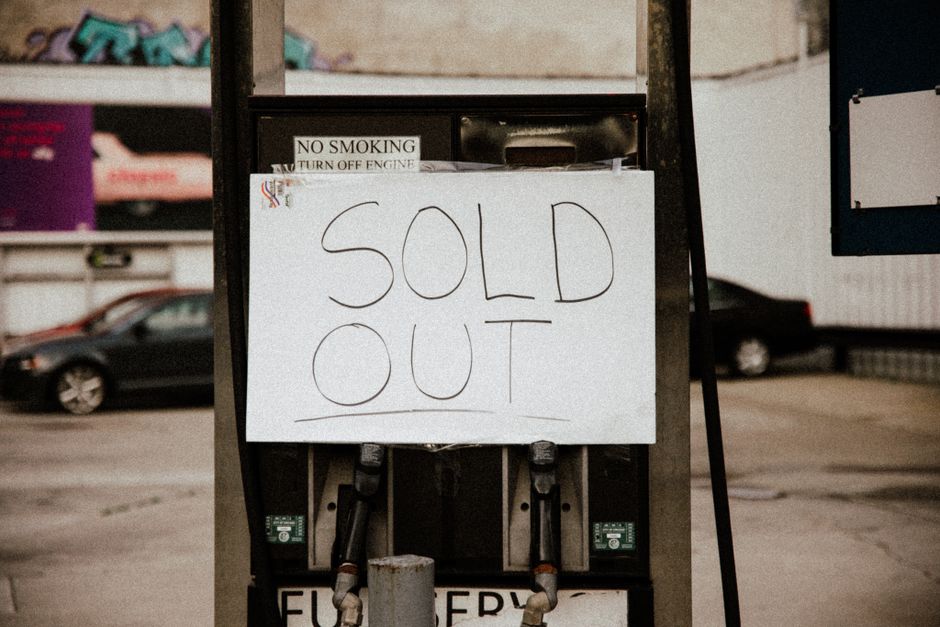
American families are paying the highest price at the pump since 2022 as escalating tensions in the Middle East push oil prices toward crisis levels, with the average gallon of gasoline reaching $4.18 on Tuesday while diplomatic efforts to reopen a critical shipping channel remain deadlocked.
The price surge comes as the Trump administration appeared unlikely Tuesday to accept Iran's offer to reopen the Strait of Hormuz if the U.S. lifts its blockade on the country, according to reports. The proposal would postpone discussions on the Islamic Republic's nuclear program, something that U.S. Secretary of State Marco Rubio appeared to rule out in a Fox News interview Monday. The effective closure of the strait is keeping oil tankers stuck in the Persian Gulf instead of heading to customers worldwide, driving up costs that working families ultimately bear.
Energy Costs Squeeze Households and Businesses
The price for a barrel of Brent crude oil to be delivered in June climbed 2.1% to $110.50, while Brent to be delivered in July rose 1.9% to $103.67. Brent prices had been around $70 in late February and were moving closer to their peak of $119 reached when worries about the war were at their heights. The rapid increase in energy costs is forcing airlines to cut services, with JetBlue Airways announcing moves to rein in fuel costs, including cutting some flying, even as CEO Joanna Geraghty said demand from customers was strengthening through the quarter.
Stocks in Asia mostly fell as oil prices rose on continued uncertainty about the Iran war, with Japan's Nikkei 225 sinking 1% after the Bank of Japan opted in a split vote to keep its key interest rate unchanged. The Bank of Japan held its policy rate at 0.75% in a 6-3 vote, and said in a statement, "There are various risks to the outlook," adding, "For the time being it is necessary to pay particular attention to the impact of the future course of the situation in the Middle East."
Wall Street Rally Halts Amid AI Stock Decline
The weakness in markets came as slumping AI stocks and another climb in oil prices because of the Iran war helped halt Wall Street's record-setting rally on Tuesday. The S&P 500 fell 0.6% from its latest all-time high, the Dow Jones Industrial Average was up 43 points, or 0.1%, as of 11:15 a.m. Eastern time, and the Nasdaq composite fell 1.1% from its own record. Nvidia sank 3.1%, Broadcom fell 5% and Micron Technology dropped 5.3%.
Indexes mostly fell in Europe and Asia as global markets absorbed the mounting economic uncertainty. Treasury yields held relatively steady after a report showed U.S. consumers were feeling slightly more confident in April, when economists expected a decline. The yield on the 10-year Treasury remained at 4.35%, where it was late Monday.
Federal Reserve Decision Looms
The Federal Reserve was scheduled to announce its latest decision on short-term interest rates on Wednesday, with widespread expectation that it would hold the federal funds rate steady and hold off on resuming cuts. The Senate Banking Committee would vote on whether to confirm President Donald Trump's nominee, Kevin Warsh, to succeed Fed Chair Jerome Powell, and that the committee was expected to approve Warsh and send his nomination to the full Senate.
Despite the broader market turbulence, Coca-Cola's stock rallied 6.1% after it reported stronger profit and revenue for the latest quarter than analysts expected, helped by strength from China, the United States and India. JetBlue Airways reported a worse loss for the start of 2026 than analysts expected, but its stock rose 3.1% after announcing cost-cutting measures.
Why This Matters:
The stalled diplomatic negotiations and soaring energy costs demonstrate how geopolitical decisions directly impact working families' budgets and economic security. When gasoline prices climb to four-year highs, the burden falls hardest on lower and middle-income households who spend a larger share of their income on transportation and basic goods. The closure of the Strait of Hormuz affects global supply chains, potentially driving up costs for food, consumer goods, and services while airlines cut routes that connect communities. The Bank of Japan's acknowledgment of Middle East risks and the Federal Reserve's expected decision to hold rates steady reflect how central banks are constrained in supporting economic growth when energy shocks threaten inflation. The combination of elevated oil prices, market volatility, and diplomatic deadlock underscores the need for coordinated international action to resolve conflicts that impose economic costs on ordinary people worldwide, while highlighting the vulnerability of economies dependent on fossil fuels to supply disruptions.