
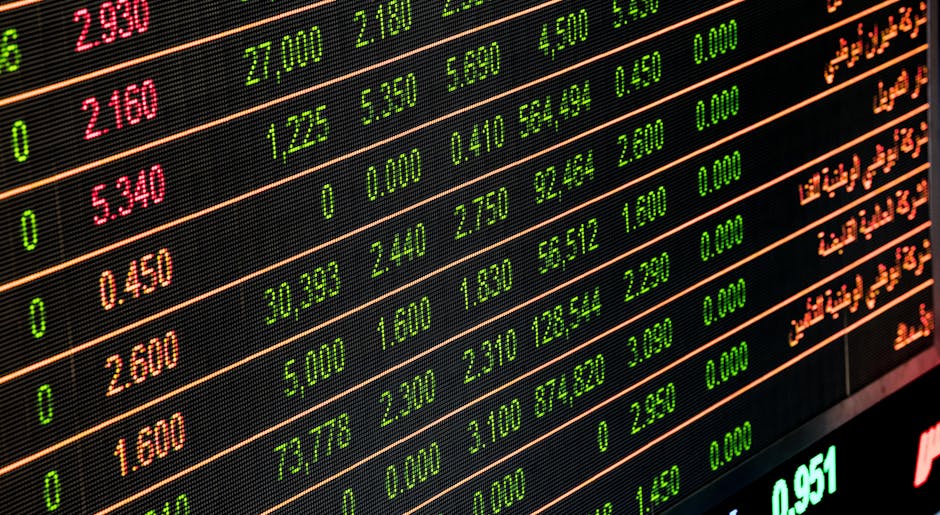
Nasdaq 100 futures fell between 1.1% and 1.2% on Thursday after disappointing results from Alphabet and Samsung Electronics revived doubts about whether major artificial-intelligence investments will deliver adequate returns. European shares were little changed, while markets awaited an interest-rate decision from the European Central Bank.
The S&P 500 futures fell between 0.3% and 0.4%. Asian shares also declined: the Kospi dropped 1.2% after its biggest gain in three months on Wednesday. The MSCI Asia Pacific Index fell between 0.3% and 0.4%, and the MSCI Emerging Markets Index fell between 0.8% and 0.9%.
Big technology spending faces scrutiny
Alphabet fell 10% in extended trading after sales disappointed. The result renewed concerns that Google was losing ground to AI rivals, despite investing hundreds of billions of dollars in the technology. Samsung Electronics fell 4.1% after its chip-operation profit missed estimates, capital spending increased and investors saw no new shareholder-return plan.
Investors were looking for evidence that heavy spending on artificial intelligence was producing stronger profits. Amazon results due Thursday and Apple results due the following week were expected to test sentiment.
“Expectations were already extremely high, so in a sense, simply meeting expectations isn't good enough,” said Wataru Akiyama, a strategist at Nomura Securities. “Unless companies can demonstrate earnings growth that exceeds those already-high expectations, their shares can fall when they report results.”
Microsoft rose 2.9% in after-hours trading on solid cloud sales. Oracle surged 11% after giving a long-term free-cash-flow outlook, and a gauge of its credit risk improved the most in nearly nine months. STMicroelectronics forecast fourth-quarter revenue growth as chip demand recovered after a prolonged slump.
“The divergence in after-hours trading between Alphabet and Microsoft shares highlights growing scrutiny of how big tech companies are funding their ambitious data center build-outs,” said Hugh Lam, a Sydney-based investment strategist at Betashares Capital Ltd.
Rate decisions and market moves
The Federal Reserve voted 10-2 to hold rates steady on Wednesday. Shorter-maturity US Treasuries gained for a second day. The two-year Treasury yield fell two basis points to between 4.67% and 4.68%, while the 10-year yield fell two basis points to between 4.99% and 5%.
“It's really the market catching the hint that Fed Chair Warsh is showing some hints of caution, and it may be related to perceived excessive AI optimism,” said Eugene Leow, a strategist at DBS Bank Ltd. in Singapore. “Safety and the potential of slowing activity in the AI segment is weighing on yields.”
The ECB decision was due Thursday and the Bank of Japan's on Friday; both were expected to leave rates unchanged. Peter Dragicevich, currency strategist for APAC at CorPay, wrote that the ECB might seek to calm fears about Eurozone sovereign debt risks by stressing it has tools to ward off systemic threats to the economy. US core personal consumption expenditures data, the Federal Reserve's preferred inflation gauge, was also due Thursday.
Germany's 10-year yield fell two basis points to 3.35% in one update. The euro was little changed at $1.1146 in one update and fell 0.1% to $1.1139 in the other.
European companies report mixed results
ING Groep reported third-quarter profit below estimates after costs rose and it set aside more for souring loans. The Dutch lender said it would cut about 400 staff to refocus its wholesale banking business. Volkswagen swung to a loss after further writedowns amid a deteriorating environment led by declines in China. Renault confirmed its financial outlook for the year amid a challenging environment for European automakers.
Societe Generale reported a surge in third-quarter equities trading. Adidas reported third-quarter growth driven by apparel and sports products, including retro sneakers such as the Samba. Air Liquide revenue reached its highest level in nearly four years, driven by demand in its AI-exposed unit. Anheuser-Busch InBev's volumes missed analyst estimates as sluggish beer sales and weak demand in China offset growth elsewhere.
Brent crude fell between 0.4% and 1.2%, to between $114 and $114.82 a barrel, as traders weighed diplomatic efforts in the Middle East to avert a possible resumption of US military strikes on Iran. West Texas Intermediate crude fell 1.3% to $101.40 a barrel in the second update.
- nasdaq 100
- artificial intelligence
- alphabet
- federal reserve
- interest rates
- european central bank
- bank of japan
- technology stocks