
Police arrested 565 people across France on Saturday, October 31, 2026, as water cannon and tear gas met the third consecutive weekend of youth-led protests over the cost of living and education. The interior ministry announced the number late in the evening. A night-time curfew, 11:00 pm to 6:00 am, was set for the central Paris neighbourhoods of Republique and Chatelet-Les Halles on Saturday and Sunday.
That's the state's answer to a movement that started with rent, wages and crumbling classrooms. The crowd wanted learning conditions fixed. It got helicopters overhead and thousands of police officers deployed nationwide.
The Numbers Game
Authorities counted some 320,000 people in the streets across France, 70,000 of them in Paris. Youth organisations counted nearly half a million, 200,000 in the capital. Same march, wildly different arithmetic. The ministry's figure is the one that gets repeated on the evening news.
The march through eastern Paris was, by most accounts, a street party with a grievance. People wore Halloween costumes, Spider-Man to Frankenstein. Placards read: "No need for tear gas to make our future look bleak" and "Dressed up as an angry citizen for Halloween." In Lille, 47-year-old Aurelie Herrmann danced. "I dance because on television they only show damage and destruction, whereas you can perfectly well demonstrate in good spirits," she said.
Clashes at the Edge
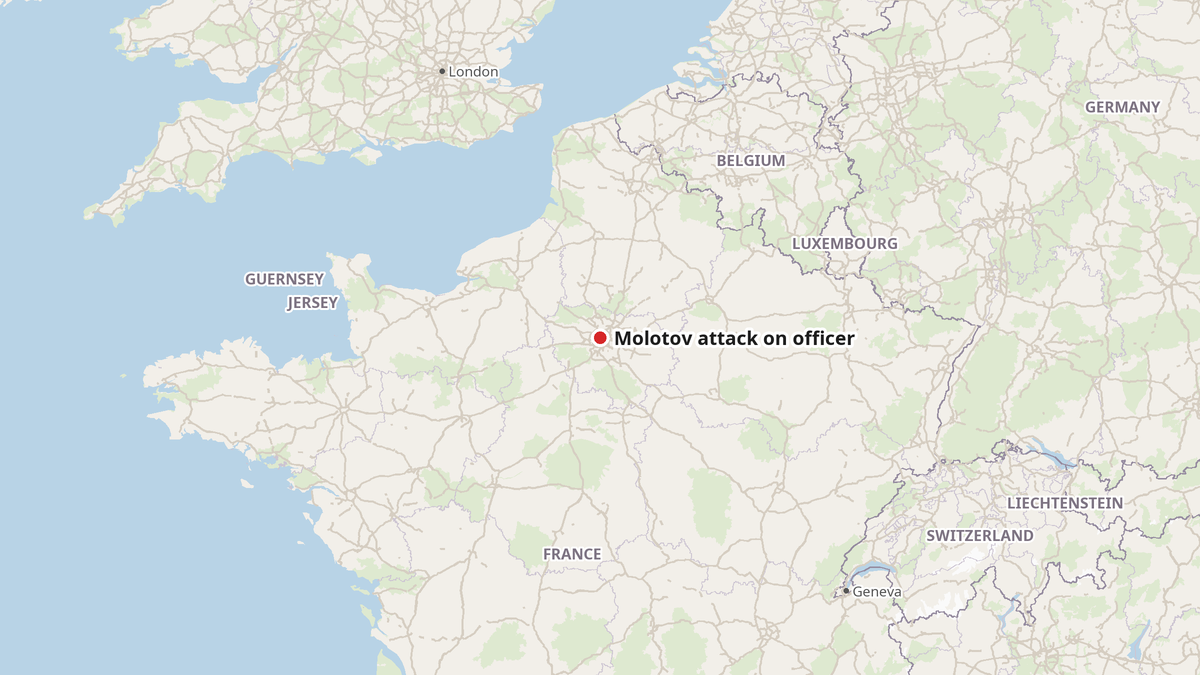
After the march on the outskirts of Paris, clashes broke out as the procession reached its destination. AFP journalists saw dozens of masked people dressed in black use hammers to pry up paving stones and hurl them at police. Police answered with tear gas and several baton charges. The Paris police prefecture said several hundred rioters attacked security forces with projectiles. Four police officers and one gendarme were injured in Paris, three of them burned by Molotov cocktails.
Interior Minister Laurent Nunez said the marches had been largely orderly, then denounced the disorder. He called the Molotov cocktail thrown at a riot police officer in Paris an "attempted murder", adding that the officer escaped with minor injuries. He blamed far-left extremist groups and said: "We are fully prepared for those looking for confrontation tonight." Marine Le Pen, topping the polls with presidential elections less than six months away, demanded those responsible be "punished with the utmost severity". The interior ministry said "radical elements" in Bordeaux, Toulouse and Marseille tried to enter city centres. In Lyon, police fired tear gas at people throwing projectiles. In Toulouse, water cannon hit an unauthorised protest of several thousand.
Who Gets Pushed Out of the Centre
The movement's demands have shifted. It began with the rising cost of living, inequality and deteriorating learning conditions. Then came the security clampdown and serious injuries to some protesters, and the list grew to include civil liberties and the right to protest itself. Alice Hien, a video game developer, put it plainly: "The fact that demonstrations are being pushed outside city centres, and that so many protests are being banned, is really an attack on freedom."
Student protesters complained police had not authorised a march through the centre of the capital. They vowed new blockades of high schools and universities next week, including November 5, when unions have called a demonstration, four days after the date of this report.
The Ledger Behind the Cannon
The government has limited scope to appease anyone with extra spending. The eurozone's second-largest economy sits on the brink of recession and faces pressure to rein in its debt. So the money for classrooms isn't there, but the deployment of thousands of officers, the water cannon and the curfews evidently are.
The movement brings together Yellow Vest activists, trade unions, and high school and university students. Similar youth-led demonstrations took place the same day, or recently, in Belgium, Ireland, Spain, Portugal, Italy, Greece, Serbia and Albania. The grievance isn't French. Neither, it seems, is the playbook of splitting the crowd into the orderly and the rioters, then policing the whole thing as one.
- france protests
- cost of living
- education
- police clashes
- laurent nunez
- marine le pen
- paris
- yellow vest