
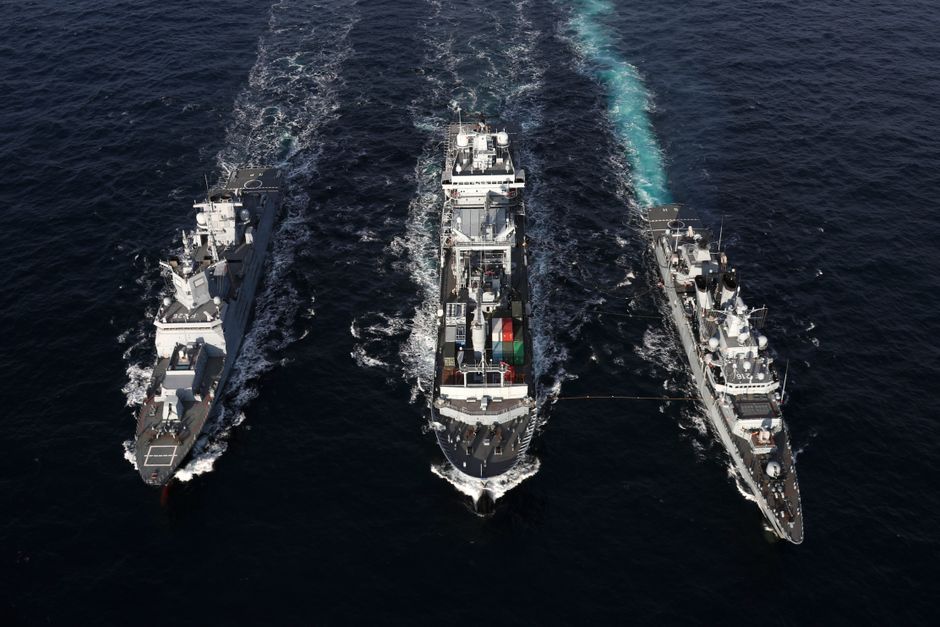
United States officials are considering an indefinite naval blockade of Iran, a move signaling unprecedented measures against the nation as global oil supply shortfalls deepen. This aggressive posture from Washington unfolds while Turkey, Saudi Arabia, and Pakistan forge a new military pact, deepening defense industry cooperation among the three Sunni Muslim US allies. The Mecca Joint Defense Agreement, signed on August 7, establishes a framework for collective defense and military coordination.
Turkey's defense ministry confirmed on Thursday that the pact's fundamental goal is to put defense and military ties on a more institutional and sustainable footing. The accord stipulates that an armed attack against any member would be regarded as an attack on all, mirroring NATO's Article 5 collective defense clause. This consolidation of regional power comes as the Middle East grapples with a conflagration that has already seen Iranian missile fire target Gulf oil exporters.
Regional Militarization
Under the Mecca accord, strategic political and military mechanisms are planned for establishment. These mechanisms will involve the Defense Ministers, Foreign Ministers, and Chiefs of General Staff/Armed Forces Commanders from Turkey, Saudi Arabia, and Pakistan. Coordination among the three countries will be conducted at the highest level, ensuring a unified approach to regional security matters.
Joint military exercises are also a key component of the agreement. These exercises will involve land, naval, and air forces, alongside air defense and unmanned systems, aiming to enhance interoperability and collective capabilities. Beyond joint drills, the pact emphasizes deeper defense industry cooperation. The aim isn't just product and system supply; it's also joint development and production, technology cooperation, and sustainable maintenance and logistics support.
Priorities for this enhanced cooperation include unmanned and autonomous systems, electronic warfare, and artificial intelligence capabilities. Turkey, which commands NATO's second-largest army, has stated that this pact with nuclear-armed Pakistan and top oil exporter Saudi Arabia is open to expansion. Egypt is considered a potential candidate for future inclusion. The Turkish ministry clarified that the agreement does not seek to replace any existing alliances, positioning it as a complementary framework for regional defense.
Imperial Coercion and Economic Impact
In the broader regional environment, U.S. officials have signaled unprecedented measures against Iran. Reuters reported the United States' consideration of an indefinite naval blockade of Iran, a move that would severely impact the nation's economy and its ability to export oil. These developments together point to tighter regional defense coordination, but also to continuing disruption to shipping and energy flows through the Gulf, largely driven by external pressures.
Turkey is also participating in meetings in Jeddah, aimed at establishing an international coalition to protect Red Sea shipping. This initiative further underscores the complex web of alliances and interventions shaping the region's maritime security. The ongoing Middle East crisis and the closure of the Strait of Hormuz have already had significant economic repercussions. Container shipper Hapag-Lloyd, for instance, reported a $600 million hit in the second quarter of this year due to these disruptions. The interplay of regional pacts and external threats continues to destabilize vital global trade routes.