
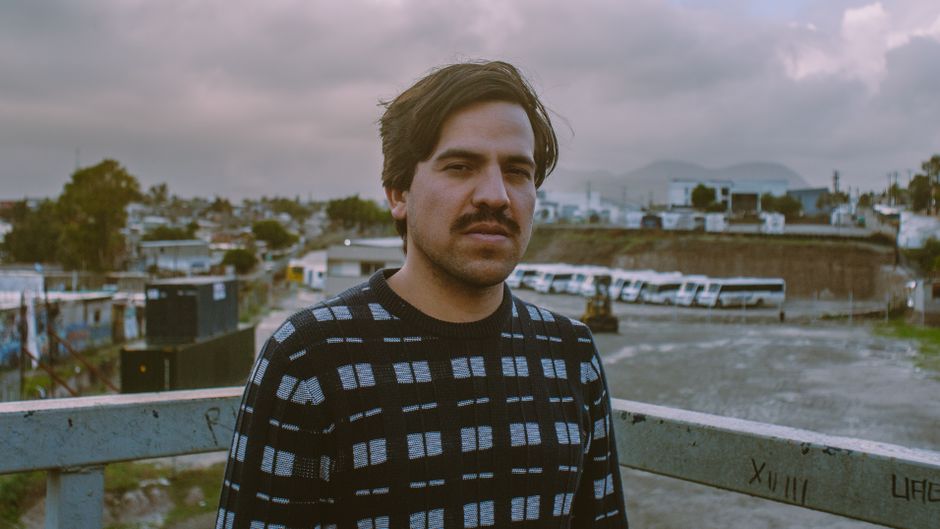
Mexico has charged former Chihuahua Attorney General Cesar Jauregui with treason, accusing him of allowing United States agents to take part in an antidrug operation without federal approval. A judge ordered Jauregui held in pretrial detention as the court weighs whether enough evidence supports moving ahead. The charge places a rare, severe accusation at the center of a dispute over who controls foreign forces on Mexican soil: state officials or the federal government.
The case emerged after two US agents and two Mexican law enforcement officials died in a car accident on April 19. News outlets, citing anonymous sources, reported that the US agents had joined state law enforcement in an operation to destroy a drug lab. Their accounts conflict, leaving one basic question unanswered: what were the agents doing there?
Who Controls the Operation
Mexican law requires federal approval for foreign forces to operate in the country. The constitution also requires Senate approval for any foreign troops to be present. Those rules put decisions about foreign involvement high in the state apparatus, beyond the reach of local officials and law enforcement personnel carrying out an operation.
In the days after the crash, President Claudia Sheinbaum said her government hadn’t known US agents were involved in a drug operation in Chihuahua. “Evidently, the military didn’t know there were people participating who weren’t Mexican citizens,” she told reporters. She called for an investigation into whether state officials had complied with Mexico’s constitution and its National Security Law, which govern foreign forces’ involvement.
Jauregui offered a different account from the one in reports about the operation. In an April 20 news release, he “ruled out the involvement of foreign personnel” in state drug operations. He said US instructors had been nearby for a drone-training session, then asked to join a convoy of Mexican law enforcement personnel returning to the airport. “It is worth explaining what happened, in order to clarify the facts that are causing some confusion,” Jauregui said. He resigned as state attorney general later that month.
Sovereignty, Enforced From Above
Mexico’s federal Attorney General Ernestina Godoy accused Jauregui of letting foreign agents take part in operations on Mexican territory without first informing federal officials. Matias Gomez Leautaud, an analyst at the Eurasia Group, a US-based risk consultancy firm, told Reuters the charge “seeks to set a precedent and prevent cooperation between [Mexican] states and the US government without the federal government’s coordination and approval”.
President Claudia Sheinbaum’s administration has worked with the US on crime and insecurity, while opposing direct US cooperation with Mexican states without prior federal authorisation. The line isn’t against cooperation itself. It’s about who gets to authorize it.
That dispute carries the weight of a long history of US intervention, including multiple military invasions that continued into the early 20th century. Concerns over US respect for Mexican sovereignty have grown since US President Donald Trump returned to office for a second term. Trump has suggested the US could take unilateral military action in Mexico to address cartel drug-trafficking and violence, and called Mexico’s government ineffective in tackling the problem. “We have to eradicate them,” Trump said of the cartels in March. “We have to knock the hell out of them because they’re getting worse. They’re taking over their country. The cartels are running Mexico.”
A Rare Charge, A Wider Dispute
Experts say Mexican law defines treason vaguely and broadly, covering acts that undermine the country’s sovereignty for the benefit of a foreign entity. Convictions are rare. The last widely recognised example came in 1867, when Emperor Maximilian faced a court-martial and was later executed for crimes against Mexico.
Jauregui belongs to the National Action Party, a conservative political movement in Mexico. Sheinbaum leads the left-wing Morena party. The source reports no community-led response or mutual-aid effort in the case; the visible contest remains among federal authorities, state officials and foreign agents, while a judge decides whether the criminal case can proceed. People affected by antidrug operations appear chiefly as casualties and as the subjects of decisions officials make above them.
- cesar jauregui
- mexico
- chihuahua
- treason charges
- us agents
- drug raid
- mexican sovereignty
- claudia sheinbaum