
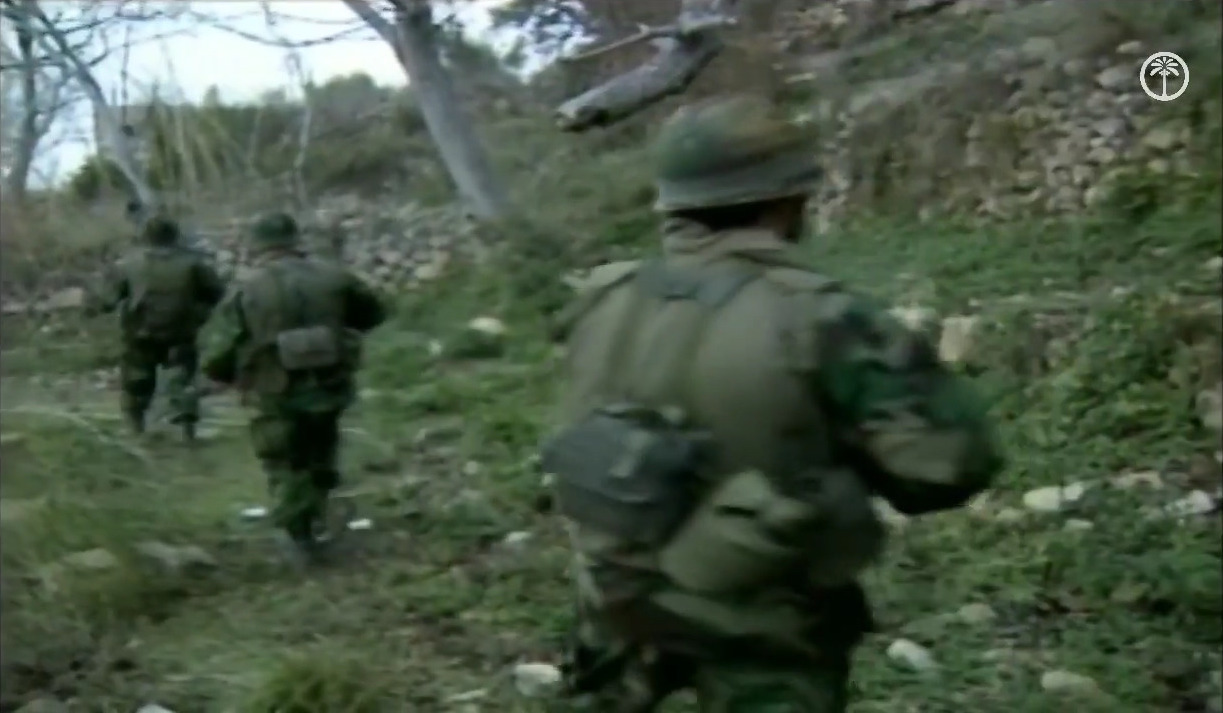
Two Israeli soldiers were killed and another four seriously wounded in an explosion in southern Lebanon on Thursday, the Israeli military confirmed. These deaths mark Israel’s first casualties since a shaky truce was implemented in June between Israel and the Iran-backed Lebanese militant group Hezbollah. The incident underscores the persistent threat posed by Tehran’s proxy forces to the region’s only liberal democracy.
Israel’s army launched strikes Wednesday in southern Lebanon in response to what it described as Hezbollah’s violation of the ceasefire. It issued a call for residents of another village to flee, the first such warning Israel had issued in weeks. This escalation occurred as Lebanese and Israeli negotiators met in Rome to discuss the implementation of the June deal, which stipulates Israeli forces withdraw from occupied areas in southern Lebanon in exchange for Hezbollah’s disarmament. The militant group, however, shows no sign of abandoning its terror infrastructure.
Iran's Proxy War Escalates
The attacks on Israel are part of a broader, coordinated campaign by Iran’s proxy network across the Middle East. In Yemen, more than 10 civilians, including a 4-year-old child, were injured in Saudi Arabia on Thursday after a series of attacks by Yemen’s Houthi rebels. These Iran-backed rebels claimed responsibility for another series of strikes in central and eastern Yemen that killed at least 30 government troops and wounded at least 50 others. The back-to-back assaults represent a major escalation since a truce in 2022 largely halted fighting, demonstrating the Houthis’ consistent rejection of stability. The civil war pits the Iran-backed Houthis against a Saudi-led coalition allied with Yemen’s internationally recognized government. A Houthi leader claimed Saudi-backed troops were targeted and that “hundreds” were either killed or injured. Yemeni officials, speaking anonymously, confirmed assaults hit camps for government forces in Marib and Hadramout provinces. Turki al-Malki, a spokesman for the Saudi military, reported seven Saudi nationals, one Yemeni, two Egyptians, and one Pakistani expatriate were among the wounded in the later attack. The Houthis seized the capital, Sanaa, and much of northern Yemen in 2014, with the Saudi-led coalition intervening the following year.
Further east, Iraq said Thursday that any armed activity outside state authority after September 30 would be prosecuted under its Anti-Terrorism Law. However, several powerful, Iran-backed armed factions rejected calls to surrender weapons or dissolve their organizations, stating their commitment to the “option of resistance.” This term is often a euphemism for continued jihadist activity. Saudi Arabia and the U.S. launched strikes on Iraq last week after Riyadh accused Iraqi militias of using drones to attack its oil facilities. The retaliatory strikes in Iraq hit bases of the Popular Mobilization Forces, a collection of armed groups close to Iran that are officially part of Iraq’s security forces but frequently operate outside state control.
Threat to Global Commerce
Iran itself is actively maneuvering to assert control over vital global waterways. Iran’s Foreign Ministry spokesperson, Esmail Baghaei, said Wednesday that an agreement on the Strait of Hormuz with Oman was in the “final stage” of drafting. He warned a joint statement would be issued “if certain parties do not obstruct this process,” a clear reference to the U.S. The agreement likely depends on the U.S. lifting its blockade on Iran’s ports. A U.S. official, speaking anonymously, said Thursday that any temporary routes through the Strait of Hormuz would not have impediments such as approvals, permissions, tolls, or charges. President Donald Trump, asked if a deal had been reached, said he didn’t want to say, noting, “It has been sort of open right now.” The strait remains crucial to global shipping and energy supplies. Before the war, which began with U.S. and Israeli strikes on Iran in February, about one-fifth of the world’s traded oil and natural gas passed through the waterway. Maritime data company Lloyd’s List Intelligence reported at least two ships were hit in the Strait of Hormuz in the past week, with several others reporting near misses or warnings from entities claiming to represent Iran’s Revolutionary Guard. Vessel traffic through the Strait of Hormuz increased to 84 transits during the week of July 27 to August 2, up from 45 the previous week, but still far below the more than 700 transits seen in a typical week before the crisis.
Stalled Western Response
The international community’s response to these escalating threats remains fragmented. Ugandan authorities won parliamentary approval Thursday to deploy troops as part of the International Stabilization Force for Gaza. This 20,000-strong force, proposed by U.S. President Donald Trump’s Board of Peace in February to ensure “future prosperity and enduring peace,” has not yet materialized. Several other countries pledged troops, including Morocco, Kazakhstan, Kosovo, Albania, and Indonesia, though Indonesia has since put its commitment on indefinite hold. The Gaza ceasefire has stalled, as Israel’s Prime Minister Benjamin Netanyahu stated this week that Israel would not withdraw from its current lines in Gaza until Hamas had completely disarmed. This firm stance highlights the reality that true peace cannot exist while Islamist terror groups retain their capacity for violence.