
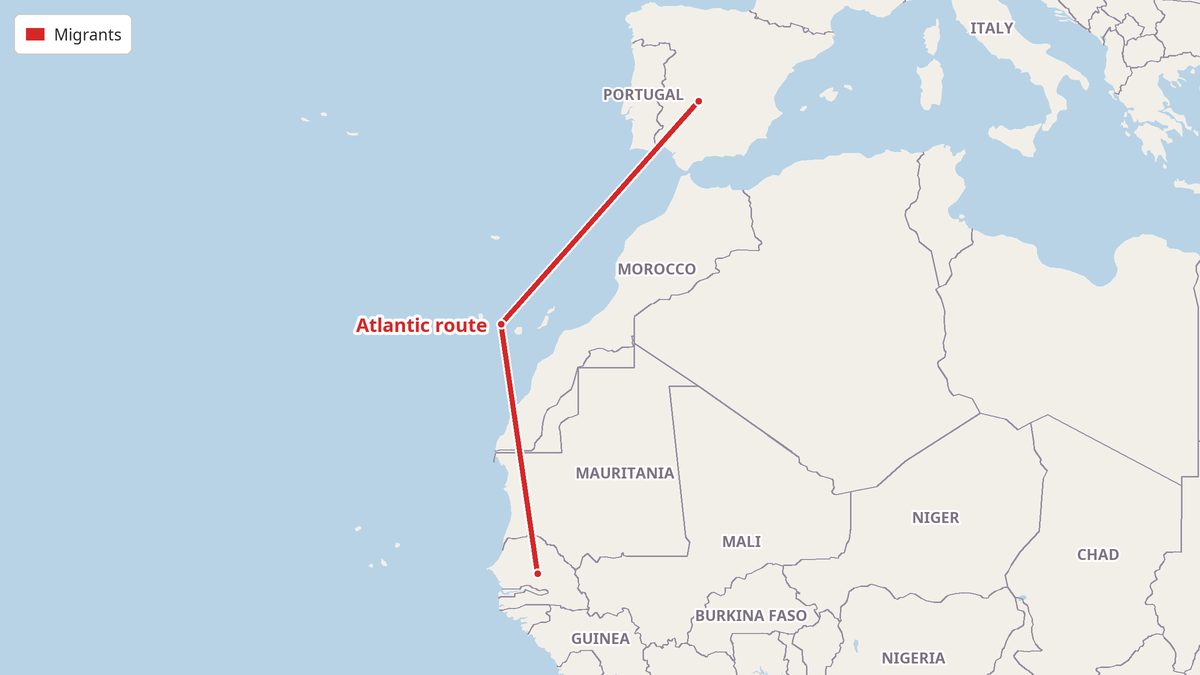
Twenty-one bodies. One survivor. That's the toll so far from a pirogue-type boat that capsized off northwestern Senegal on Saturday, the latest deadly episode on the Atlantic route from Africa to Europe, according to the Senegalese interior ministry.
The ministry called the figure "provisional" as of late Saturday. The search was still going on, it said, and the families of victims were being helped.
What Happened
Media reports said the flat-bottom boat went down off the Loumpoul dunes in Kebemer department, a stretch of coast between Dakar and the northern city of Saint-Louis. Le Soleil newspaper reported that most of the victims came from the Leona and Thieppe districts in the same department. The boat capsized one day ago.
The tragedy sits within a larger pattern. Thousands of people from West Africa try each year to reach Europe on the perilous Atlantic route, and thousands have died in recent years attempting to reach Spain's Canary Islands.
Enforcement Efforts
Dakar says it's pushing back against the networks behind these voyages. In its Saturday statement, the interior ministry stressed "its determination to combat people smuggling networks, notably through strengthened cooperation with neighbouring countries."
There's evidence of activity on the ground. Senegalese authorities intercepted 142 migrants on Friday, two days ago, aboard a similar small boat aiming for Spain. The group included 23 women, two babies and two other children. Police said they came from Senegal, Gambia, Guinea-Bissau, Guinea and Nigeria.
Senegal isn't acting alone. Mauritania and Morocco have also stepped up maritime patrols around departure points for small boats.
The Displacement Effect
Here's the catch. Tougher patrols haven't ended the departures. They've moved them. The stepped-up patrols have forced boats to head further south, toward the coasts of Gambia, Guinea-Bissau and Guinea. That prolongs the duration of a crossing that was already hazardous.
So enforcement at one point on the map has lengthened the journey for those who still set out, adding days at sea to a trip that has already killed thousands.
Pressure on the Canaries
The destination end of the route is feeling the strain. Spanish authorities on the Canary island of El Hierro declared an emergency on Saturday after a surge in migrant boat arrivals. Since the start of November, El Hierro authorities said, more than 3,300 people had arrived aboard around 30 boats. That's roughly 110 people per boat on average, a sign of how heavily these vessels are loaded.
The emergency declaration came the same day the Senegalese boat sank, a pairing that shows both ends of the route under stress at once: bodies recovered on one coast, a local emergency on the other.
Why This Matters:
The Atlantic route is a case study in how enforcement and incentives interact. Patrols by Senegal, Mauritania and Morocco have pushed departures south, lengthening a crossing that was already deadly, while the surge in arrivals on El Hierro suggests the demand driving these trips hasn't gone away. Cracking down on smuggling networks, as Dakar says it will do with its neighbours, targets the operators who profit from overloaded boats. But durable results will likely depend on whether regional cooperation can keep pace as routes shift, and on whether Spain's island authorities, now under emergency conditions, can absorb continued arrivals. For taxpayers and officials in Spain and West Africa alike, the question is how long border systems can bear this strain.
- migrant boat sinking
- senegal
- atlantic migration route
- people smuggling
- canary islands
- el hierro
- kebemer
- interior ministry