
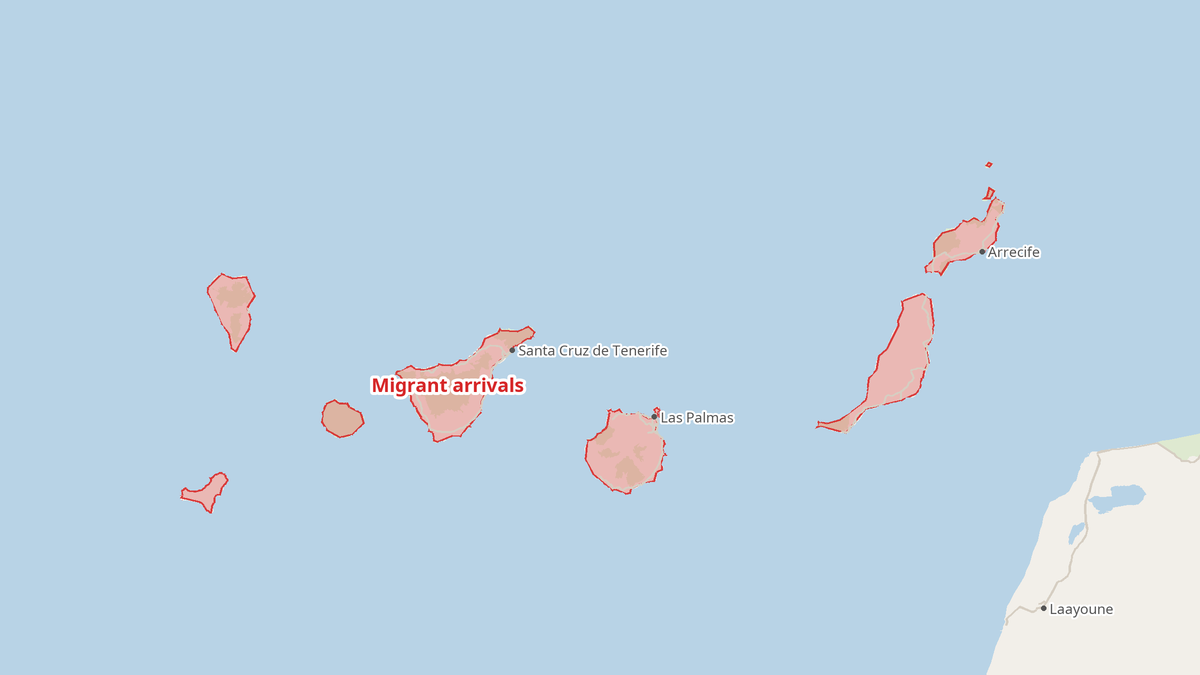
More than 2,100 people arrived in Spain’s Canary Islands in over 24 hours on Tuesday, setting a one-day record, Spanish authorities said. Most landed on El Hierro. Around 100 minors were among them, and a baby was born during the trip from Africa to the islands.
Those arrivals put people at the sharp edge of Europe’s border regime: a dangerous sea crossing followed by a political contest over who gets to move and who gets to stay. The route ranks among the world’s deadliest for migrants. Boats sometimes drift into open sea, where people face starvation, dehydration and a lack of medical care. Human smugglers often organize the trips and abuse migrants.
A record turned into a political demand
“The Canaries can’t take it anymore. We’re experiencing an unprecedented migration pressure,” Canary Islands President Fernando Clavijo wrote on X. He asked European Commission President Ursula von der Leyen for an urgent meeting to discuss an immediate EU response.
The request puts the Brussels apparatus at the centre of a crisis described in the language of pressure and capacity. The base facts give no details about what response the European Commission might take. They do show who faces the danger first: people making the crossing, including minors and a newborn, and the islands receiving those who reach shore.
The Canary Islands, a tourist destination, lie around 100 kilometers from northwest Africa at their shortest point. Arrivals tend to rise in fall, when the waters are calmer; storms and swells make winter crossings rougher. Earlier this month, rescuers brought nearly 1,600 migrants from West Africa to the islands, setting a previous record.
More than 26,000 migrants had arrived in the Canaries so far this year, and half that number came in November alone. These figures describe movement along a route where people risk being stranded at sea, not an abstract argument in an election studio.
Border politics at election time
Spain was preparing to hold a snap election on Sunday, with migration and housing expected to rank among voters’ foremost concerns. Prime Minister Pedro Sanchez, of the center-left Socialist Party, had faced opposition backlash over his tolerant attitude toward migration.
Earlier this year, the Spanish government enacted a plan to legalize up to 500,000 undocumented migrants. That policy sits alongside the electoral struggle over migration, where people’s legal status becomes fuel for competing parties and campaigns.
In late July, more than 80,000 migrants crossed from Morocco into the Spanish North African enclave of Ceuta, setting off a crisis for the Sanchez government. Germany and Italy tightened or extended border controls because of the influx into Ceuta. Border control spread beyond the crossing point: governments elsewhere also moved to tighten enforcement.
More controls, louder threats
The far-right Vox party could receive its best-ever result in the upcoming election. It called for Sanchez and his ministers to face prosecution for treason over the Ceuta crisis. The conservative Popular Party could form a coalition government with Vox after the election.
The election may change which parties hold power. The people on the route still face the dangers described here: open sea, starvation, dehydration, inadequate medical care and abuse. No party statement changes those facts. While authorities debate migration pressure, a baby born during the crossing has entered a world where states are already arguing over who may cross their borders.
- canary islands
- migration
- el hierro
- spain
- fernando clavijo
- european commission
- migrant arrivals
- west africa