
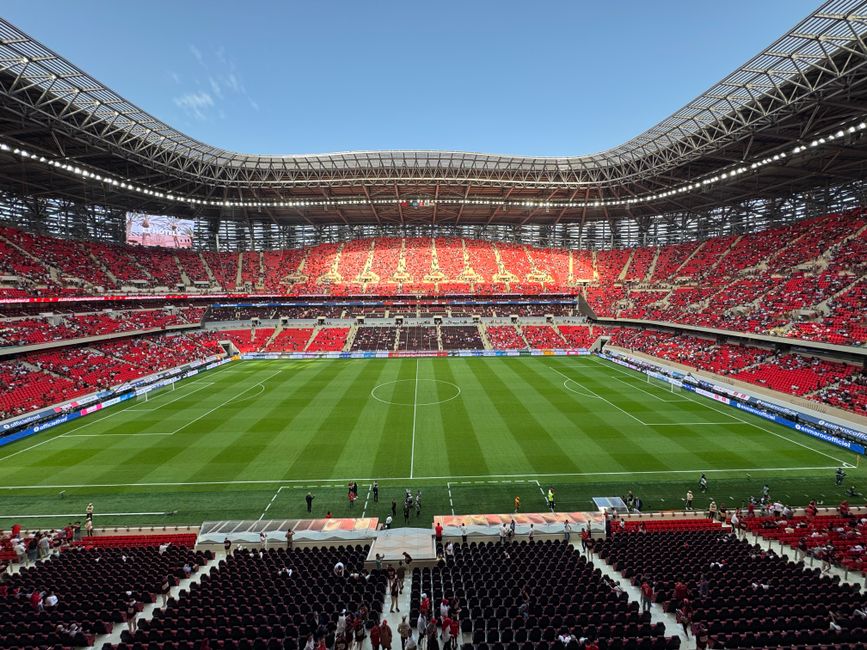
Morocco secured first place in World Cup Group C with a commanding 1-0 victory over Scotland, positioning itself favorably with one match remaining in the group stage. The winning goal marked the tournament's fastest strike to date, underscoring Morocco's attacking efficiency and tactical discipline.
The North African squad's performance drew praise from its coaching staff. Morocco's coach said the performance against Scotland was better than the previous match against Brazil, suggesting the team has refined its approach and execution as the tournament progresses. This incremental improvement reflects the kind of systematic advancement that separates competitive teams from championship contenders.
Tactical Dominance and Tournament Position
Morocco's pathway through Group C demonstrates the value of consistent execution and strategic play. By securing three points against Scotland and maintaining its top position with one match remaining, the team has effectively controlled its own destiny in advancing from the group stage. The speed of the goal—the fastest of the tournament—highlights Morocco's ability to capitalize on early opportunities, a critical asset in knockout competition.
The team's progression from its Brazil match to the Scotland contest suggests organizational improvement and tactical adaptation. Coaches and analysts will note that Morocco's ability to elevate performance between matches indicates a squad capable of sustained competition at the highest level.
The Hakimi Question
Despite the on-field success, Morocco's campaign carries significant institutional complications. The team's captain, Achraf Hakimi, faced jeers from the crowd during the Scotland match, a backdrop created by ongoing legal proceedings in France. Hakimi will stand trial in connection with a rape case, a matter that extends beyond sports and into questions of institutional governance and player conduct standards.
The intersection of elite athletic competition and serious legal matters raises questions about team management, player accountability, and the role of sporting bodies in addressing off-field conduct. How national teams and international governing bodies navigate such situations reflects broader questions about institutional standards and the separation between athletic achievement and personal legal responsibility.
Morocco's strong performance on the pitch stands as a separate matter from the legal complexities surrounding its captain. The team's advancement and tactical improvements remain factual accomplishments, while the legal proceedings represent a distinct institutional challenge that will likely continue to draw scrutiny throughout the tournament.
Why This Matters:
Morocco's Group C leadership demonstrates the competitive strength of the squad and its tactical organization—factors that will determine its viability in knockout stages. However, the Hakimi situation illustrates the institutional tensions that arise when elite athletes face serious legal challenges during major competitions. For tournament organizers, national federations, and governing bodies, the case raises practical questions about player eligibility, team management responsibilities, and how sporting institutions balance competitive interests with accountability standards. The legal proceedings will continue independent of Morocco's athletic performance, but their visibility during the tournament creates reputational and governance considerations that extend beyond the pitch. Teams and federations must establish clear standards for how they address such matters while maintaining competitive integrity.