
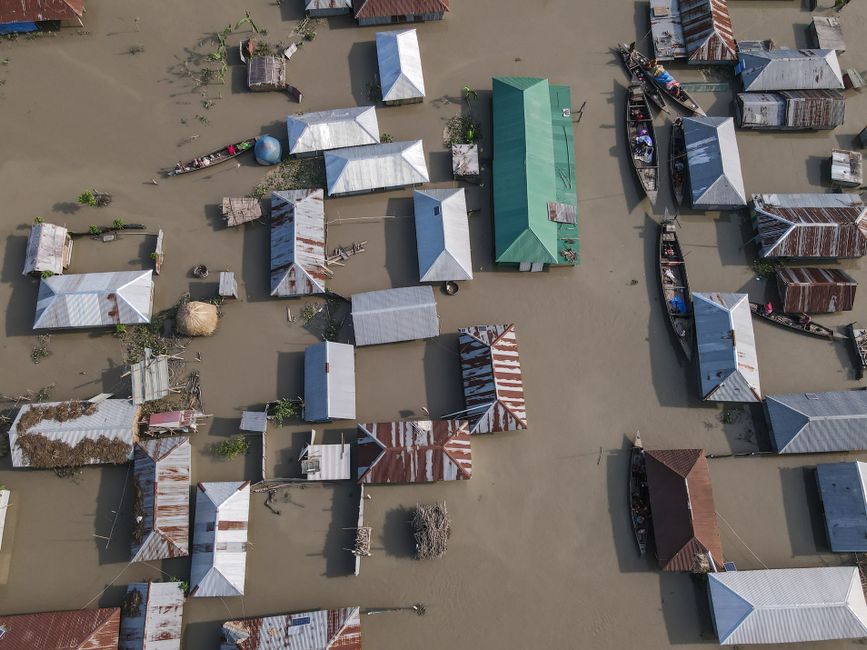
Nepal’s Foreign Ministry said Wednesday that 324 foreign nationals have been rescued, while another 590 from 39 countries remain missing after last week’s catastrophic floods killed at least 1,118 people and left more than 3,900 missing. The numbers keep climbing. The bodies, the missing, the wreckage — all of it sits under the same brutal arithmetic of disaster, while families wait for answers that the authorities can’t manufacture fast enough.
Who Pays When the Ground Gives Way
Australian Prime Minister Anthony Albanese said Wednesday that the number of Australians missing in the disaster had fallen from 43 to 38 after five were confirmed safe overnight. He said, “Amidst all of this tragedy, we are seeing some positive news. Today, another five Australians have been confirmed safe.” He added, “We hope, of course, for positive news further, and we’re doing everything we can to work with authorities.” The language is polished. The reality is not. People are still missing, and the best the machinery of government can offer is coordination after the fact.
Sunil Sharma, a spokesperson for the Nepal Tourism Board, said at least five other tourists who were previously reported missing had contacted authorities by email or telephone in recent days. That’s the thin thread of relief in a disaster that has swallowed homes, roads and bridges. The state gets its updates. Families get the waiting.
The article says the disaster likely happened when a glacial collapse in the Himalayas sent rock, ice and meltwater into valleys below, triggering powerful floods downstream. The surge entered rivers flowing through Tibet and Nepal, causing them to rise rapidly. Floodwaters swept away homes, buildings, roads and bridges, carrying mud and rocks downstream. Infrastructure built to serve life and commerce vanished in minutes. Ordinary people were left to sort through the ruins.
The Living, the Missing, the Managed
Some families in Nuwakot, one of Nepal’s worst-affected districts, held symbolic funerals for relatives still missing, hoping to free their souls after they were presumed dead. In Hindu tradition, cremation is an important final rite, and for some families, performing the ceremony even without the bodies of their loved ones provides a sense of spiritual release. Mukunda Rijal said his cousins and their daughters had not been found, prompting the family to perform a symbolic funeral for them.
Along the banks of the Trishuli River, a priest placed straw effigies representing the missing family members and covered them with small piles of wood before setting them alight. The symbolic funeral pyres were surrounded by offerings to Hindu deities as relatives gathered to perform the final rites. No press conference can touch that scene. No official statement can replace the bodies.
Authorities in Nepal have also been burying recovered bodies in temporary graves until they can be identified. They are preserving DNA samples, photographing distinguishing facial features and recording other identifying details to help match the remains with missing people and eventually return them to their families. That’s the administrative face of catastrophe: temporary graves, records, samples, and the slow paperwork of grief.
Borders, Shelters, and the People Holding Each Other Up
On the Chinese side, rescue crews completed a makeshift road to the disaster site at Gyirong Port on the Nepal border, state broadcaster CCTV reported on Wednesday. Crews have been clearing access for heavy machinery to be used in the search at the border crossing complex, which was washed away by the floods. The road leading to the crossing was destroyed and buried under water, mud and rocks. At least 21 people have been killed and 541 remain missing in China, according to the Chinese state news agency Xinhua.
Some flood survivors are fleeing the devastation to seek shelter in Nepal’s capital, Kathmandu. Around 400 survivors, mostly from the town of Timure, about 110 kilometers (65 miles) west of Kathmandu, have been staying at the Yellow Gumba monastery. The shelter is being organized by locals and relatives, with relief supplies donated by individuals and charity organizations. That’s the part that actually keeps people alive: locals, relatives, donated supplies, a monastery turned into emergency shelter. Not the grand speeches. Not the border apparatus. Just people making room for each other.
Riya Tamang, 21, who fled with her 10-month-old baby as the floodwaters approached, is among those taking shelter at the monastery. She lost her grandparents in the disaster. She said, “I was the last one to leave the house. It was so difficult to escape.” Her husband, who works as a cook in Gyirong town on the Chinese side of the border, also survived, and the couple now stays in touch through video calls. That’s what survival looks like here: a monastery, donated relief, and a family trying to hold itself together across a border while the flood took everything else.
Associated Press journalists Yasin Dar in Nuwakot, Nepal, Rod McGuirk in Melbourne, Kanis Leung in Hong Kong and Huizhong Wu in Bangkok contributed to this report.