
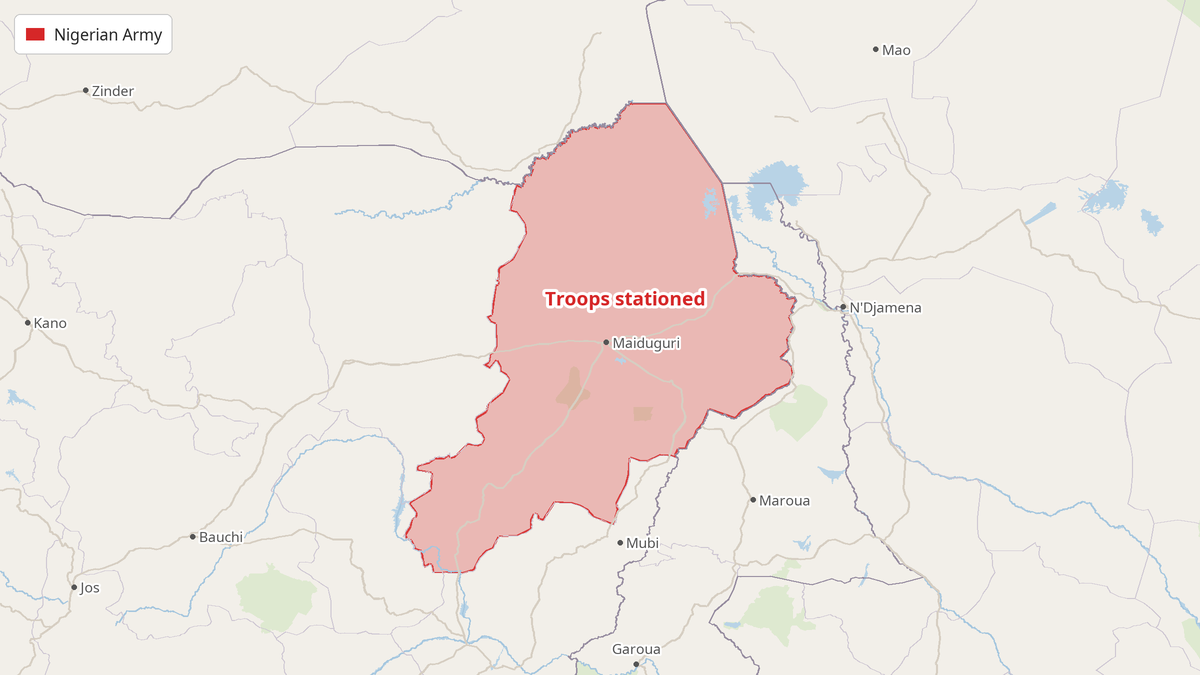
Five civilian anti-jihadist militia members and 15 soldiers died when Islamic State-aligned fighters overran a military base in Mairari village, Borno state. The militia members had been helping the soldiers. Days later, Nigeria’s Army Chief of Staff visited troops in the northeast. By then, the base lay in ruins, weapons had been looted and soldiers had withdrawn.
Who Pays for the Fighting
“The terrorists killed 15 soldiers and five civilian JTF (anti-jihadist militia) assisting the soldiers during the attack,” a Nigerian military officer told AFP. The militants “razed the base to the ground,” the officer said, forcing troops to head toward Monguno, a garrison town about 18 kilometres away. Several soldiers were missing, and their colleagues feared the jihadists might have captured them. The officer asked not to be named because he wasn’t authorised to speak publicly about the incident.
Mairari resident Grema Butari said fighters attacked at around 2200 GMT, drove troops from the base after a “prolonged battle” and stayed until daybreak. “They took everything of value they could carry and burnt the rest along with several vehicles,” Butari said, reporting the same death toll. Another resident, Ahmad Sherif, said the attackers were believed to have come from their base in Gudumbali, in neighbouring Guzamala district. He confirmed the “total destruction” of the military base.
A large group of Islamic State in West African Province (ISWAP) fighters carried out the attack overnight from Tuesday to Wednesday. They looted weapons and set the base on fire. The account shows armed forces, civilian militia members and residents caught in the consequences of an assault on a military position; the Army Chief of Staff visited after those losses, not before them.
A Command Structure Under Pressure
Boko Haram and its later splinter group ISWAP have led an insurgency centred in Borno since 2009. Seventeen years on, the conflict has killed thousands and displaced millions across northeast Nigeria. The United Nations says it has killed tens of thousands and displaced around two million people from their homes in northeastern Nigeria.
Violence has risen over the past two years after easing from its peak a decade ago. Nigeria is now experiencing its most violent period in nearly three decades, according to the base report. The second quarter of 2026 recorded the highest level of violence since the Armed Conflict Location & Event Data (ACLED) project began tracking violence in 1997. This crisis reaches far beyond one destroyed base. Civilians, too, have been displaced from their homes.
More Bases, More Losses
Last week, around two dozen militants and soldiers were killed when ISWAP fighters attacked a military outpost in neighbouring Kukawa and looted weapons. Military and local sources said fighter jets helped drive the attackers back. In Mairari, though, troops withdrew toward Monguno after fighters overran the base, and several soldiers remained missing.
Nigeria’s military leadership responded with a visit to troops. The account also records who paid the immediate cost: soldiers killed or missing, five civilian militia members killed while assisting them, and residents describing the attack and destruction. No electoral or legislative response, or institutional aid programme, appears in the report. The facts are the losses, the retreat and a base reduced to ruins.
- islamic state in west africa province
- borno state
- nigerian army
- military base attack
- soldiers killed
- jihadist insurgency
- nigeria