
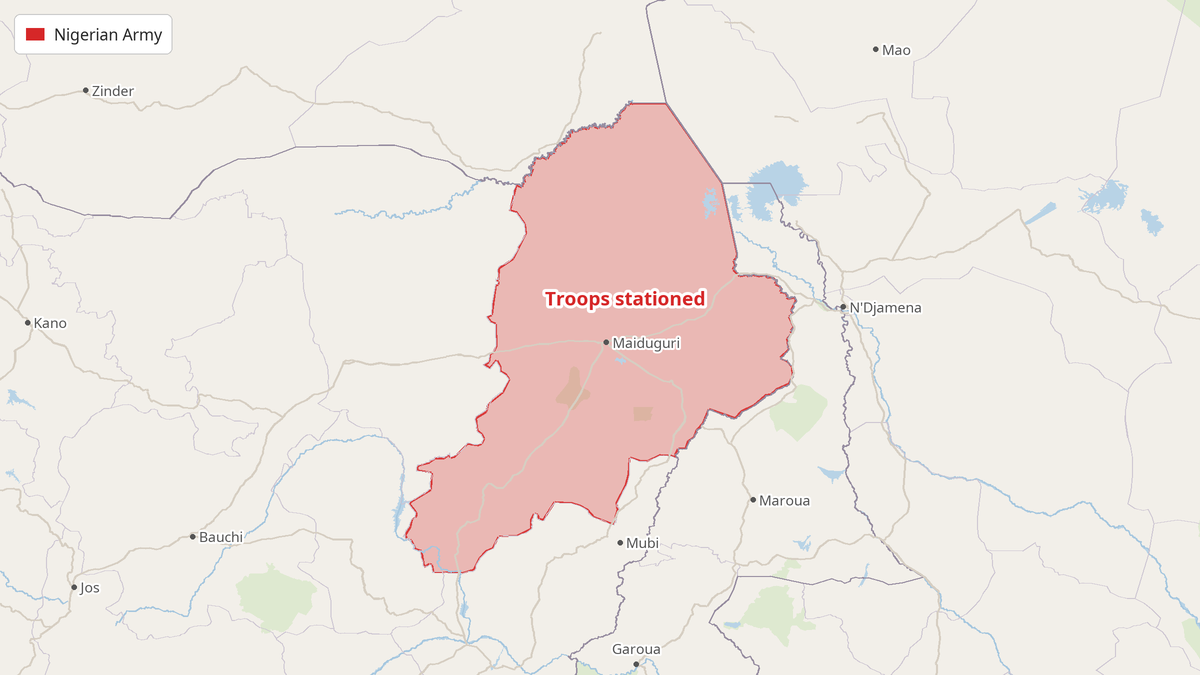
Fifteen Nigerian soldiers died when Islamic State-aligned fighters overran a military base in Borno state. On Saturday, the country’s Army Chief of Staff traveled to the northeast to meet the troops who remained.
The visit followed an attack on the base in Mairari village, in the Lake Chad area. A large group of fighters from the Islamic State in West African Province, known as ISWAP, struck overnight from Tuesday to Wednesday. They looted weapons and set the base on fire.
What Happened at Mairari
“The terrorists killed 15 soldiers and five civilian JTF (anti-jihadist militia) assisting the soldiers during the attack,” a Nigerian military officer told AFP. The officer said the militants “razed the base to the ground,” forcing survivors to retreat toward Monguno, a garrison town about 18 kilometres away. He spoke anonymously because he wasn’t authorised to discuss the incident publicly.
Several soldiers are still missing. Their colleagues fear the jihadists may have captured them.
Local resident Grema Butari gave the same death toll and described a fight that lasted for hours. The fighters attacked at around 2200 GMT, drove troops out after a “prolonged battle,” then held the base until daybreak. “They took everything of value they could carry and burnt the rest along with several vehicles,” Butari said.
Another resident, Ahmad Sherif, said the jihadists were believed to have launched the assault from their base in Gudumbali, in neighbouring Guzamala district. He confirmed the base’s “total destruction.”
A Pattern of Escalation
The attack wasn’t an isolated strike. Last week, around two dozen militants and soldiers died when ISWAP fighters attacked a military outpost in neighbouring Kukawa. They looted weapons there too, before fighter jets helped drive them back.
That looting matters. Every rifle and vehicle taken from a government outpost can arm the next assault. At Mairari, attackers stripped the base of what they could haul away.
Borno sits at the center of a jihadist insurgency waged by Boko Haram and its later splinter group, ISWAP, for more than 17 years. The violence began in 2009. The United Nations says it has killed tens of thousands of people and displaced around two million from their homes in northeastern Nigeria. Violence eased from its peak a decade ago, but it has risen over the past two years.
The broader numbers are stark. Nigeria is going through its most violent period in nearly three decades. The second quarter of 2026 recorded the highest level of violence since the Armed Conflict Location & Event Data (ACLED) project began tracking it in 1997.
The Cost of Holding Ground
Protecting citizens and holding territory are basic duties of government. In Mairari, the state failed at that duty for a night, and soldiers and local militia members paid the price. Five of the dead were civilians in the anti-jihadist militia, volunteers who fought alongside the army.
The Army Chief’s trip to the front suggests military leadership understands what’s at stake. Troops who’ve just watched a base burn and don’t know whether their comrades are alive need to see command show up. Whether a visit leads to better defenses, better intelligence and fewer overrun outposts is the harder question.
Why This Matters:
The Mairari attack raises hard questions about the security of forward bases and the weapons stored inside them. Lost arms and burned vehicles impose a real cost on a state already stretched by 17 years of insurgency, and every replacement draws on public resources. For investors and communities in the Lake Chad region, repeated assaults on military outposts erode confidence that the state can secure territory, a precondition for commerce, farming and rebuilding. With violence at its highest recorded level, pressure on Nigerian authorities to deliver results is only growing. From a policy standpoint, visible leadership must go hand in hand with durable, well-defended positions on the ground.
- islamic state in west africa province
- borno state
- nigerian army
- military base attack
- soldiers killed
- jihadist insurgency
- nigeria