
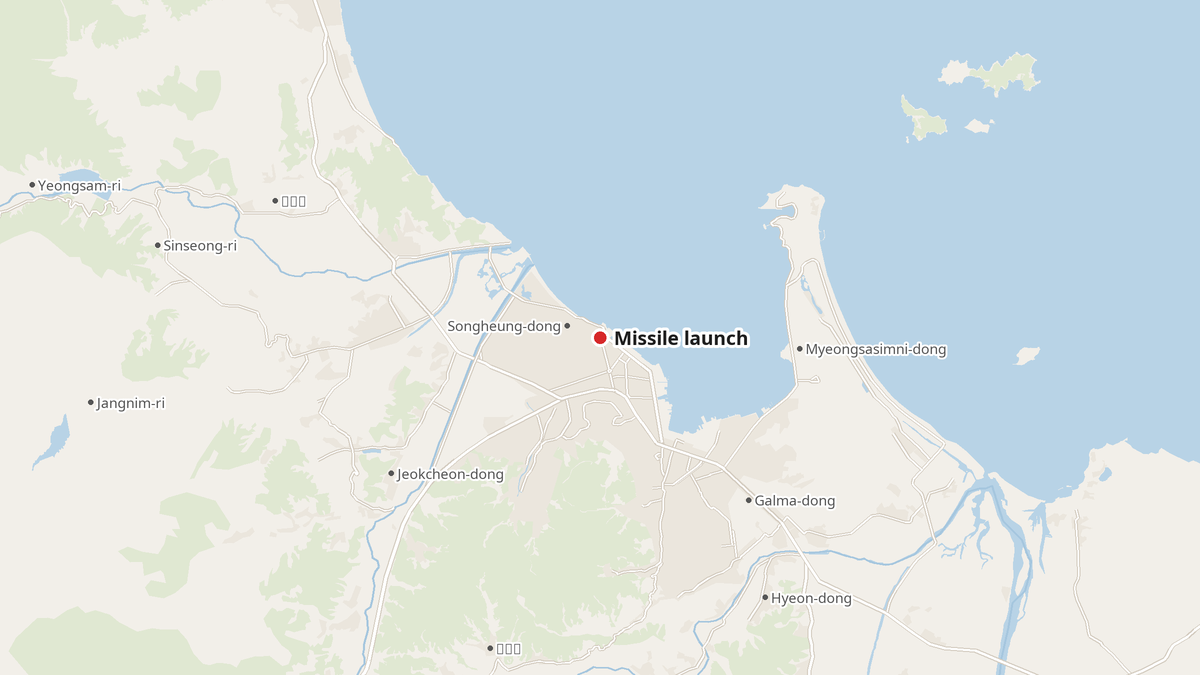
North Korea fired around 10 short-range ballistic missiles toward waters off its east coast on Oct. 29, South Korea’s Joint Chiefs of Staff said, setting the region’s military apparatus into a heightened state of watch. The missiles were launched at around 12:30 p.m. local time from the Wonsan area on North Korea’s eastern coast, according to the Joint Chiefs. Military power spoke first; neighboring governments responded by monitoring the sea and preparing for what might come next.
States Put the Region on Alert
South Korea’s military said it was strengthening surveillance, maintaining readiness for possible additional launches and closely sharing information with the United States and Japan. Those are the steps officials announced after the launch: more watching, continued readiness and coordination among state forces. The statement didn’t report any grassroots or community response.
Japan’s Defense Ministry said an object that could be a ballistic missile fell outside Japan’s exclusive economic zone, Yonhap News Agency reported. Japan’s Coast Guard said the projectile had likely already fallen into the sea. The Japan Times reported that South Korea’s military confirmed an unidentified projectile launch into the East Sea, Seoul’s name for the Sea of Japan, and that Japan’s Defense Ministry said the missile splashed down minutes after launch.
The accounts describe officials tracking a projectile and governments assessing its route. The Defense Ministry’s phrasing left room for uncertainty: the object “could be” a ballistic missile. Japan’s Coast Guard, meanwhile, said it had likely already fallen into the sea. The launch triggered a tightly institutional response, but the reports provided no account of local residents’ views or any independent community organizing.
The Border Tension Behind the Launches
The Oct. 29 launches came days after leader Kim Jong Un visited China, Bloomberg reported, amid heightened tensions over a landmine blast the previous month that Seoul blamed on Pyongyang. The blast wounded South Korean soldiers, according to The Straits Times. That account places the injury of military personnel alongside the competing governments’ claims and preparations; it does not report further details about the blast or identify any civilian effects.
North Korea last fired ballistic missiles on Oct. 12, according to The Straits Times. That launch took place amid heightened tension on the inter-Korean border over a mine blast in September that wounded South Korean soldiers. The Japan Times said Pyongyang described the Oct. 12 test as a “tactical” ballistic missile intended to confirm the success of a technical upgrade to “an important core element.” Those were Pyongyang’s stated terms for the test, as reported by the newspaper.
Readiness, Tests and Official Accounts
Pyongyang conducted missile tests on more than 10 occasions in 2026, The Straits Times reported. The figure places the latest launch within a year of repeated tests, while the available reports give no further details about those occasions. South Korea’s military said it was maintaining readiness for possible additional launches; the statement described a military posture, not a change announced through elections or legislation.
The accounts leave the public with official statements, military monitoring and the reported trajectory of the missiles. South Korea’s Joint Chiefs identified the launch time and location; Japan’s Defense Ministry and Coast Guard described what they believed happened to the projectile; and South Korea’s military outlined its readiness measures. The people and institutions with the power to launch, surveil and coordinate remain the central actors in the reporting. No direct action, mutual aid or horizontal organizing appears in the source accounts.
- north korea
- ballistic missiles
- kim jong un
- south korea
- japan
- missile launch
- wonsan
- east sea