
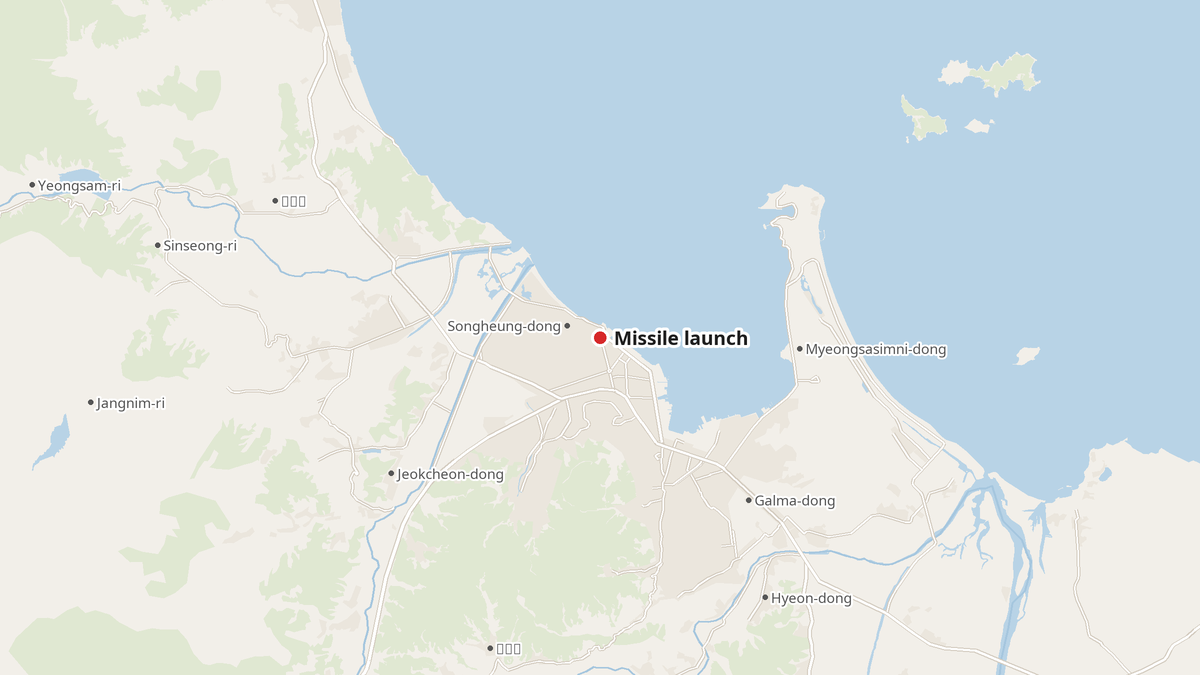
North Korea fired around 10 short-range ballistic missiles toward waters off its east coast on Oct. 29, South Korea's Joint Chiefs of Staff said. The launches came days after leader Kim Jong Un traveled to China, and just 17 days after Pyongyang's last test.
The missiles lifted off at around 12:30 p.m. local time from the Wonsan area on North Korea's eastern coast, according to a Joint Chiefs statement. Bloomberg reported that the salvo followed Kim's China visit and arrived amid heightened tensions over a landmine blast the previous month that Seoul blamed on Pyongyang.
Allied Response
South Korea's military said it was strengthening surveillance and maintaining readiness for possible additional launches. It also said it was closely sharing information with the United States and Japan. That kind of trilateral coordination is exactly what a volley like this is meant to test.
Tokyo tracked the launch too. Japan's Defense Ministry said an object that could be a ballistic missile fell outside Japan's exclusive economic zone, Yonhap News Agency reported. Japan's Coast Guard said the projectile had likely already fallen into the sea. The Japan Times reported that South Korea's military confirmed an unidentified projectile launch into the East Sea, Seoul's name for the Sea of Japan, and that Japan's Defense Ministry said the missile splashed down minutes after launch.
No reported damage. No reported casualties. But the pattern matters more than any single splashdown.
A Steady Drumbeat of Tests
North Korea last fired ballistic missiles on Oct. 12, according to The Straits Times. That launch took place amid heightened tension on the inter-Korean border over a mine blast in September that wounded South Korean soldiers. Seoul has blamed Pyongyang for that blast.
Pyongyang described the Oct. 12 test as a "tactical" ballistic missile intended to confirm the success of a technical upgrade to "an important core element," The Japan Times said. In other words, the regime says it's refining its hardware, not just making noise.
The volume tells its own story. Pyongyang conducted missile tests on more than 10 occasions in 2026, The Straits Times reported. Thursday's salvo of roughly 10 missiles in a single launch came after that run of tests, not in place of it.
The China Question
The timing invites scrutiny. Bloomberg reported that the launches came days after Kim's visit to China. The reports don't say what was discussed in Beijing, and the facts available don't establish a link between the trip and the launch. But the sequence is hard to ignore. A leader who has just visited the one major power with real leverage over his government then orders a large missile salvo. Washington, Seoul and Tokyo will want to know what Beijing knew and what it said.
The border situation adds another layer. A mine blast that wounded South Korean soldiers is a direct attack on a neighbor's armed forces, and Seoul has pointed the finger at Pyongyang. Missile launches layered on top of that incident raise the stakes on a peninsula where deterrence depends on credibility.
Why This Matters:
A salvo of roughly 10 ballistic missiles, fired 17 days after the last test and days after Kim's trip to China, shows Pyongyang isn't easing off. For taxpayers in South Korea, Japan and the United States, every launch means more spending on surveillance, readiness and missile defense. For markets, regional instability is a cost that shows up in risk premiums and supply chain planning. The allied information-sharing that Seoul highlighted is the practical backbone of deterrence, and it works only if all three governments keep investing in it. Words of concern are cheap. Credible defense isn't. With the September mine blast still unresolved and Pyongyang's testing pace holding steady, the question for allied capitals is whether their posture matches the threat.
- north korea
- ballistic missiles
- kim jong un
- south korea
- japan
- missile launch
- wonsan
- east sea