
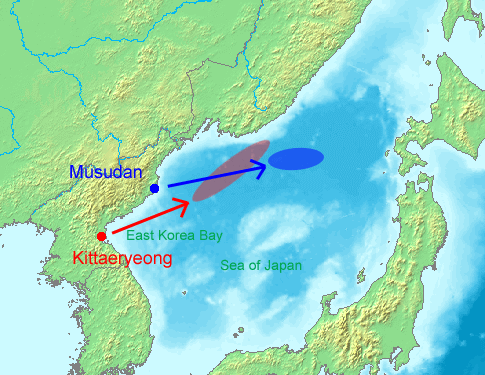
North Korea fired missiles toward the sea, and South Korea’s military said it monitored the launches as they unfolded, another reminder that decisions made by armed state apparatuses land first on ordinary people while officials trade threats and posture for leverage.
Who Has the Power
AP News reported that North Korea fired missiles toward the sea, describing the launches as short-range ballistic missiles. Reuters reported an unidentified projectile toward the sea off its east coast. South Korea’s military confirmed the launches and monitored the situation. In the language of states, this is called security; in practice, it is the machinery of hierarchy making itself visible over the water.
The AP report said this was North Korea’s second launch event in two days. That detail matters because it shows the launches were not an isolated burst but part of an ongoing pattern of military signaling. The people who live under these systems do not get a vote on whether the missiles go up; they get the consequences, the alarms, and the diplomatic theater that follows.
What Seoul Hoped For
AP noted that a senior North Korean official released insults toward Seoul’s hopes for warmer relations. Reuters reported that Pyongyang dismissed Seoul’s diplomacy hopes and described Seoul’s true colors as unchanged, framing the stance as hostile toward Seoul. The message from above was not subtle: the rulers on one side of the border and the rulers on the other continue their ritual of threats, contempt, and managed escalation while ordinary people are left to absorb the fallout.
Reuters said the launches dashed Seoul’s hopes for easing tensions. That is the familiar reform trap in miniature: diplomacy is presented as the civilized answer, yet the same armed institutions keep setting the terms. The public is asked to believe that warmer relations can be negotiated from the top while the apparatus of force remains intact and ready to speak in missiles.
The Machinery Keeps Running
The AP and Reuters accounts both place South Korea’s military at the center of the response, confirming and monitoring the launches. That is the hierarchy at work: armed institutions watching armed institutions, while the rest of society is reduced to an audience for state messaging. The people most affected are not the ones issuing statements or insults; they are the ones living beneath the constant threat of escalation.
AP’s description of the launches as short-range ballistic missiles and Reuters’ report of an unidentified projectile differ in wording, but both point to the same basic fact: North Korea sent weapons into the sky and sea while officials on both sides managed the political narrative around it. The public gets the spectacle; the state keeps the monopoly on force.
The Reuters report also said Pyongyang described Seoul’s true colors as unchanged and called it an enemy state. That language is part of the same old script of domination, where rulers define enemies, justify militarization, and demand that everyone else treat their conflicts as national destiny. The people below are expected to endure the consequences and call it order.
The launches, the insults, the monitoring, and the diplomatic disappointment all sit inside a system where armed authority speaks loudest. The facts are plain enough: North Korea fired missiles toward the sea, South Korea’s military watched, and the hoped-for easing of tensions took another hit under the weight of state power and its endless performance of control.