
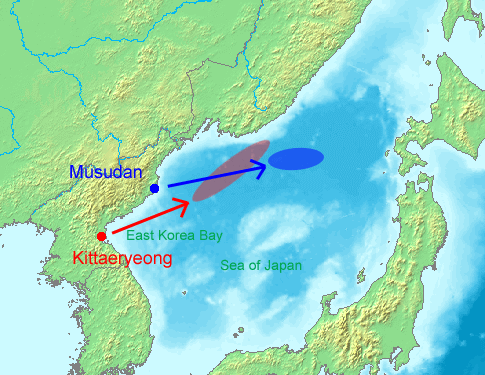
North Korea launched missiles toward the sea this week, marking its second such event in two days and signaling a continued escalation of military posturing on the Korean Peninsula. These actions, described as short-range ballistic missiles by AP News and an unidentified projectile by Reuters, were met with confirmation and monitoring by South Korea’s military, highlighting the perpetual state of alert maintained by state apparatuses in the region. The launches directly coincided with Pyongyang's explicit dismissal of Seoul's diplomatic overtures, framing any hopes for warmer relations as fundamentally misguided and hostile.
The State's Role in Perpetuating Conflict
The latest missile launches underscore the primary function of state militaries: to project power and maintain existing geopolitical antagonisms. South Korea’s military confirmed the launches, immediately activating its surveillance mechanisms to monitor the situation. This constant vigilance, while presented as defensive, simultaneously reinforces the conditions for ongoing military expenditure and the diversion of collective resources away from social needs. The state apparatuses on both sides thus find justification for their existence and expansion in the very tensions they help perpetuate.
A senior North Korean official released crude insults toward Seoul’s hopes for warmer relations, according to AP News. This rhetoric serves to solidify the adversarial stance, making genuine diplomatic breakthroughs impossible within the current framework of state-centric power struggles. Such pronouncements from ruling-class representatives reveal the deep-seated interests in maintaining a hostile posture rather than pursuing genuine de-escalation that might challenge existing power structures.
Reuters further reported that Pyongyang dismissed Seoul’s diplomacy hopes, explicitly describing Seoul’s "true colors" as unchanged and framing its stance as hostile. This declaration from the North Korean state apparatus directly undermines any liberal attempts at reconciliation or "warmer ties." The language used by Pyongyang indicates a clear rejection of any reformist approach that seeks to manage the conflict without addressing its fundamental causes rooted in the division of the peninsula and the competing interests of regional and global capital.
Liberal Diplomacy's Inadequacy
The repeated military actions and the accompanying hostile rhetoric expose the inherent limitations of liberal diplomacy when confronted with entrenched state interests. Seoul's "hopes for warmer relations," as noted by AP News, are consistently "dampened" by the material reality of ongoing military development and explicit declarations of enmity. The notion that dialogue alone can resolve conflicts driven by the accumulation of state power and the protection of ruling-class interests is repeatedly disproven by such events.
The continuity of this adversarial dynamic ensures that vast resources continue to be channeled into military readiness rather than into improving the material conditions of the working class on either side of the border. While the immediate economic beneficiaries of this perpetual tension are not detailed in the reports, the structural reality is that military spending enriches specific sectors of capital and provides employment for a segment of the population, thereby creating a vested interest in the continuation of conflict. The working people, however, bear the ultimate cost through the allocation of their collective labor and resources to instruments of war rather than to social welfare, infrastructure, or public services.
The current situation, marked by North Korea's second launch event in two days and Pyongyang's explicit rejection of diplomatic overtures, demonstrates that the state, far from being a neutral arbiter, acts as a primary agent in maintaining and escalating conflicts that serve the interests of the ruling classes. The cycle of military drills and hostile rhetoric effectively buries any prospect of a lasting peace that would challenge the existing distribution of power and wealth on the Korean Peninsula.