
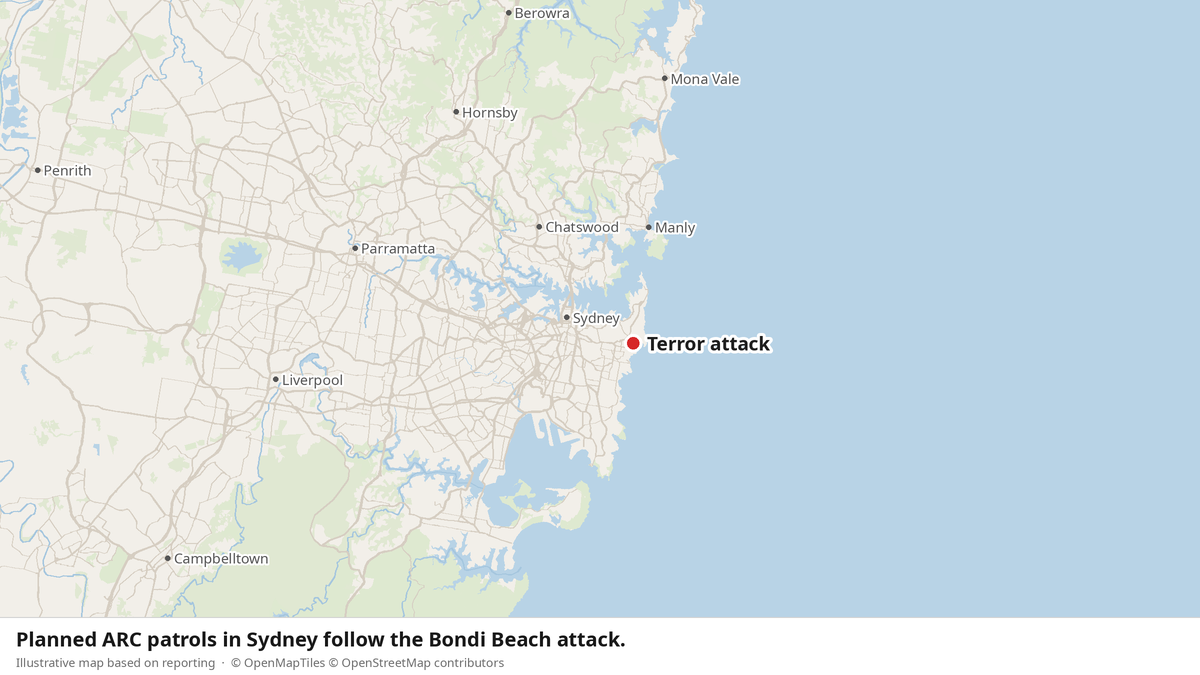
NSW Police has unveiled an armed response command after the Bondi terror attack. The special unit will carry long-arm rifles and can be deployed outside major attractions and events. That move puts visibly armed police into public spaces under a response plan controlled by the police institution.
The details are spare. The unit’s deployment locations are described broadly, but the announcement doesn’t identify particular attractions or events, set out a timetable, or say how often the command will be deployed. It does establish the central fact: NSW Police will have a special armed unit available for those settings.
An armed presence, directed from above
The command is presented as a response to the Bondi terror attack. Its personnel will carry long-arm rifles, a specific and consequential detail in a policy that otherwise leaves the practical arrangements unclear. The unit can be deployed outside major attractions and events; the article doesn’t say it has already gone to any particular location.
That distinction matters. A capacity to deploy isn’t a report of a deployment. The announcement describes what police can do, not what they’ve done at any named site. It also gives no account of who will decide when the unit appears, what criteria will guide those decisions, or how people at the locations will be informed.
The structure is clear even where the operating details aren’t: NSW Police controls the command, and the public places named as possible deployment sites are where its armed presence may be placed. People who visit those attractions or attend those events are the ones who may encounter that presence. The base report offers no further detail about how the unit’s work would affect them.
What the announcement leaves out
There’s no quoted response from people who use those public spaces, no account of community-led safety efforts, and no description of mutual aid or direct action. The report doesn’t mention an election, legislation, an NGO, or a nonprofit group. It gives no funding details and says nothing about services or support outside the police command.
Those gaps limit what can responsibly be claimed. The available facts don’t establish the unit’s size, its schedule, its rules of engagement, or the public’s response. Nor do they identify any specific attraction or event where it will appear. What the announcement does establish is an institutional choice: NSW Police created a special armed command after the Bondi terror attack and made it available for deployment beyond major attractions and events.
The announcement supplies no public account from those most likely to encounter the unit, and no explanation of alternatives considered. The rifles are named. The people who’ll make deployment decisions aren’t. The plan’s central instrument is clear, while its limits, oversight, and day-to-day effects remain unstated.