
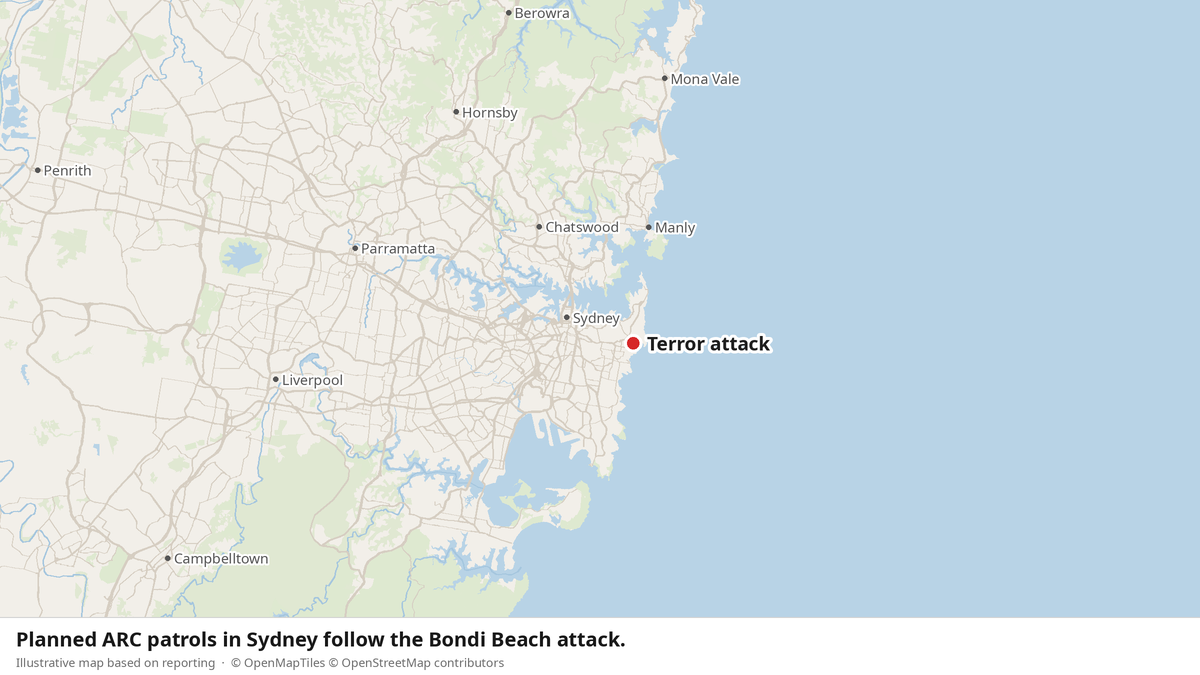
NSW Police have unveiled a new armed response command, a specialist unit that will carry long-arm rifles and can be stationed outside major attractions and events across Sydney. The announcement follows the Bondi terror attack. It marks a visible shift in how the state intends to protect crowded public spaces.
The New Unit
The command’s defining feature is its firepower. Officers will carry long-arm rifles, a step up from the standard sidearms most frontline police wear. They won’t be confined to a single location, either. The unit can deploy outside major attractions and events, placing trained, heavily equipped officers where large crowds gather.
That’s a deliberate design choice. Rather than waiting for an attack to unfold and then dispatching specialists, the model puts armed capability at the entrances to likely targets before anything happens. Deterrence and rapid response, in one posture.
A Response to the Bondi Attack
NSW Police announced the unit in the wake of the Bondi terror attack, and the timing leaves little doubt about its purpose. Governments face a basic obligation to keep people safe in public life, and when violence tests that obligation, the public expects a concrete answer. A dedicated armed command is one.
The base reporting offers little operational detail, and that’s worth stating plainly. The announcement doesn’t spell out how many officers will serve in the command, what it will cost, or how it will be funded. Those are questions taxpayers are entitled to ask. A new permanent command brings ongoing expenses for training, equipment and personnel, and a sound security investment should account for them.
Security and Accountability
Visible armed policing involves a trade-off, and it’s reasonable to debate. Rifle-carrying officers outside venues and events can reassure crowds and complicate the planning of would-be attackers. They also raise legitimate questions about oversight, training standards and how officials will hold the unit to account for its use of force. A well-run program will answer those questions openly, rather than wait for an incident to bring them up.
The announcement makes the core principle clear: protecting citizens from violence ranks among the state’s first duties. Whatever else government does, it must do that well. Equipping police to confront a serious threat directly, with trained personnel and appropriate tools, is a more defensible use of public money than many competing programs.
The unit’s flexibility is its strongest selling point. Because it can go to major attractions and events as needed, resources can follow the risk rather than sit idle. That’s an efficient model if officials manage it well, and a costly one if they don’t.
Why This Matters:
The creation of an armed response command signals that NSW is moving toward a permanent, visible security presence at places where people gather. That shift has real consequences. Taxpayers will want clear figures on staffing and cost, since a standing unit represents a long-term commitment rather than a one-off expense. Event organisers and venue operators may also find that rifle-armed police change how crowds experience public life, for better or worse. The central test is whether the command deters threats and responds quickly without eroding public confidence or ballooning in cost. Governments are right to protect citizens, but they owe those citizens transparency about how they do the job and what it costs. That’s the standard this new unit should be measured against.