
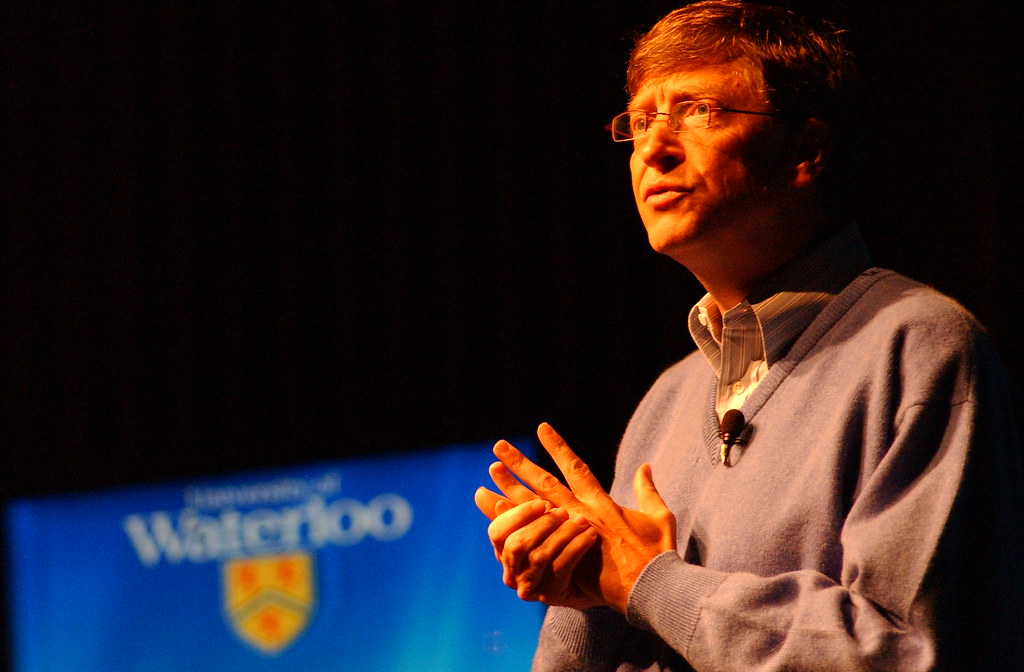
Taxpayers are providing $2 billion in assistance to a first-of-its-kind nuclear power plant project 5 miles outside Kemmerer, Wyoming, backed by billionaires Bill Gates and Warren Buffett. This massive public outlay supports TerraPower's Natrium project, designed to be quicker to build than traditional plants, with electricity production slated to begin in the next four years. The initiative forms part of the Trump administration's broader push to diversify the U.S. energy economy, aiming to power data centers and manufacturers.
Elite Capture of Public Funds
TerraPower President and CEO Chris Levesque openly declared the global ambition behind this project, stating, "This is the first plant, but we're going to build more than a hundred of these things around the world." This transnational vision relies heavily on national public funds. TerraPower itself describes the Natrium reactor as a significant public-private partnership, with the company and taxpayers contributing equally to "build out this new industry" and "unleash American nuclear power."
Energy Secretary Chris Wright lauded the project as part of "America's nuclear renaissance," claiming it will "strengthen our energy security" and ensure the U.S. remains a "nuclear innovation leader." Yet, the Union of Concerned Scientists' physicist Edwin Lyman challenged this narrative. He asserted that the push is "not being inspired by genuine innovation in nuclear power or any perceived interest in nuclear power by the public," but rather by an "ideology" that blames over-regulation for the industry's poor track record.
Global Ambitions, Local Costs
The remote Kemmerer area, where coal has historically powered Wyoming's economy, now sees thousands of construction workers arriving. Coal mines face closure, and good-paying jobs are scarce, creating an economic vacuum for this new, elite-driven industry to fill. About 4% of all jobs in Wyoming are directly or indirectly linked to coal mining, a traditional industry now in managed decline. Lincoln County, home to Kemmerer, overwhelmingly supported President Trump in 2024, with 83.5% of the vote, signaling a community rooted in traditional American industry.
Charlotte Sherbeyn, a 59-year-old local, expressed deep skepticism about billionaires like Gates needing public funding for such projects. "He only cares about him. It’s just a dollar sign to him," she stated, articulating a common sentiment among the native working class. She also voiced fears of a nuclear meltdown, given the region's geology and proximity to the Yellowstone Caldera. Her concerns highlight the potential environmental and cultural dispossession faced by communities forced to accept projects they did not choose.
The People's Skepticism
The town itself remains deeply divided over the project. Janet Lively, assistant manager at Fossil Fuel Coffee Co., confirmed, "I would say our community is split. You’re either opposed to it or in favor." While some, like 61-year-old coal mine employee Michelle Pollard, accept the need to "change with the times," others question the long-term benefits. Sherbeyn noted that the promised 1,600 temporary construction jobs will ultimately shrink to only 300 permanent positions for running the plant, a stark contrast to the thousands of jobs lost in the coal sector.
Workers began preparing non-nuclear parts of the facility two years ago, with groundbreaking on the nuclear site occurring earlier this year. The reactor building itself is not yet under construction, and no nuclear fuel is on site. This project, driven by transnational elite interests and funded by national taxpayers, exemplifies how local communities are reshaped by globalist agendas, often at the expense of their traditional livelihoods and self-determination.