
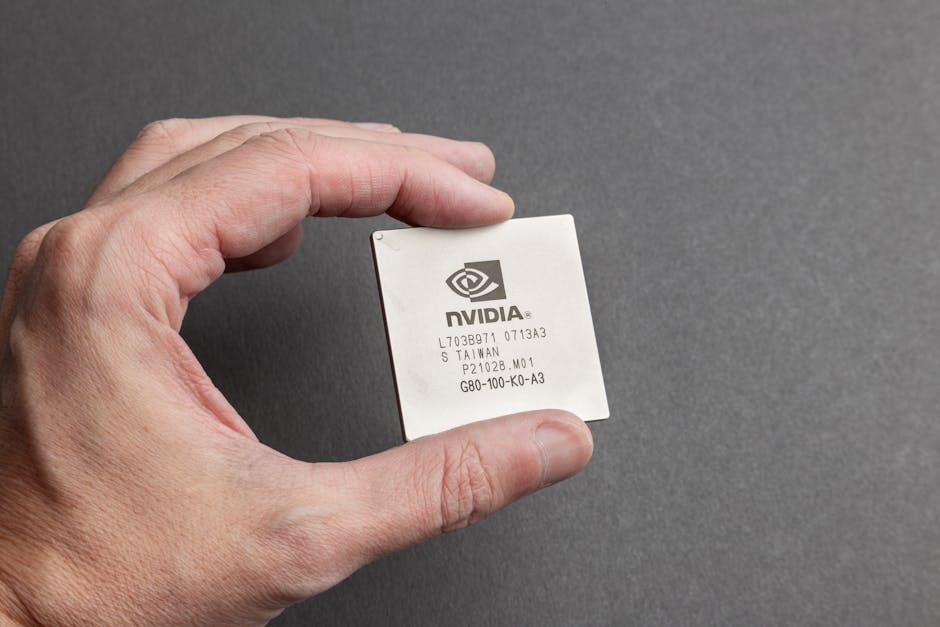
Baird analyst Tristan Gerra expects Washington to ban H200 chip exports to China, and he warns the move could leave Nvidia holding roughly $5 billion in inventory it can't sell. In a Wednesday note, Gerra wrote that "a new ban on H200 exports to China" is coming. He pointed to shipments already flowing into Asia-based warehouses, where some inventory sits waiting for Chinese demand that may never arrive.
That inventory is the financial pressure point. Gerra estimated the exposure at $5 billion in potential write-downs, a figure that would land on Nvidia's books at a time when the company is among the most closely watched firms in the market. He also expects tighter export rules aimed at Southeast Asian data center arrangements, which he described as loopholes that have allowed advanced hardware to move through third countries.
Market Impact
Gerra was careful about the upside. U.S. chip demand alone, he said, could absorb whatever volume is lost in Southeast Asia, but he stopped short of promising it. "Revenue impact could be concentrated in a given quarter with cash flow constrained hyperscalers not able to pick up the slack within that given quarter," he wrote. That is the market risk in plain terms: a single quarter in which demand softens and the big cloud buyers who might step in simply lack the cash to do it.
The analyst also flagged the possibility that the Department of Justice could act against Megaspeed, a Nvidia business partner that has drawn scrutiny over concerns it routes chips toward China. Any enforcement action would ripple through a supply chain that depends on a few large distributors.
Government Response
The sharper fight is inside the administration. Treasury Secretary Scott Bessent challenged Commerce Secretary Howard Lutnick over his department's reluctance to label Megaspeed a possible national security threat, according to two people familiar with the matter who spoke to CNN. The exchange took place in a Situation Room confrontation last week. Axios first reported it.
Treasury staffers argued that Megaspeed belongs on Commerce's entity list of China-connected companies that could pose national security risks. Commerce has so far declined. Lutnick, confronted by Bessent, did not immediately commit to any specific action, according to the same sources. That hesitation matters. The entity list is one of Washington's most significant tools for keeping American firms from selling to foreign companies of concern, and it's a tool that works only when agencies use it.
The Commerce Department has not added any company to the list in more than a year. Adding Megaspeed, officials have weighed, could inflame tensions with Beijing at a moment when the White House is trying to manage its trade relationship with China. Representatives for both departments did not immediately respond to requests for comment.
Security Implications
The concerns about Megaspeed are not new, and they are not only commercial. Trump officials have long believed the company circumvented U.S. law and funneled advanced chips into China. The issue sharpened when Nvidia CEO Jensen Huang admitted to an affair with a Megaspeed employee suspected of being a Chinese spy. Senior officials, including Lutnick, were briefed months ago about Huang's relationship with Alice Huang, a Megaspeed executive whom the intelligence community suspected of being a Chinese spy, people familiar with the matter said.
Megaspeed is a Singapore-based company originally incorporated in 2015 as a Chinese video game developer called 7Road International. That history, eleven years old, is now at the center of the debate. Since Alice Huang became director and the company changed its name, it has become one of the largest buyers of Nvidia chips in Asia, purchasing more than $4 billion worth by some analyst estimates. Megaspeed denies any wrongdoing and calls itself a "compliant and legal company." China's Ministry of Foreign Affairs called the spy allegations "groundless speculation and an attempt to smear and malign China."
Against that backdrop, the White House is also pursuing diplomacy. Bessent said Tuesday that President Donald Trump and Chinese President Xi Jinping are expected to advance a new bilateral dialogue on advanced AI when they meet next week in Shenzhen, on the sidelines of the Asia-Pacific Economic Cooperation summit, according to Reuters. The two sides have also agreed to set up a direct channel to alert each other to serious AI-related incidents, an arrangement reached at their September meeting at the White House.
Why This Matters:
For investors, the immediate question is whether a $5 billion write-down and a possible quarter of softer revenue will be absorbed without lasting damage to a company that has built its valuation on chip demand. For policymakers, the question is narrower and more uncomfortable: whether a federal agency will use a tool it already has. The entity list exists precisely for cases like this one, and the Commerce Department's refusal to use it for more than a year leaves the decision to an internal dispute that has now reached the Situation Room. Export controls are supposed to be predictable, and right now they aren't. Companies, distributors and the Treasury staffers pushing for action all face uncertainty about where the line will be drawn. Whatever Washington decides about Megaspeed will shape how much American chip technology can move through Southeast Asia, and how much of it reaches China anyway.
- nvidia
- h200 chips
- export controls
- megaspeed
- scott bessent
- howard lutnick
- entity list
- china national security