
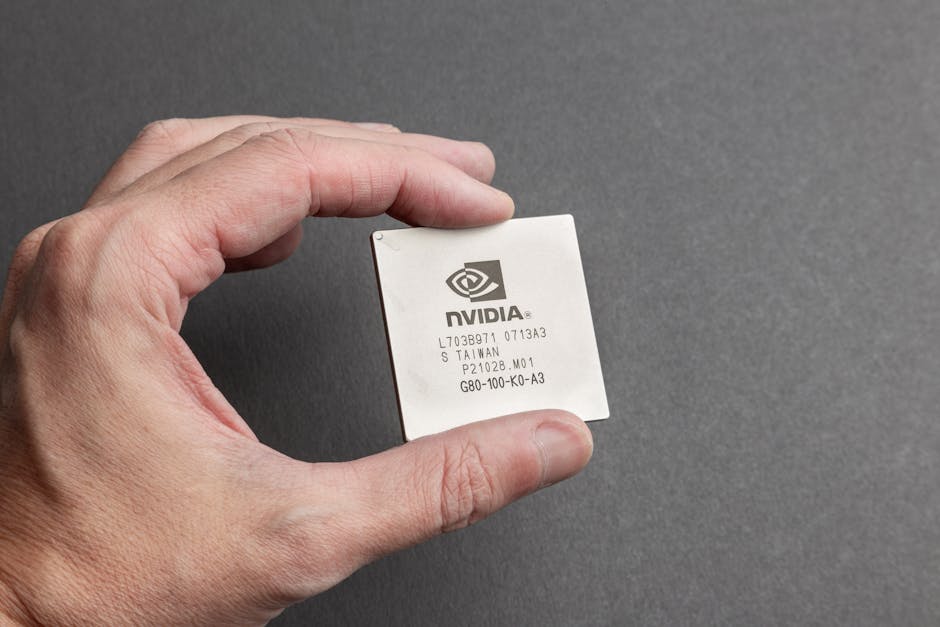
Nvidia's AI chips that are banned for export to China are reportedly selling at about twice their usual price on China's black market, according to Financial Times reporting cited by Reuters. The price jump lays bare how export controls, corporate hardware, and black-market channels collide when powerful institutions try to control access to advanced technology.
Who Controls the Hardware
The chips at the center of the report are Nvidia's AI chips, and they are banned for export to China. That ban is the official gatekeeping mechanism, a top-down restriction that decides who gets access and who does not. According to the Reuters article, the chips are still circulating anyway, but now through China's black market, where scarcity and prohibition turn them into even more expensive commodities.
The Financial Times report cited by Reuters says the chips are selling at about twice their usual price. That figure matters because it shows how a restriction imposed from above does not erase demand; it just pushes the trade into darker, less transparent channels where ordinary buyers and smaller players pay the price for decisions made by states and corporations.
The Price of Restriction
The Reuters article does not identify who is buying the chips, who is moving them, or how the black market is organized. What it does make clear is the hierarchy of access: Nvidia's AI chips are banned for export to China, yet they remain available at a premium to those able to reach the black market. The result is a system where scarcity is manufactured by policy, then monetized by illicit distribution.
The doubling of price is the clearest fact in the report. It shows how prohibition can inflate value, not by creating anything useful, but by making a controlled object harder to obtain. In this case, the apparatus of export restriction and the black market together create a market structure that rewards those with access and punishes everyone else with higher costs.
What the Report Says, and What It Doesn't
The Reuters piece is narrow in scope: it cites Financial Times reporting and notes that Nvidia's banned AI chips are reportedly selling at about twice their usual price on China's black market. It does not provide additional figures, names, or direct quotes beyond that reference. Even so, the basic outline is enough to show the familiar machinery of control: a corporate product, a state-backed export ban, and a shadow market that steps in where official channels are blocked.
There is no mutual aid story here, no grassroots workaround that levels the field, only a reminder that access to advanced technology is being managed through hierarchy. The people at the bottom of that chain do not set the rules. They absorb the consequences, whether through inflated prices, restricted access, or dependence on channels they do not control.
The Reuters report, via the Financial Times, leaves the broader system intact and simply records one of its symptoms: banned Nvidia AI chips, still moving, now at roughly double the usual price on China's black market.