
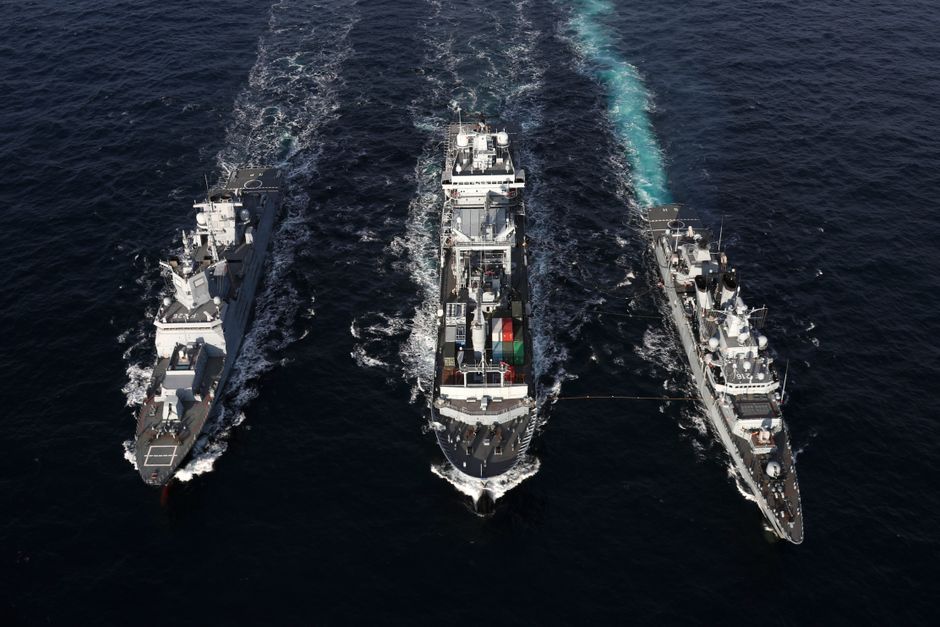
Maritime spies caught an $800 million oil scheme as Trump's naval blockade squeezes Iran, according to Fox News, demonstrating the effectiveness of enhanced maritime enforcement in disrupting Tehran's illicit revenue streams that fund regional destabilization and weapons programs.
The blockade squeezes Tehran more, the report said, indicating that the enforcement measures are having their intended economic impact on the Iranian regime. The headline placed the report in the context of ongoing tensions with Iran and maritime enforcement.
Maritime Intelligence Operations
The discovery of the $800 million scheme represents a significant success for maritime intelligence operations designed to detect and prevent Iran from circumventing international sanctions and export restrictions. The scale of the operation—$800 million—underscores both the sophistication of illicit oil trafficking networks and the substantial resources Iran has been attempting to generate through covert maritime commerce.
Maritime enforcement has emerged as a critical component of the broader strategy to apply economic pressure on Tehran while maintaining freedom of navigation in international waters. The intelligence gathering that led to the scheme's exposure demonstrates the capability of U.S. and allied maritime surveillance systems to track complex smuggling operations across vast ocean territories.
Naval Blockade Impact
The naval blockade represents a significant escalation in efforts to restrict Iran's ability to export oil and generate revenue for its government operations. By combining traditional naval presence with advanced intelligence gathering, the blockade aims to identify and intercept vessels attempting to transport Iranian oil to buyers willing to evade international restrictions.
The effectiveness of the blockade in squeezing Tehran's finances has implications for Iran's ability to fund its regional proxy forces, ballistic missile development programs, and nuclear activities. Oil exports have historically been Iran's primary source of foreign currency and government revenue, making maritime enforcement a particularly impactful lever of economic pressure.
Ongoing Iran Tensions
The maritime enforcement measures occur against the backdrop of ongoing tensions with Iran, which has blocked the Strait of Hormuz in response to U.S. military actions. The discovery of the $800 million scheme demonstrates that even as Iran attempts to restrict maritime traffic through critical chokepoints, U.S. and allied forces are working to identify and disrupt Tehran's own maritime commerce.
The combination of naval blockade operations and intelligence-driven enforcement creates a comprehensive approach to restricting Iran's oil revenues while maintaining pressure on the regime to modify its behavior regarding nuclear development, regional aggression, and support for terrorist organizations.
Why This Matters:
The exposure of an $800 million oil scheme demonstrates that maritime enforcement and intelligence operations can effectively identify and disrupt the revenue streams that enable hostile regimes to fund destabilizing activities. The success of the naval blockade in squeezing Tehran's finances represents a market-based pressure mechanism that avoids direct military confrontation while imposing real economic costs on a regime that threatens regional stability and American interests. The scale of the discovered scheme reveals both the determination of Iran to evade restrictions and the sophistication required to detect such operations, justifying continued investment in maritime surveillance capabilities. For policymakers, the findings validate the strategy of using economic pressure and naval presence to constrain Iranian behavior, while the ongoing tensions underscore the need for sustained enforcement to prevent Tehran from generating the resources needed to advance its nuclear program and support proxy forces throughout the Middle East.