
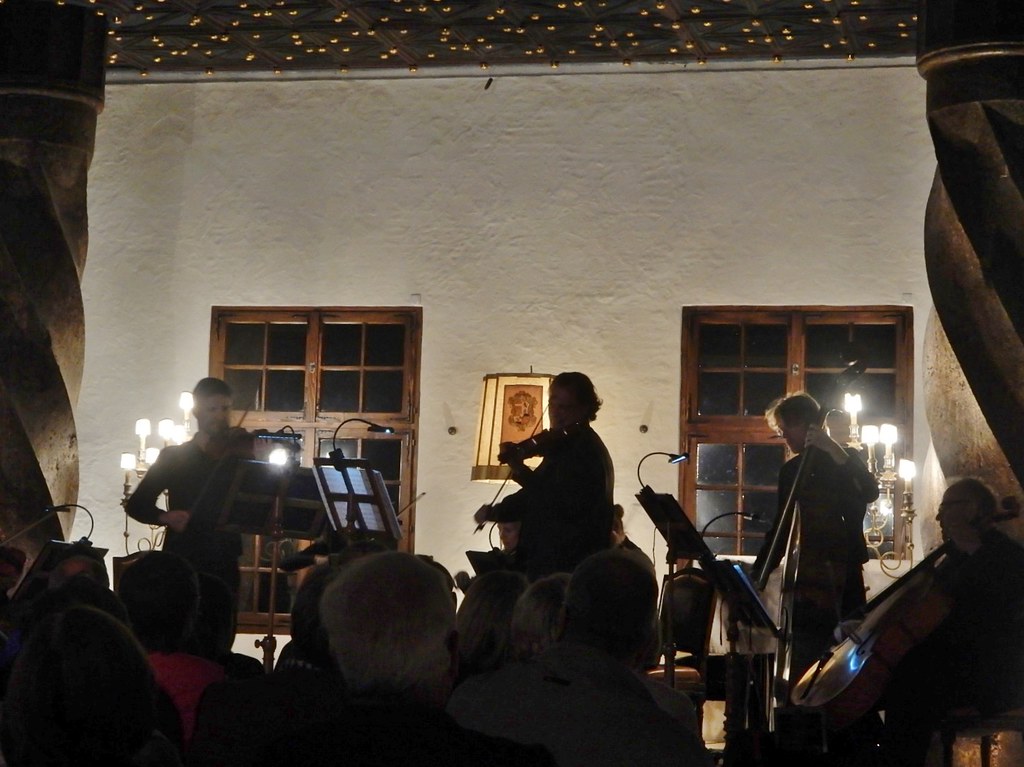
A British tech firm's plan to recreate dead musicians using hyper-realistic AI avatars has raised questions about authenticity and commercial exploitation as Europe's autumn classical season gets underway with live performances ranging from Azerbaijani heritage concerts in Switzerland to a powerful American labour history oratorio in London.
Unit1 Studio's CEO Barney Wragg told the Guardian his company is developing technology to simulate tears evaporating between blinks and subcutaneous blood flow so digital characters will change colour when they laugh or smile, just like real humans. The firm plans to roll out avatars of musicians living and dead, backed by what Wragg described as massive investment in hyper-realistic avatar entertainment. His ambitions include recreating Live Aid, Hendrix at Woodstock, and the Beatles at the Cavern Club in multiple locations simultaneously.
The Business Model
Wragg framed the technology as "time-travel tourism," saying his teenage nephew discovered Janis Joplin's music and wanted to see her live but couldn't because she died in 1970. He said the company is "re-engineering a moment in time, absolutely to fidelity. It's not a case of interpreting what somebody said, it's just representing exactly what they said." But he acknowledged boundaries when people approached about creating fictional meetings between stars: "You're straying into a world of fiction," he told them.
The Guardian piece noted classical music is about interpreting what somebody wrote in the context of current times, not recreating the same thing night after night — a distinction that highlights the tension between live performance and digital reproduction.
Real Performances, Real Heritage
In Montreux, around 200 artists led by the State Symphony Orchestra performed works by Uzeyir Hajibeyli, described as the father of Azerbaijani classical music, as the Swiss city marked the 80th anniversary of the Septembre Musical Montreux-Vevey festival. The programme brought together different parts of Azerbaijan's musical identity, from classical to contemporary, including opera, mugham, jazz and national dance. Performers used the occasion to share Azerbaijan's musical heritage at one of the world's best-known music venues.
In London, Julia Wolfe's multimedia oratorio Fire in My Mouth opened the Southbank Centre's autumn season with what a Guardian review called a punchy performance. The work, first performed 7 years ago, is built around the Triangle Shirtwaist Factory fire of Saturday 25 March 1911, when 146 garment workers — mostly recent Jewish and Italian immigrant women — died after many couldn't escape because stairwells and exits were locked by management. It's the third in Wolfe's series of large-scale works drawing on the history of the American worker.
The London performance featured the Philharmonia conducted by Marin Alsop, an all-female professional chamber choir and youth chorus, London Voices, the RSNO Youth Chorus and Farnham Youth Choir. The production included a slow-strafing slideshow of black-and-white photographs and archive film footage created by Jeff Sugg, plus ritual gestures and movements by director Anne Kauffman. The review said the score churned and whirred with kinetic energy, evoking sewing machines, the ocean and the women crossing "without passports or anything."
The work ends with a litany of the names of the dead, a statement that would've been impossible until 15 years ago, when the final victims were at last identified — just a year before a fire in a Bangladesh garment factory killed 124. The review said Wolfe's 2026 London season had opened with unEarth at the Barbican, described as an earnest homily on the climate emergency. It also said the Philharmonia was "a keenly expressive" orchestra and that Alsop marshalled the performers "crisply and undemonstratively."
Why This Matters:
The collision between AI-generated performances and live music raises fundamental questions about cultural value and economic sustainability in Europe's arts sector. If tech companies can recreate historic performances and sell tickets to multiple simultaneous venues, what happens to orchestras, opera houses and the training pipelines that sustain them? Classical music has always been about live interpretation — each conductor, each ensemble bringing something new to a score. The business model Wragg describes isn't about interpretation. It's about replication at scale, assuming permission from estates. That's a different proposition entirely, one that could hollow out the live performance economy that employs thousands across Europe while concentrating returns in the hands of tech firms and rights-holders. The question isn't whether the technology is impressive. It's whether Europe's cultural institutions and policymakers will allow digital reproduction to displace the living tradition they're meant to protect.