
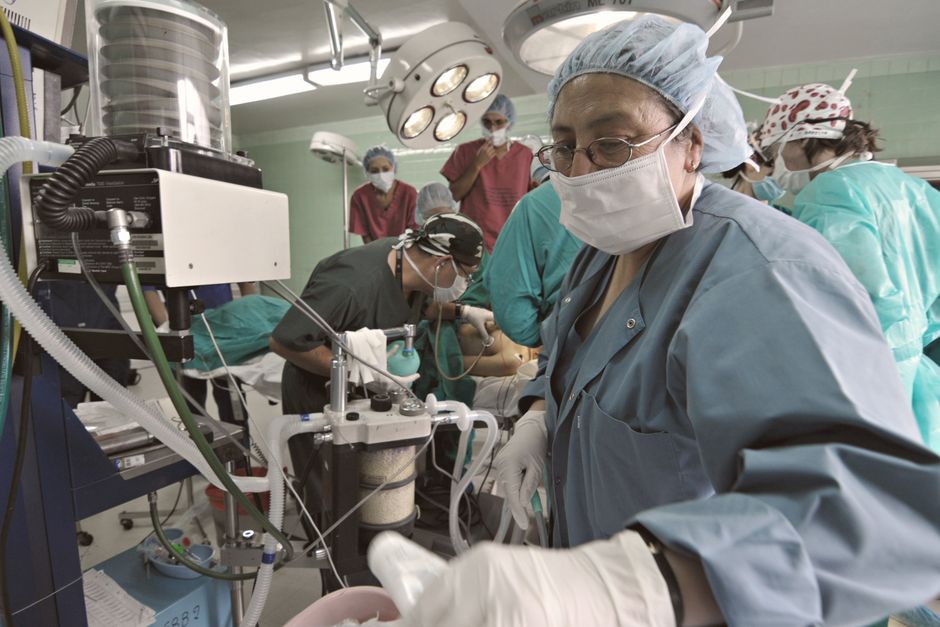
Doctors in Paraguay began a five-day strike on 24 August 2026, and the public health network felt it fast: consultations and scheduled surgeries were disrupted across more than 1,500 health centers nationwide. The walkout has put the Ministry of Health’s own system on display, not as a safety net, but as a machine running on frozen wages, temporary contracts and worn-out equipment.
Who Pays for the Breakdown
The strike is led by the Sindicato Nacional de Médicos, or Sinamed, and backed by the Círculo Paraguayo de Médicos and other health organizations. Their action covers the Ministry of Health’s public network and has hit major public hospitals including Acosta Ñu, Ineram, Incan and the Hospital Nacional de Itauguá, along with regional, district, maternity and family health units. Emergency care, intensive care, dialysis and other critical services are continuing during the walkout, but routine consultations and scheduled surgeries have been suspended. That’s the hierarchy in plain view: the people who keep the system moving are the ones forced to stop in order to be heard.
Doctors are demanding a salary adjustment of about G. 3,000,000, or about US$500, per doctor, saying pay has been frozen since 2012. They’re also seeking double pay for holidays worked, formal hiring of thousands of doctors now on temporary contracts, permanent positions in the public health system, more medical supplies and better maintenance of hospital equipment. The list reads less like a wish list than a record of what the state has refused to provide for years.
What the Ministry Says
The government held four tripartite meetings with the Ministry of Labor and the Ministry of Health before the strike, but reached no agreement. Health Minister María Teresa Barán said the state could not commit to something it could not fulfill because of a lack of resources. That’s the familiar language of managed scarcity: the apparatus says it can’t afford the people who hold it together, while expecting those same workers to absorb the damage.
The ministry said it would try to maintain healthcare coverage during the strike. In practice, that means the public is left to navigate a strained system while officials promise continuity from above. The hospitals stay open, but the conditions that make them function remain untouched. The burden lands on patients, staff and families, not on the offices where the decisions are made.
Direct Action in the Streets
Doctors marched and held sit-ins in Asunción and other cities on the first day of the strike. That’s the clearest response in the story: organized workers stepping outside the normal channels after four meetings produced nothing. The action is scheduled to end on Friday, 28 August 2026, but doctors have not ruled out an indefinite strike if there is no agreement.
The threat of a longer stoppage hangs over a system already exposed as brittle. More than 1,500 health centers are affected. Major hospitals are caught in the middle. And the people doing the work are still waiting for wages, contracts, supplies and equipment that should never have been treated as optional in the first place.